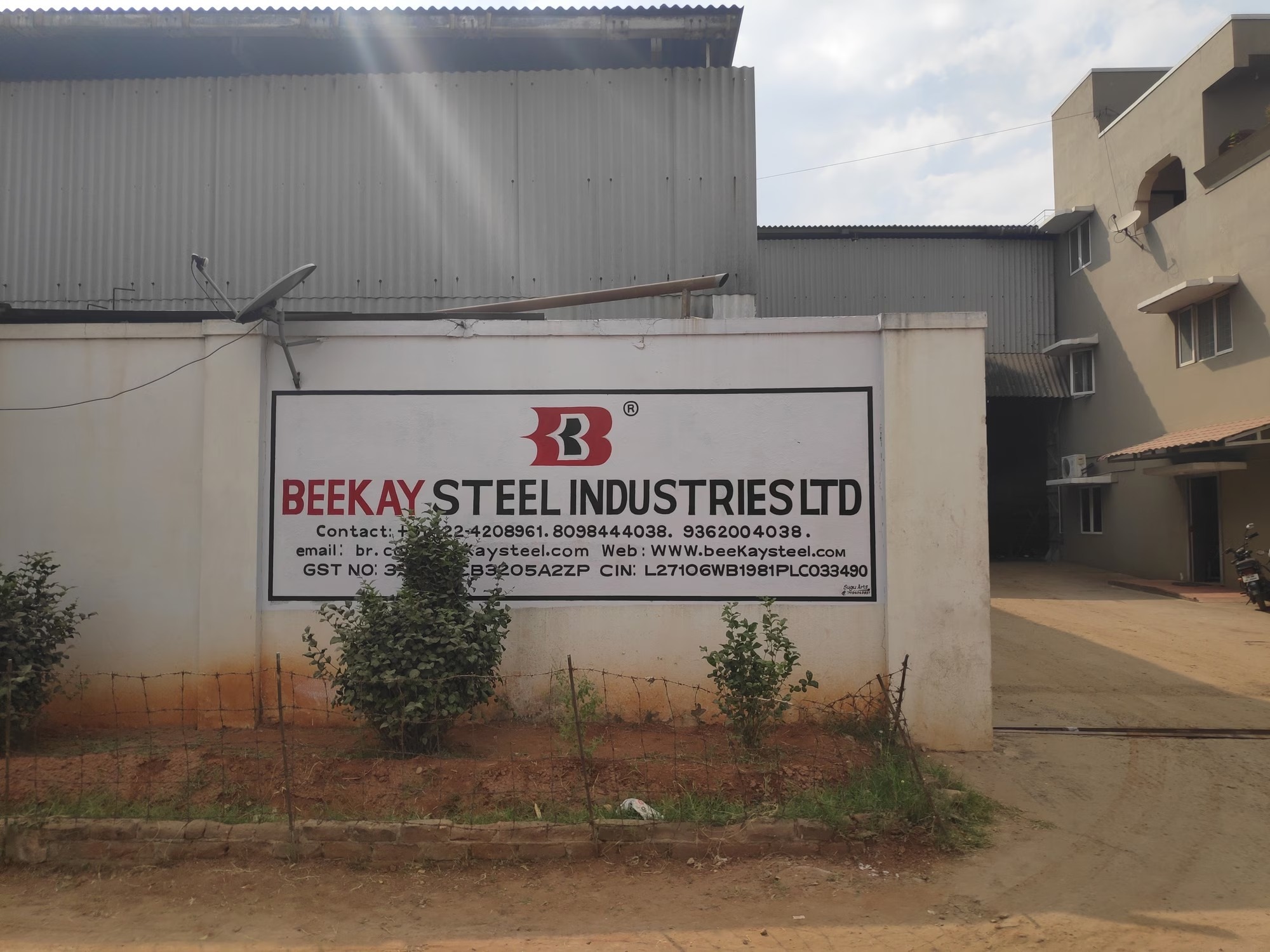
Beekay Steel Industries Ltd Mar 2026 : A Dismal ₹20.10 Crore Quarterly Net Loss Exposes Peak Structural Margin Meltdown
Section 1 — At a Glance
Beekay Steel Industries Ltd has closed its fiscal year 2026 on an alarming financial note, booking an unprecedented consolidated quarterly net loss of ₹20.10 crore for the period ending March 31, 2026. This structural earnings collapse materialised despite achieving a record consolidated quarterly topline of ₹338.62 crore, driven primarily by a severe compression in processing spreads and substantial escalation in volatile manufacturing input lines. For the full fiscal year, total operational revenue expanded to ₹1,175.04 crore, but the business suffered from acute structural overhead under-absorption across its non-integrated processing footprint.
While the broader equity market has previously rewarded the business for its high asset-backing and deep operating discount—trading at a modest price-to-book multiple of 0.73x against a substantial tangible book value of ₹549—investors are now sharply pivoting their attention toward a deeply compromised return profile. The company’s key profitability matrices have deteriorated to multi-year troughs, characterized by an annual Return on Equity (ROE) of 3.57% and a Return on Capital Employed (ROCE) of 5.48%.
The primary operational anxiety stems from an severe margin contraction across its core proprietary longs segment, coupled with a costly, debt-reliant expansion blueprint designed to breathe life back into historical distressed infrastructure assets. When operating profit margins drop sharply during periods of peak revenue execution, it highlights the structural risk of being a non-integrated processing business. This report strips away secondary accounting variations to expose the true capital health of the enterprise.
Section 2 — Introduction
Beekay Steel Industries Ltd, an established secondary processor in the long steel sector since 1981, finds its investment thesis heavily challenged at the close of 2026. Long recognized as an agile manufacturer of custom hot-rolled sections, bright bars, structural profiles, and thermomechanical treatment (TMT) bars, the company’s manufacturing footprint spans across seven regional facilities situated across West Bengal, Jharkhand, Odisha, and Tamil Nadu.
The immediate catalyst demanding analytical evaluation today is the sudden exit of the Chief Financial Officer (CFO) on February 14, 2026, coinciding precisely with a rapid drop in operating profitability margins. Simultaneously, the organization has entered a highly aggressive, multi-phased capital investment program aimed at re-commissioning a closed, legacy manufacturing complex in Cuttack. This dramatic shift from conservative asset sweat to aggressive capital expenditure occurs right when core steel cycles are showing signs of structural weakness, testing the financial stability of the balance sheet.
Section 3 — Business Model: WTF Do They Even Do?
Stripped of the corporate public relations jargon, Beekay Steel functions essentially as an external conversion mill and custom rolling shop for primary metal producers. The business model is structured into two primary operating segments:
Proprietary Manufacturing (77% of Revenues): The company buys prime commercial billets, heats them up, and rolls them into specialized architectural sections, crane rails, automotive bright bars, and regional commercial TMT products.
Non-Proprietary Conversion Job Work (23% of Revenues): An institutional toll-manufacturing arrangement where primary steel producers supply their own raw steel input. Beekay handles the conversion into specialized sub-components for a fixed processing fee per metric ton.
This structural division creates a concentrated risk exposure, as over 60% of regional product output is absorbed by the infrastructure-heavy markets of Southern India. Furthermore, client concentration has intensified significantly, with the top five institutional buyers now controlling an alarming 54% of total annual volumes.