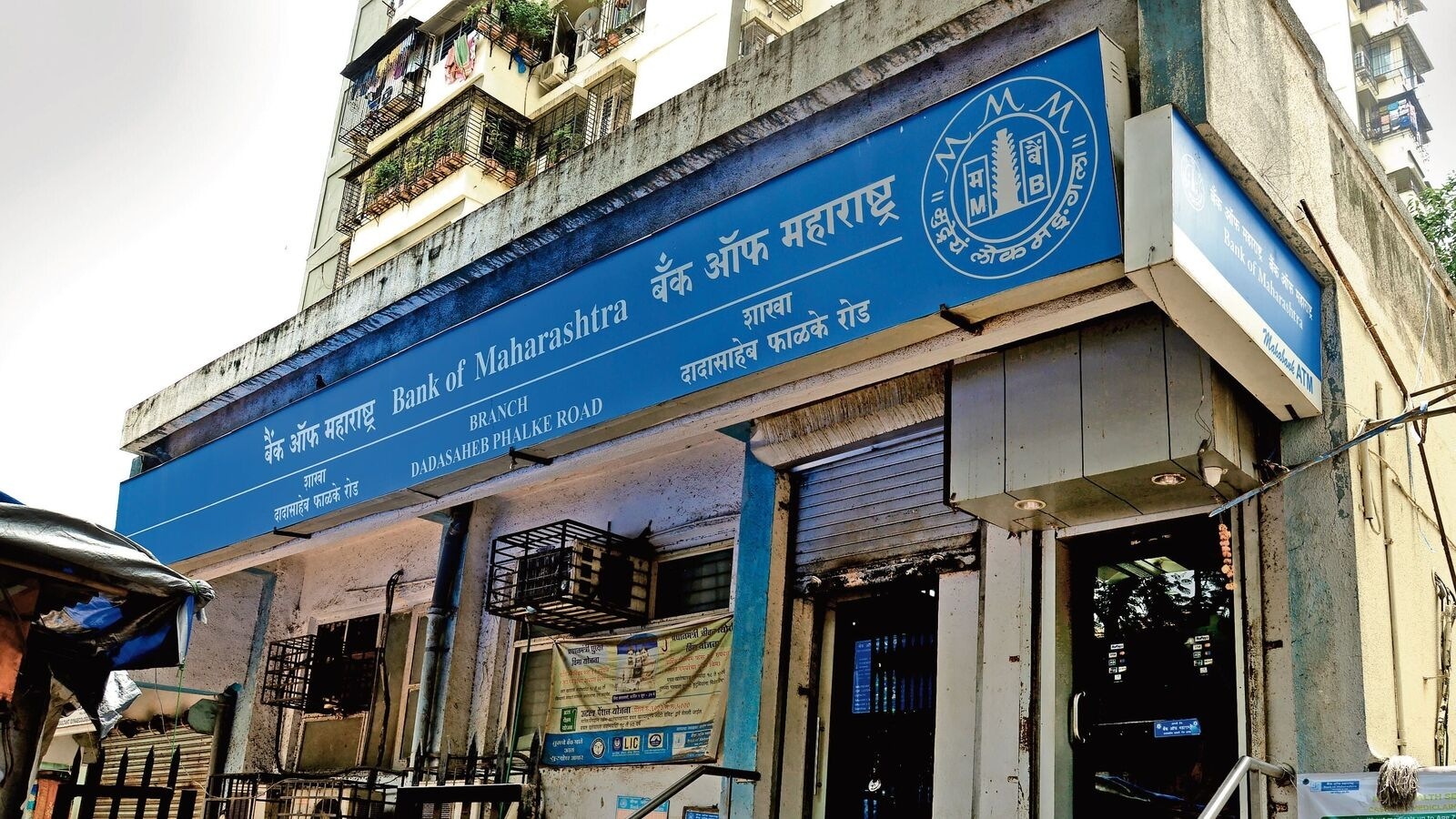
1. At a Glance
There are PSU banks that survive. Then there are PSU banks that suddenly wake up, start behaving like private banks, and make investors wonder whether somebody secretly replaced the management team with people from a fintech startup.
Bank of Maharashtra looks exactly like that right now.
This is a bank that was once known more for bad loans, weak profitability and endless government recapitalization than for growth. Between FY17 and FY20, the government had to pump in ₹8,707 crore just to keep the ship floating. Today, the same bank is posting ₹7,019 crore annual profit, 26.6% ROE, 1.97% ROA, GNPA of just 1.45%, and a cost-to-income ratio of 36.5%.
That is not just a turnaround. That is a complete personality change.
The funniest part? The stock still trades at a P/E of only 8.3 and price-to-book of 1.75. That is lower than many private banks with weaker return ratios and worse asset quality.
But before everyone starts calling this the next PSU banking miracle, there are still some unresolved dramas hiding under the carpet.
The bank reported 285 fraud cases involving ₹807 crore during 9M FY26. There were also four legacy fraud accounts worth ₹601 crore which had to be reclassified as fraud. Borrowings have climbed sharply to ₹35,234 crore from ₹23,853 crore last year. Government ownership has dropped from 86% to 73.6% after a large OFS, which is good for public float but also means the bank will eventually have to survive with less direct government handholding.
Then there is the geographical concentration problem. Around 43% of branches are still located in Maharashtra. Nearly half the network is concentrated in the western region. If Maharashtra sneezes, Bank of Maharashtra catches a cold.
Still, there is no denying the momentum.
Q4 FY26 profit rose nearly 35% YoY to ₹2,014 crore. Advances grew 21.7%. Retail loans grew 32%. Vehicle loans rose 55%. Gold loans are exploding. Deposits crossed ₹3.5 lakh crore. GNPA fell to 1.45%. Net NPA fell to 0.13%.
This is no longer the sleepy PSU lender sitting quietly in the corner while larger banks take all the attention.
This bank has entered the chat.
2. Introduction
For years, Bank of Maharashtra lived in the shadow of bigger PSU banks like State Bank of India, Punjab National Bank and Canara Bank.
It was smaller, slower, more regionally concentrated and frankly less glamorous.
Then something changed around FY22.
The bank started focusing heavily on RAM loans — Retail, Agriculture and MSME. Instead of depending too much on risky corporate lending, it started building a loan book with more granularity and better spreads. Retail banking rose from roughly 35% of revenue mix in FY22 to 46% by Q3 FY26. Treasury dependence fell sharply from 32% to 19%.
That is important because treasury income is like free dessert at a wedding. Nice to have, but not reliable enough to build your life around.
The bank also got aggressive in improving asset quality. Gross NPA fell from 3.94% in FY22 to 1.45% by Mar FY26. Net NPA collapsed from 0.97% to 0.13%.
Meanwhile, return ratios improved dramatically.
ROE rose from 11.5% in FY22 to 26.6% in Q4 FY26. ROA rose from barely 1.1% in FY23 to 1.97%.
This is not the kind of improvement you see by accident.
Management clearly focused on:
- Better underwriting
- Faster recovery
- Retail loan expansion
- High-yield products like gold loans and vehicle loans
- Letting expensive deposits go away instead of blindly chasing growth
- Keeping cost-to-income under control
One of the most interesting things management said in the January 2026 concall was that they intentionally allowed high-cost bulk deposits to leave the bank because “we don’t need that kind of funding.” That is not the usual PSU bank behavior. Usually PSU banks behave like people at a buffet: pile everything on the plate first, think later.
Instead, Bank of Maharashtra is trying to protect profitability first and growth second.
The result is visible.
NIM remains above 3.9%. CASA ratio is still above 52%. Credit cost is falling. PCR is near 99%.
Now the big question is simple: can this continue for another 3–5 years, or is this the peak?
3. Business Model – WTF Do They Even Do?
Bank of Maharashtra is a full-service bank. Which basically means it does everything from giving home loans to financing businesses to handling salary accounts to selling insurance to processing UPI transactions.
The business is divided into four segments:
- Retail Banking
- Corporate / Wholesale Banking
- Treasury
- Other Banking Operations
Retail is now the star child.
Retail loans are 30% of global advances. Agriculture is 14%. MSME is 18%. Corporate is still 36%, but the bank is clearly