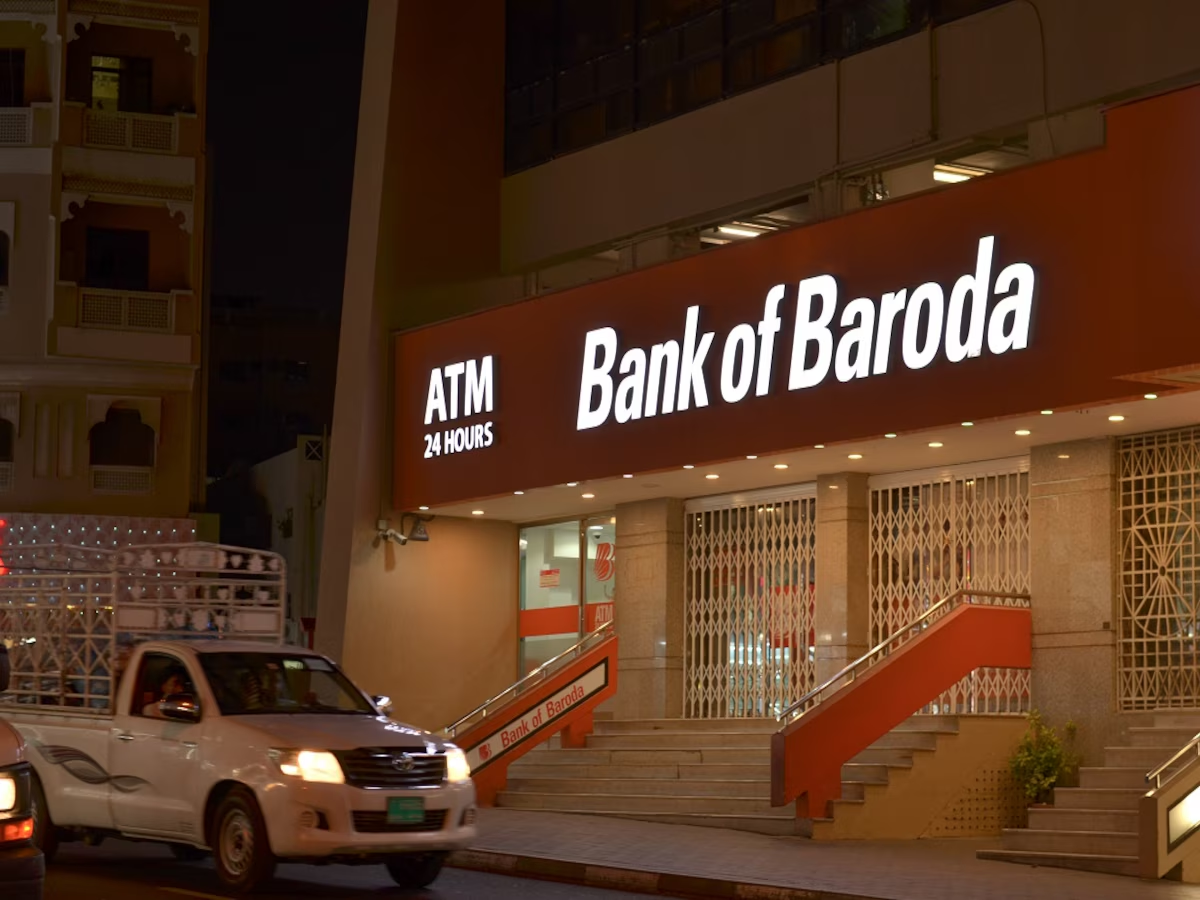
1. At a Glance
If PSU banks were cricketers, Bank of Baroda (BoB) would be that seasoned all-rounder who quietly scores 70 every innings while others either slog or collapse. As of September 2025, this 1908-born banking behemoth sits pretty with a market cap of ₹1.44 lakh crore, a P/E of 7.5x, and a Price-to-Book of just 0.91x — meaning the market values it cheaper than your neighbourhood chai stall’s goodwill.
The bank reported Q2FY26 revenue of ₹33,318 crore (up 4.4% YoY) and PAT of ₹5,134 crore (down 4.1% YoY). Despite that blip, its ROE stands tall at 15.5%, NIM at 3.14%, and GNPA at just 2.5% — its cleanest balance sheet in decades.
From a ₹1,836 crore loss in FY18 to a ₹19,236 crore profit in FY25, BoB’s turnaround has been as dramatic as a Bollywood comeback. It’s paying a 3% dividend yield, expanding digitally (95% of transactions online), and even secured an AUD125 million overseas loan like a proper global banker.
At ₹278 per share, the stock is up 18% in the last three months — because apparently, investors now believe in PSU redemption arcs.
2. Introduction
Back when India was still a colony, Maharaja Sayajirao Gaekwad III of Baroda founded a modest bank in 1908. Fast forward a century, and Bank of Baroda is now India’s third-largest public sector bank, with assets over ₹19 lakh crore.
The bank’s life story has everything — an Amalgamation trilogy (Vijaya Bank + Dena Bank in 2019), digital rebirth via BoB World, and even an RBI slap in 2023 for “creative” customer onboarding. But like a disciplined student after suspension, BoB cleaned up its act — the ban was lifted in May 2024.
Its portfolio today spans everything from retail loans (36%) to corporate lending (35%), while the rest flows through treasury and rural operations. Over 8,200 branches, 9,400 ATMs, and 91 overseas offices make it not just a bank, but a bureaucratic continent.
Yet, behind this government suit lies a surprisingly nimble beast. With GNPA down from 6.6% in FY22 to 2.5% now, BoB’s credit quality glow-up deserves a Netflix docuseries.
Is it the next SBI, or just the PSU version of “fit but forgotten”? Let’s find out.
3. Business Model – WTF Do They Even Do?
Think of BoB as India’s “one-stop financial bazaar.” It offers:
- Retail Banking – Home loans, auto loans, credit cards, personal finance, and digital products under BoB World.
- Corporate Banking – Large project finance, infrastructure, working capital, and treasury services.
- MSME & Agri Lending – Backbone of its rural and small business growth.
- Treasury & Global Operations –