Banco Products (India) Ltd Q2FY26 – From Cool Radiators to Hot Profits: ₹1,038 Cr Sales, ₹139 Cr PAT, and a Dividend that Keeps on Flowing
1. At a Glance
If radiators had a brand ambassador, Banco Products (India) Ltd would probably make them walk the ramp with pride — polished aluminum, steady margins, and all. At ₹708 per share (as of 21 Nov 2025), the company sits comfortably with a market cap of ₹10,127 crore, flexing a ROE of 32.2%, ROCE of 32.4%, and P/E of 23.4x — cheaper than many auto ancillaries that still burn more oil than cash.
In Q2FY26 (Sep 2025), Banco clocked ₹1,038 crore in revenue and ₹139 crore in net profit, showing resilience amid global auto chaos. The Operating Profit Margin cooled slightly to 14% from 19% QoQ, but still kept things “temperate.” Its Q2 EPS? A sizzling ₹9.71, annualized to about ₹39 — enough to make its P/E look like a reasonable dinner bill for once.
The board recently declared an interim dividend of ₹7/share (350%), because apparently even radiators like to share some warmth.
Banco is no longer that silent auto parts supplier from Vadodara — it’s now a global cooling giant exporting to 80+ countries through its European arm NRF, which just opened new warehouses in Romania and Turkey. Clearly, someone turned the “expansion mode” thermostat up to max.
2. Introduction – When Radiators Meet R&D and the Dividend Flows Like Coolant
Imagine a Gujarati family business that’s been making cars chill since 1961 — and still finds new ways to make money from metal and coolant. That’s Banco Products for you. It started with radiators and engine cooling systems when cars were a luxury, and now, even in the EV era, it’s finding ways to stay cool — literally.
While many auto component players whine about input costs and export headwinds, Banco is busy announcing new warehouses in Europe, acquiring turbocharger businesses, and expanding EV cooling systems. It’s the corporate equivalent of that uncle who quietly builds three new houses while everyone else is still figuring out EMIs.
The company’s sales have jumped 40% between FY22 and FY24, a feat not many legacy component manufacturers can brag about. Add to that a consistent ROE above 30%, no promoter pledges, and zero drama in shareholding, and Banco looks like the kind of stock your conservative dad would accidentally pick and then never sell.
But wait — this isn’t a fairy tale. Costs have been rising, margins fluctuate like temperature gauges, and its European subsidiary NRF France S.A.S. recently dealt with a warehouse fire (insurance covered, thankfully). Yet, the group’s global spread and strong OEM relationships make it one of the rare “auto ancillaries” that can truly flex on both OEMs and the aftermarket.
3. Business Model – WTF Do They Even Do?
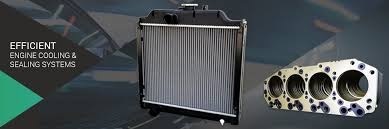
Banco Products manufactures engine cooling modules — the stuff that keeps engines, oil, fuel, and transmissions from frying themselves to death. If your car doesn’t overheat in May traffic, thank Banco. Their product basket includes radiators, oil coolers, charge air coolers, condensers, and even gaskets that prevent oil leaks — the true unsung heroes of combustion sanity.
The company serves OEMs (55–60% revenue), Aftermarket (15%), and Exports (30%). That means they’re not begging any one segment to survive — a nicely diversified mix.
They’re also heavily invested abroad through NRF, their Netherlands-based wholly-owned subsidiary, which contributes the bulk of exports and runs a European logistics empire with 19 warehouses across the continent.
On the home turf, Banco has five manufacturing plants producing up to 3.33 million radiators annually. Their distribution network in India has six regional offices, ensuring that a broken radiator in Kerala or Kanpur can find a Banco replacement faster than you can say “engine overheat.”
And here’s the EV twist — Banco set up Banco New Energy Cooling Systems, a dedicated unit to build heat exchangers for electric vehicles and locomotives. If ICE engines were yesterday’s heroes, Banco is already selling the coolant for tomorrow’s Teslas and Tatas.
So, in short: they make cars run cooler, margins stay hotter, and dividends flow smoother.