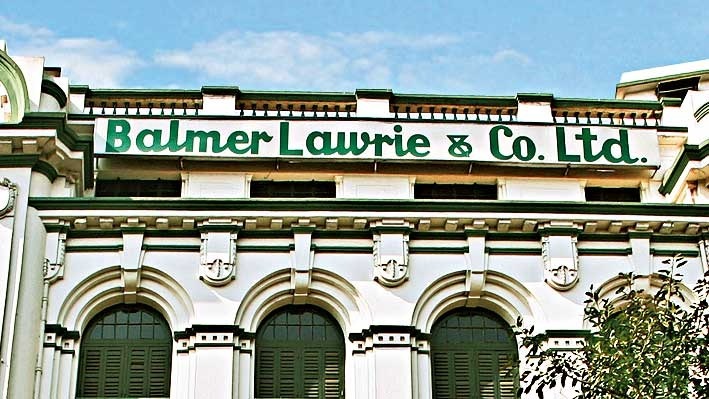
Balmer Lawrie Investment Ltd Mar 2026: The ₹613 Cr Cash Pile That Can’t Outrun SEBI Fines
Section 1 — At a Glance
Balmer Lawrie Investment Ltd presents a distinct financial structure that commands investor attention while flashing clear corporate warning signals. Operating strictly as a government-controlled special purpose vehicle under the Ministry of Petroleum & Natural Gas, the company’s underlying economic value remains completely decoupled from operational asset management. The primary anchor of investor interest rests on a monumental liquid surplus, featuring ₹613 crore in cash and bank balances sitting alongside a debt load of ₹220 crore.
While headline revenue expanded to ₹2,727.55 crore for the full fiscal year ended March 31, 2026, the structural efficiency of the enterprise tells a vastly more complex story. Annual net profits crawled up marginally to ₹178.39 crore. The core structural dilemma surfaces in capital efficiency metrics, where the reported Return on Equity struggles at 12.67%, trailing significantly behind a 16.91% Return on Capital Employed.
Compounding these operational limitations is an escalating regulatory compliance crisis. The company has become a repeat target for capital market regulatory penalties, culminating in a fresh ₹9,79,400 fine levied by the stock exchange on May 27, 2026, for chronic board and committee non-compliance.
Financial Wisdom Drop: A massive net cash balance provides safety, but it cannot mask structural inefficiencies when capital yields remain below the market’s cost of equity.
With a high dividend yield of 5.94% acting as a primary attraction, the fundamental tension remains whether this corporate vehicle can smoothly pass through structural holding-company discounts.
Section 2 — Introduction
Balmer Lawrie Investment Ltd occupies a unique space within the central public sector enterprise ecosystem. Established in 2001 as part of the structural deregulation of India’s oil sector, the company was engineered specifically to house the demerged stake of IBP Co. in Balmer Lawrie & Company Ltd. The corporate architecture is lean: the President of India maintains a firm 59.67% controlling equity stake, ensuring that state-level policy and governance guidelines directly dictate corporate capital allocation.
The enterprise operates with a skeletal administrative footprint, intentionally designed to act as a financial pass-through channel rather than an active commercial operator. However, recent corporate developments have added administrative friction. While the company executed a ten-for-one stock split in July 2024 to satisfy capital restructuring benchmarks, the board abruptly decided on May 21, 2026, against any further share splits or bonus issues. Investors are left evaluating a corporate entity whose destiny is entirely bound to the operational cash generation of its primary holding.
Section 3 — Business Model: WTF Do They Even Do?
To understand this business model, you must first accept that the word “business” is doing some exceptionally heavy lifting here. Balmer Lawrie Investment Ltd does absolutely nothing on its own. It doesn’t manufacture a single product, deploy a service, or interact with a retail customer. It is an corporate envelope designed to hold a 61.9% controlling interest in its operating subsidiary, Balmer Lawrie & Co. Ltd.
The revenue model is beautifully lazy:
The Dividend Straw: Approximately 91% of its corporate income flows straight from dividends kicked up by the subsidiary.
The FD Hustle: The remaining 9% comes from taking surplus funds and parking them in fixed deposits at scheduled commercial banks to earn sweet, un-glamorous interest.
The underlying subsidiary is the one getting its hands dirty, managing industrial packaging, greases, lubricants, travel vacations, and logistics infrastructure. If you are looking for an aggressive, fast-paced corporate strategy, you are in the wrong room. This is essentially a government-operated wealth locker where the primary operational activity involves waiting for the mail to arrive with a dividend check.
Section 4 — Financials Overview
Figures are consolidated, in ₹ crore.
Quarterly Financial Performance
Metric
March 2026
YoY (%)
QoQ (%)
Revenue
746.32
22.15%
13.19%
EBITDA / Operating Profit
116.14
23.64%
31.40%
Net Profit
54.11
12.17%
26.63%
Reported EPS (₹)
2.44
14.02%
26.42%
The final quarter of FY26 delivered a surprisingly sharp top-line expansion, with revenue jumping to ₹746.32 crore. Operating profit also spiked nicely to ₹116.14 crore, showing that when the underlying industrial logistics and packaging segments catch a tailwind, the absolute numbers reflect it immediately.
What is Management Promising in the Coming Quarters?