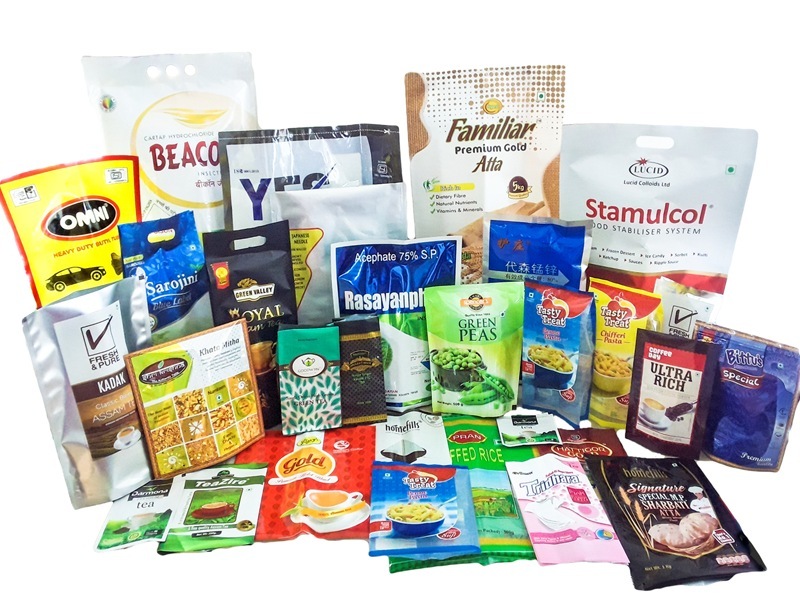
If you thought packaging companies were boring, B & A Packaging India Ltd just stapled a paper sack full of surprises on your desk. The stock, currently lounging at ₹212, looks like that quiet class topper who never speaks but always scores. With a market cap of ₹105 crore, the company runs a surprisingly efficient operation in paper sacks and flexible laminates — the kind of stuff that wraps up cement, carbon black, and your favourite snack chips with equal enthusiasm.
For Q2 FY26 (ended 30th September 2025), the company reported quarterly revenue of ₹40.8 crore — a 13.8% YoY jump — and a PAT of ₹3.18 crore, up 6.35% YoY. Not bad for a midcap from Balasore quietly sealing profits while most smallcaps are busy packaging excuses. With a P/E of 12.7, ROCE of 17.6%, and ROE of 12.6%, the business has the balance of a yoga instructor and the margins of a disciplined accountant.
Sales growth has been modest, at 2.94% YoY, but the company remains almost debt-free with a debt-to-equity ratio of just 0.08. While larger peers like Uflex and TCPL Packaging fight over volume, B&A Packaging is playing the “slow and sticky” game — much like the glue they probably use in their sacks.
2. Introduction
Let’s be honest — nobody grows up dreaming of making paper sacks. Yet here we are, talking about a 39-year-old company that’s literally wrapping India’s economy, one laminated pouch at a time. B & A Packaging India Ltd (part of the B&A Group, known for its tea estates, tourism, and golf resort — because why not?) has turned the humble packaging business into a quiet profit engine.
At first glance, the ₹105 crore market cap might seem tiny in the glittering world of capital goods, but that’s the charm. The company has stayed steady, solvent, and scandal-free — three rare qualities in today’s smallcap jungle. Its revenue mix is pretty even between Paper Sacks (53%) and Flexible Laminates (46%), which means it’s not overly dependent on one segment. Even its 1% scrap sales are wrapped up neatly in the profit sheet.
The Q2 FY26 results show resilience: despite inflationary pressures on raw material costs and muted industrial demand, margins held steady at 11.84%. Meanwhile, industry titans like Polyplex and Jindal Poly Film are bleeding from oversupply wounds. Maybe B&A’s secret is simple — make less noise, but more sacks.
3. Business Model – WTF Do They Even Do?
So what exactly does B&A Packaging make? Think of it as the behind-the-scenes hero of every industry you can imagine. From cement to snacks, from rubber chemicals to milk powder — if it needs a bag, B&A probably makes one.
The company operates two main product divisions: a) Paper Sacks: Valved sacks, open-mouth sacks, pinch-bottom sacks, and reinforced sacks. They’re used in packaging heavy-duty materials like carbon black, cement, and refractories. Essentially, they build the outer shell that protects industries’ insides. b) Flexible Laminates & Pouches: These are the glamour cousins — glossy, printed, and flexible. Used for frozen foods, pharmaceuticals, confectionery, dairy, and even edible oils.
In 2022, the company ramped up capacity at its Balasore factory by installing a new Tuber and Bottomer machine, boosting production capacity in the paper sacks unit by 25%. That’s the kind of move that screams “industrial yoga” — expanding flexibility without overextending debt.
And then there’s the tech angle. The company holds a patent for an “Ultrasonic Sealing Device and Related Methods”. Yes, you read that right. This packaging company literally patented sound waves to seal bags tighter. Someone give them a standing ovation… or at least a plastic-free one.
4. Financials Overview
Let’s unwrap the Q2 FY26 numbers before they get laminated in boredom:
Metric
Q2 FY26 (Sep 2025)
Q2 FY25 (Sep 2024)
Q1 FY26 (Jun 2025)
YoY %
QoQ %
Revenue (₹ Cr)
40.80
35.85
34.88
13.8% ↑
17.0% ↑
EBITDA (₹ Cr)
4.83
4.33
2.36
11.5% ↑
104.6% ↑
PAT (₹ Cr)
3.18
2.99
1.72
6.4% ↑
84.9% ↑
EPS (₹)
6.41
6.03
3.47
6.3% ↑
84.7% ↑
Commentary: This quarter, B&A clearly decided to flex. Revenue jumped double digits YoY and QoQ, but the real kicker is EBITDA doubling sequentially — suggesting operational leverage is finally kicking in. EPS popped back to ₹6.41, effectively putting the stock at an annualized EPS of ~₹25.6, giving a P/E of ~8.2x on an annualized basis.
For a near debt-free manufacturing company with double-digit ROCE and improving utilization, that’s cheaper than a roadside cutting chai.
5. Valuation Discussion – Fair Value Range Only
Let’s play the valuation game the boring-but-honest way:
(a) P/E Method:
Current EPS (TTM): ₹16.7
Industry P/E: 21.4
Company P/E: 12.7 Applying a fair range (12x–20x): Fair Value Range = ₹200 – ₹334 per share
(b) EV/EBITDA Method:
EV = ₹107 Cr
EBITDA (TTM) = ₹14 Cr EV/EBITDA = 7.56x Industry average = 10x–12x Fair EV range = ₹140–₹170 Cr After adjusting for debt, fair equity value per share ≈ ₹260–₹315
(c) DCF (simplified): Assume modest 6% revenue growth, stable margins, and 10% discount rate → Fair value range roughly ₹240–₹320.
Educational Disclaimer: This fair value range is purely for educational purposes. It’s not investment advice, not a stock tip, and definitely not a call