1. At a Glance – Blink and You’ll Miss the Margins
Axita Cotton Ltd is one of those companies that makes you rub your eyes twice. A ₹396 crore market cap business trading at ₹11.4, selling cotton bales worth ₹449 crore annually, but earning margins so thin that even butter paper would laugh. Q3 FY26 revenue came in at ₹89.4 crore, while PAT jumped to ₹2.6 crore, a 243% QoQ surge that looks heroic until you zoom out and realise last quarter was basically survival mode. The stock is up ~34% in three months, ROCE is chilling at 2.35%, ROE at 0.94%, and yet the P/E is a jaw-dropping 166. This is cotton, not cloud computing.
Axita operates in a commodity business where pricing power is a myth, but the market is currently pricing it like a rare artisanal startup. With promoter holding down to ~41.9%, no pledges, modest debt of ₹22.3 crore, and a business that runs on volume more than margins, this stock feels like a Bollywood item song: loud, catchy, and confusingly expensive. Curious already? Good. Let’s unroll the cotton bale layer by layer.
2. Introduction – Welcome to the Ginning Zone
Axita Cotton Ltd was incorporated in 2013 and operates squarely in India’s most desi, cyclical, monsoon-dependent industry: cotton. No AI, no SaaS, no blockchain. Just kapas, ginning, pressing, yarn, seeds, and trading. If rainfall sneezes in Gujarat, Axita catches a cold.
The company is part of the Axita Group and focuses primarily on manufacturing and exporting cotton bales, especially Shankar-6 and MCU-5/MECH varieties. Cotton bales contribute ~92% of FY24 sales, with yarn doing the remaining ~8%. This alone tells you everything about margin structure. Cotton bales are a volume game. You don’t price them; the market does.
Exports contribute just ~7% of revenue, with domestic sales dominating at ~93%. Customers range from traders and wholesalers to yarn mills and merchant exporters. Basically, Axita sits in the middle of the cotton food chain, supplying raw material to everyone else who might actually make money from it.
So why is the market excited? Bonuses, buybacks, sudden profit spikes, and a valuation that looks completely divorced from reality. Or maybe the market knows something we don’t. Let’s investigate like a slightly sarcastic financial detective.
3. Business Model – WTF Do They Even Do?
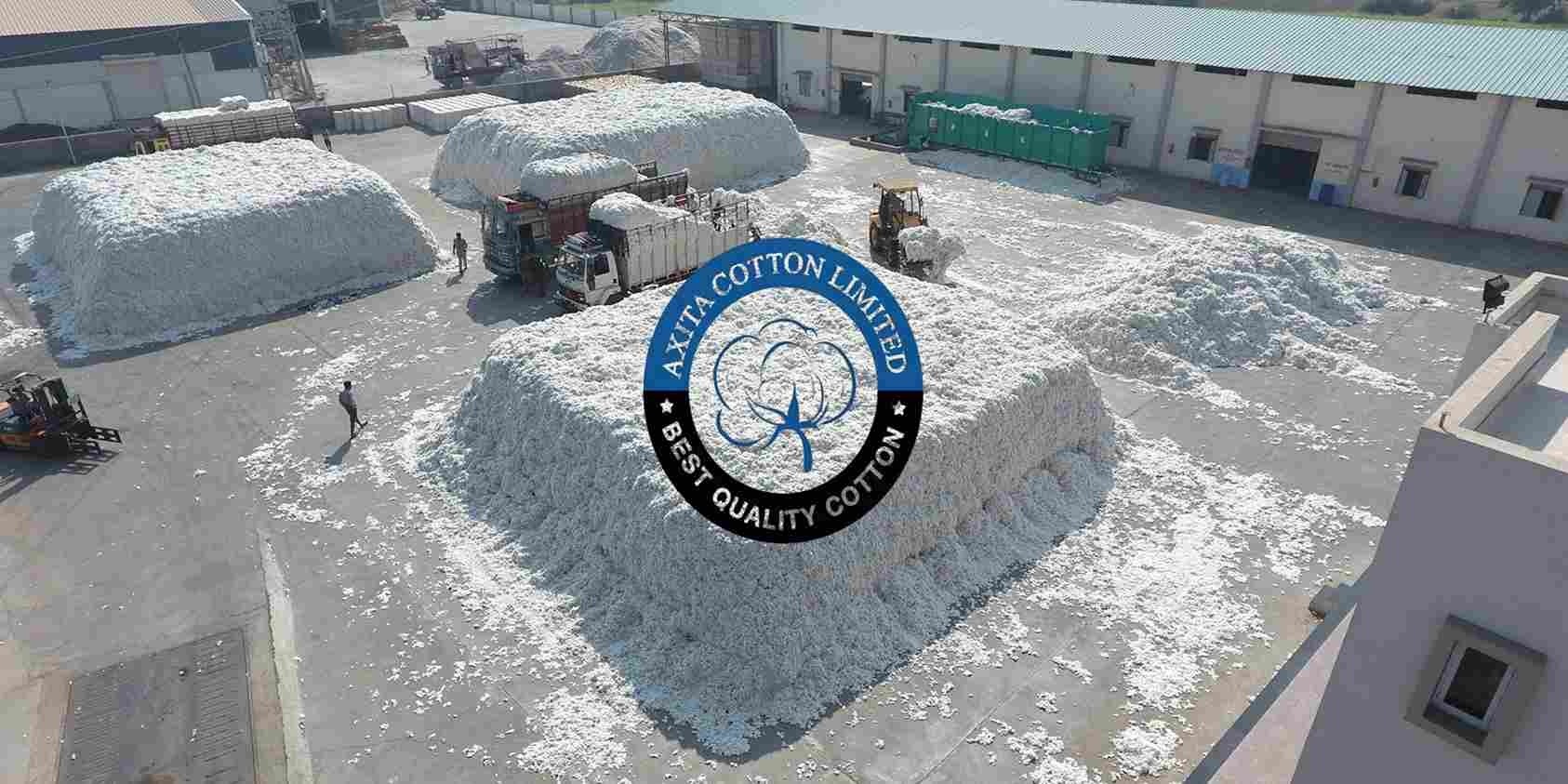
Imagine a giant mandi where raw cotton (kapas) arrives from farmers. Axita buys it, cleans it, removes seeds, presses the fibre into neat cotton bales, and sells it onward. That’s ginning and pressing. Simple, mechanical, brutally competitive.
Axita also trades cotton, yarn, and cotton seeds. Trading adds revenue but usually not margin. It’s like running a kirana store with ₹1,000 turnover and ₹20 profit. Great for sales charts, terrible for ROE screenshots.
The manufacturing facility is located in Kadi, Mehsana district, Gujarat — prime cotton territory. Logistics