1. At a Glance
There is a specific kind of financial safety that only comes when you are the “favorite child” of a global giant. Imagine a company that derives nearly 92% of its revenue from a single parent entity, yet manages to keep its balance sheet so clean it’s effectively debt-free. We are looking at a business where the latest quarterly sales have surged by 24.8%, and profit has outpaced that growth with a 26.6% jump.
The numbers are startling. In an industry known for thin margins and high capital intensity, this player has delivered a Return on Capital Employed (ROCE) of 29.7%. To put that in perspective, while the rest of the auto-component sector often struggles to cross the 15% mark, this entity is operating at nearly double that efficiency. But don’t let the shiny surface fool you.
The concentration risk here is a double-edged sword. When your primary customer is a behemoth undergoing its own massive demerger and restructuring, every ripple in their pond becomes a tidal wave in yours. We see a company that sold 7,265 buses in FY25, hitting an all-time high, yet it remains tethered to the cyclical whims of State Transport Undertakings (STUs) and government budgets.
The red flags are subtle but present. There has been a slight dip in promoter holding, and the dependence on a bill discounting facility—while settled by the parent—adds a layer of complexity to the short-term borrowing figures. If the parent decides to diversify its supply chain even by 10%, the impact on this company’s top line would be catastrophic.
Yet, the market is pricing it at a P/E of 17.4, significantly lower than the industry median of 28.2. Is this a hidden gem protected by the Tata shield, or a captive unit whose growth is capped by its master’s voice?
2. Introduction
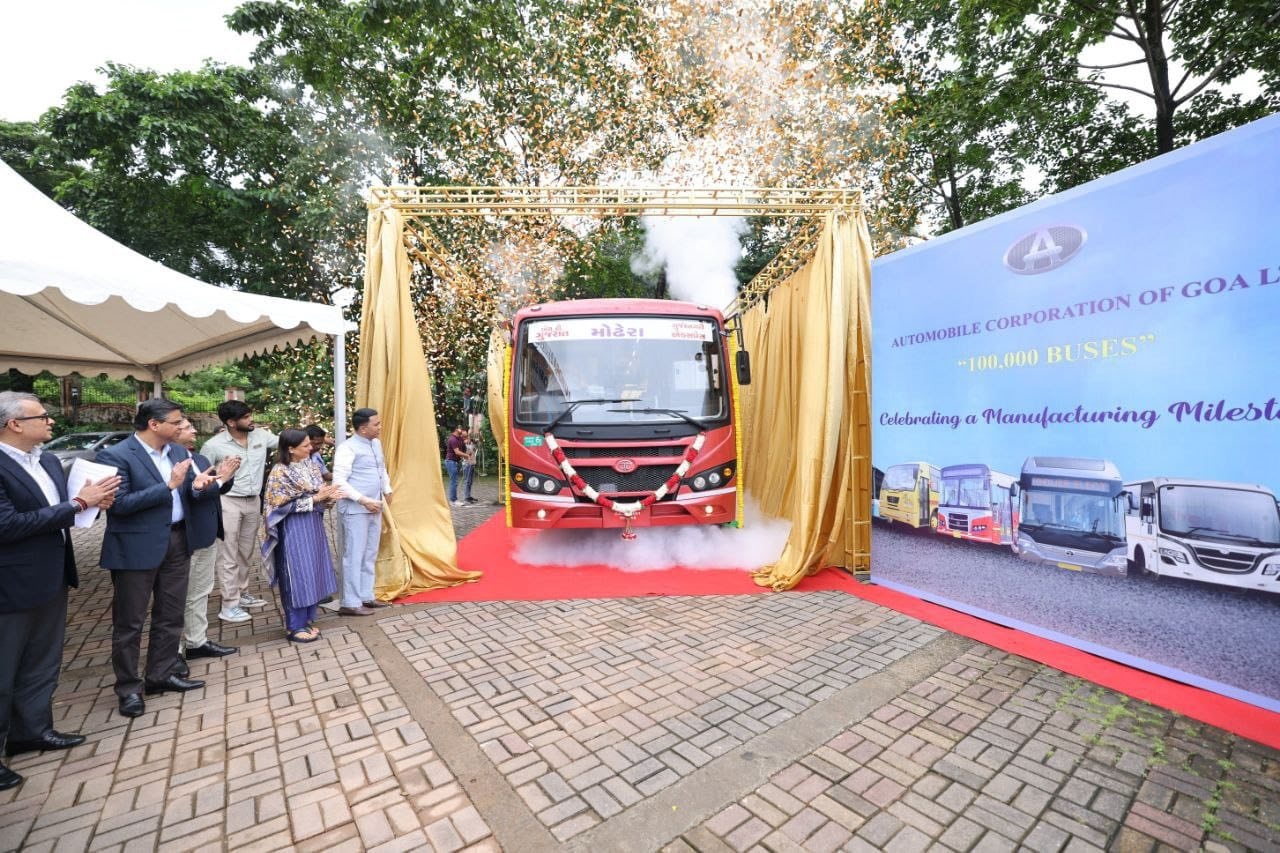
Automobile Corporation of Goa Ltd (ACGL) is not just another auto-component maker. It is a strategic outpost of the Tata ecosystem, nestled in the scenic locales of Goa. Founded in 1980 as a joint venture between the Economic Development Corporation (EDC) of Goa and Tata Motors Limited (TML), it has evolved into the backbone of Tata’s bus-building operations.
The company operates five manufacturing facilities across Goa, Maharashtra, and Karnataka. Its primary mission? To take the chassis provided by Tata Motors and turn them into the buses you see on Indian roads—from luxury AC coaches to rugged staff transport and specialized defense vehicles.
In the financial year ending March 2026, ACGL has shown that it is no longer just a “stable” performer. It has entered a high-growth phase. With net profits reaching ₹70 crore for the full year, a massive jump from the ₹47 crore seen in the previous year, the company is finally flexing its operational muscles.
The narrative here is simple: India is urbanizing, and the demand for public transport—especially Electric Vehicles (EVs) and CNG buses—is exploding. ACGL is positioned right at the mouth of this funnel. But as we peel back the layers of its latest quarterly performance, we need to ask: can a company that lives in the shadow of a giant ever truly stand on its own?
3. Business Model – WTF Do They Even Do?
If you’ve ever sat in a Tata bus, there’s a high probability ACGL built the shell you’re sitting in. Their business model is divided into two distinct buckets, though one clearly pays the bills while the other just keeps the machines humming.
The Bus Body Building Division (The Heavy Lifter)
This segment accounts for roughly 90% of their revenue. They don’t make the engines or the wheels; they build the “body.” They take a bare-bones chassis and perform the complex engineering required to turn it into a 12-meter AC coach, a school bus, or a low-floor city bus. In FY25, they manufactured 7,265 units, operating at about 65% utilization. This means they have a massive runway to increase output without spending a single paisa on new land or buildings.
The Pressing Division (The Side Hustle)
The remaining 10% of revenue comes from making pressed steel parts and sub-assemblies. These are the nuts, bolts, and frames used in other automobiles. It’s a low-margin business that largely exists to support the core bus-building operations and provide some basic diversification.
The Tata Trap?
The “secret sauce”—or perhaps the “golden cage”—is their relationship with Tata Motors. ACGL caters to about