1. At a Glance – Blink and You’ll Miss the Margin
If smallcap agrochemical companies were people at a wedding buffet, Aristo Bio-Tech & Lifescience Ltd would be the guy piling plates high, eating fast, but somehow not gaining muscle. Market cap sits around ₹82 crore, current price near ₹120, and the stock has politely declined to excite anyone over the last year (-9.8%). And yet, revenue refuses to behave — H1 FY26 sales clocked in at ₹256 crore, up nearly 20% YoY. That’s not growth; that’s sprinting in gumboots.
But before you clap, look at the operating margin — roughly 3%. Yes, three. Blink again. This is a company that sells agrochemicals across India, exports a bit, works with heavyweights like National Fertilizers, Syngenta India, UPL-linked entities… and still earns margins thinner than an election promise. ROE hovers around 11–12%, ROCE around 12%, and debt-to-equity is a very noticeable 0.84. Not scary, but definitely not yoga-flexible either.
Latest half-year EPS came in at ₹6.13, which annualises to about ₹12.26 under half-yearly logic. That makes the P/E land in the low-20s — not dirt cheap, not outrageously expensive, just… awkward. So the obvious question: is Aristo a hidden compounding machine choking temporarily, or a volume monster permanently allergic to margins? Let’s open the pesticide drum and sniff carefully. 😌
2. Introduction – Volume Ka Sultan, Margin Ka Fakir
Aristo Bio-Tech & Lifescience Ltd was incorporated back in 2005, long before agrochemicals became dinner-table discussion topics thanks to YouTube agronomy experts. The company manufactures, formulates, supplies, and packages pesticides — insecticides, herbicides, fungicides, plant growth regulators, and basically everything that helps crops survive both pests and Indian weather.
On paper, this is a serious operation. 257 products registered with CIB&RC. ISO-certified. A proper formulation and packaging facility in Savli, Vadodara. Clients include National Fertilizers, Sinochem India, Syngenta India, Albaugh USA, Jubilant Agri, and a whole who’s-who of the agrochemical world. This isn’t a backyard blender mixing neem oil in a pressure cooker.
And yet, every time Aristo grows its top line, the bottom line looks at it and says, “Bhai, thoda sambhal ke.” Profits exist, yes. But they behave like a government clerk on a Friday afternoon — present, but not enthusiastic.
So why does the market even care? Because volume has power. Because agrochemicals is not a dying sector. Because contract manufacturing is boring but sticky. And because sometimes, margin expansion comes late to the party — after capacity utilisation, scale, and client trust are locked in. Or… sometimes it never comes. Which side Aristo ends up on is the real thriller here.
What do you think — is margin destiny written in stone, or still negotiable? 🤔
3. Business Model – WTF Do They Even Do?
Let’s simplify Aristo’s business so even your chai-wala can understand it.
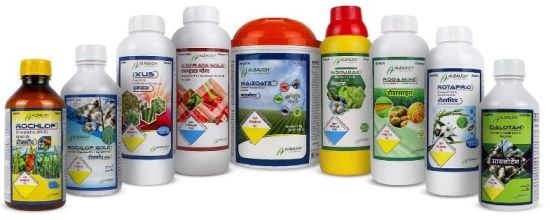
Aristo does formulation and packaging of agrochemicals. It’s not inventing blockbuster molecules in a Swiss lab. It’s taking registered technicals, formulating them into usable products, packing them nicely, and shipping them at scale. Think of it as the “mass kitchen” of agrochemicals — volume-driven, efficiency-dependent, and brutally competitive.
The company operates three main formulation verticals:
- Herbicides
- Insecticides
- Fungicides
All of this happens at its Savli, Vadodara facility, which has separate plants for each category. The real magic isn’t just own-brand sales (brands like Machete, Lasso, Fastmix, Ramban), but contract manufacturing, job work, and toll manufacturing for larger players.
This is where the revenue explodes. Big agro companies outsource formulation and packaging to players like Aristo because:
- It’s cheaper than expanding their own plants
- It’s faster
- It shifts some regulatory and operational headache
The downside? Pricing power is weak. You don’t tell Syngenta or National Fertilizers, “Sir margin kam hai, rate badha dete