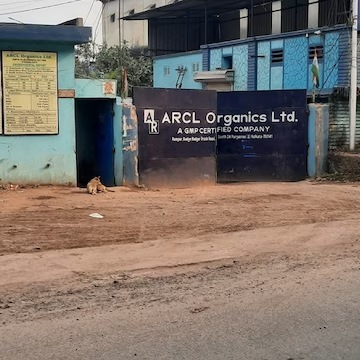
1. At a Glance – Smallcap Chemical Factory or Legal Department with a Side Business?
Market Cap: ₹175 Cr.
Current Price: ₹218.
3-Month Return: –40.4%.
Stock P/E: 24.1.
ROCE: 20.3%.
ROE: 17.2%.
Debt: ₹34.8 Cr.
Book Value: ₹111.
Price to Book: 1.97x.
And now the bombshell.
For Q3 FY26 (December 2025 quarter), ARCL Organics reported:
- Sales: ₹53.47 Cr (down 13.7% YoY)
- Net Profit: –₹8.81 Cr
- EPS: –₹11.01
- OPM: –0.60%
Yes. Negative operating margin. Negative EPS. And the stock is still quoting at 24x trailing earnings.
Ladies and gentlemen, welcome to the wild world of smallcap chemicals — where one quarter you’re expanding formaldehyde capacity and the next quarter you’re fighting High Court orders.
Curious how a company with 5-year sales CAGR of 29% ends up with a quarterly loss bigger than its annual PAT?
Good. Let’s open the lab door.
2. Introduction – When Chemicals Meet Courtrooms
ARCL Organics is a Kolkata-based chemical manufacturer incorporated in 1992. For three decades, they’ve been making phenolics, amino resins, melamine resins, and formaldehyde — basically the invisible glue holding your plywood, textiles, paper and industrial adhesives together.
Sounds boring?
That’s because chemical businesses are boring. Until they’re not.
FY24 looked like growth mode:
- Formaldehyde capacity enhanced.
- Technical collaboration with Willamette Valley Corporation (USA).
- MoU with Haldia Petrochemicals for 1 lakh MTPA phenol off-take from a 3 lakh MTPA project.
- Grand ambition: “Largest Phenolic Resin manufacturer in India, Top 10 globally.”
And then FY26 happened.
Q3 FY26 shows:
- Sales decline.
- Operating loss.
- Net loss of ₹8.81 Cr.
- Tax impact of 236%.
On top of that?
- High Court injunction.
- NGT plant halt orders.
- Pollution board fines.
- Bank account restraints.
- ₹5.29 Cr tax settlement.
- ₹4.23 Cr municipal dues.
- ₹7 Cr court deposit.
At this point, you’re not analysing a chemical company.
You’re analysing a courtroom case study.
So the question is simple:
Is this a temporary regulatory hiccup — or structural fragility?
Let’s decode the business first.
3. Business Model – WTF Do They Even Do?
ARCL Organics manufactures:
- Phenolics
- Amino Resins
- Melamine Resins
- Formaldehyde
These are primarily adhesive chemicals used in:
- Wood industry (plywood, laminates)
- Textile processing
- Paper industry
- Healthcare
In FY24, revenue mix:
- Sale of products: 98%
- Other operating income: 1%
- Other non-operating income: 1%
Product-wise sales split FY24:
- FMLD (Formaldehyde): 42%
- Amino Powder: 23%
- PF Powder: 18%
- Aqua SB: 12%
- Phenolics: 3%
Geography:
- Domestic: 70%
- Export: 30%
So the business is B2B, volume-driven, commodity-leaning with customization.
But here’s the catch.
They signed:
- Technical collaboration with a US specialty chemical company.
- Long-term phenol sourcing MoU from Haldia Petrochemicals.
- MOU for ₹500 Cr project.
- MOU for land, plant & machinery purchase worth ₹26 Cr.
Ambition level? High.
Balance sheet strength? Smallcap.
Regulatory tolerance? Zero.
In chemicals, margins are thin. Environmental compliance is brutal. And working capital eats cash like a Bollywood wedding buffet.
So here’s the question:
Is ARCL scaling into global phenolic leadership — or stretching itself too thin?
4. Financials Overview – The Quarter That Hurt
EPS:
- Q1 FY26 (Jun 2025): ₹4.99
- Q2 FY26 (Sep 2025): ₹9.02
- Q3 FY26 (Dec 2025): –₹11.01
Average EPS = (4.99 + 9.02 – 11.01) / 3 = 1.00 approx
Annualised EPS ≈ 1 × 4 =