1. At a Glance
If garbage could talk, it would probably say “Antony Waste, tumhare bina main kuch nahi hoon.” The ₹1,545 crore smallcap emperor of Indian trash has reported a Q2FY26 revenue of ₹258 crore (up 16.5% YoY) and a net profit of ₹13.6 crore (up 12.9%). The company trades at ₹544 per share, roughly 22x its trailing earnings, which—given its niche monopoly on waste—is not trashy at all. With ₹505 crore in debt, ₹990 crore in annual sales, and a 21% operating margin, Antony Waste looks like that disciplined kid in class who never tops but always ranks in the top five.
Despite being one of India’s most boringly consistent businesses (because garbage never goes out of style), the stock’s last 1-year return is a smelly –32.7%. Apparently, investors dumped the waste handler faster than they dump wrappers on Indian roads. Yet, the company continues to manage 90% of Mumbai’s municipal waste daily and has just grabbed ₹3,200 crore worth of Waste-to-Energy (WtE) projects in Andhra Pradesh.
The irony? It literally makes power out of waste, but its stock price is the one that needs energizing.
2. Introduction
Let’s face it—waste management is that sector everyone wants the government to handle but no one wants to talk about at dinner. Enter Antony Waste Handling Cell Ltd (AWHCL), the official cleaner of Indian chaos. This company has made a business out of our collective laziness and lack of segregation discipline.
With 20 years of track record and projects spanning 9 states, Antony Waste doesn’t just pick up trash—it processes, burns, and even electrifies it. While others complain about “corporate garbage,” Antony literally converts it into megawatts.
Its empire includes the 7,500 TPD Kanjurmarg plant, one of Asia’s largest single-location waste-processing facilities, managing 90% of Mumbai’s waste daily. On top of that, it operates 15 collection contracts, 5 sweeping projects, 3 waste-processing plants, and now—drumroll—two 15MW Waste-to-Energy projects in Andhra Pradesh.
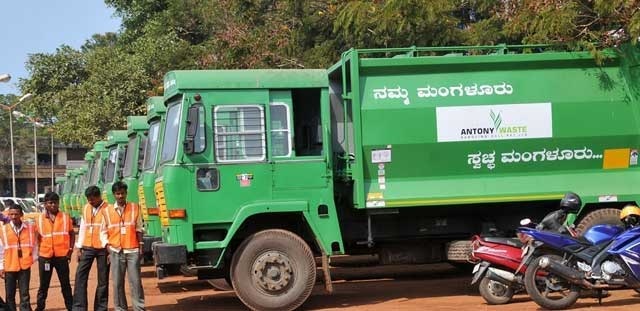
The company is the rare hybrid: part Swachh Bharat, part Reliance Energy, part logistical nightmare—but all business. With 2,295 vehicles (of which 93 are electric, because ESG brownie points matter), Antony Waste has built itself into India’s most organized garbage collector.
Question time: When was the last time you got excited reading about landfills and RDF sales? If the answer is never, buckle up.
3. Business Model – WTF Do They Even Do?
Antony Waste’s business is simple: India creates chaos, they clean it—for a fee. But beneath the simplicity lies a cash-generating machine that thrives on government contracts, steady annuity payments, and 20-year concessions.
They have three major segments:
- Municipal Solid Waste Collection & Transportation (C&T) – 62% of FY24 revenue. These are the iconic garbage trucks roaming cities under long-term municipal contracts. Boring? Yes. Profitable? Also yes.
- Waste Processing – 23% of FY24 revenue. Think composting, RDF (refuse-derived fuel), and waste-to-energy processing. This is where the company transforms banana peels into kilowatt-hours.
- Contracts & Others – 15% of FY24. Includes construction, mechanical sweeping, and other