1. At a Glance
Andhra Paper Ltd just wrote itself a not-so-happy chapter in Q2FY26 — and this one’s more tragedy than textbook. With quarterly sales of ₹362 crore and a loss of ₹20.26 crore, the company seems to be bleeding both pulp and patience. That’s a 149% profit drop YoY — yes, negative profitability has a way of multiplying. The market, unsurprisingly, hasn’t been thrilled — the stock hovers at ₹76.6 (6 Nov close), barely moving over three months (+0.88%), while 1-year returns are down a steep 23%.
At a market cap of ₹1,515 crore, Andhra Paper trades at a book value multiple of just 0.79x, a bargain if the business were a stable ream of premium copier paper — but it’s behaving more like tissue paper under monsoon rain. With an ROE of just 3.07%, ROCE of 4.5%, and debt of ₹263 crore, the company’s profitability looks thin enough to read through.
So, what happens when your margins shrink faster than paper in a rainstorm? Let’s unfold the sheet — and this one’s got creases, smudges, and maybe a little hope left in the watermark.
2. Introduction
Once upon a time, Andhra Paper was one of India’s proud manufacturers turning trees into textbooks and pulp into profit. But lately, the company’s story reads more like “Fifty Shades of Bleak.” The pulp may be bleached, but the earnings are in red.
Despite a strong distribution network across India and a rich history dating back decades, Andhra Paper has struggled to sustain growth. Sales growth for five years? Just 3.95%. Profit growth over the same period? A tragic -22.7%. The company can print money, but apparently not keep much of it.
And it’s not like paper demand is dead — India’s growing education and packaging industries still absorb tons of it. But cost inflation, worker strikes, and temporary shutdowns have crumpled the margins. Even Other Income (₹70.4 crore) seems to be doing the heavy lifting, while core operations barely keep the lights on.
Yet, investors stay curious — perhaps seduced by the 1.31% dividend yield and low debt levels. After all, the company is still backed by West Coast Paper Mills Ltd, which holds 72.45% — an industry veteran with a reputation for discipline. Maybe that’s the only reason this sheet hasn’t been shredded yet.
3. Business Model – WTF Do They Even Do?
So, what does Andhra Paper actually do, apart from bleeding ink in quarterly results?
It’s a good old-fashioned pulp and paper manufacturer, producing Writing & Printing Papers, Industrial & Packaging Papers, and Specialty Papers. Think of everything from your college notebook to your coffee cup — somewhere, Andhra Paper’s fiber is probably there.
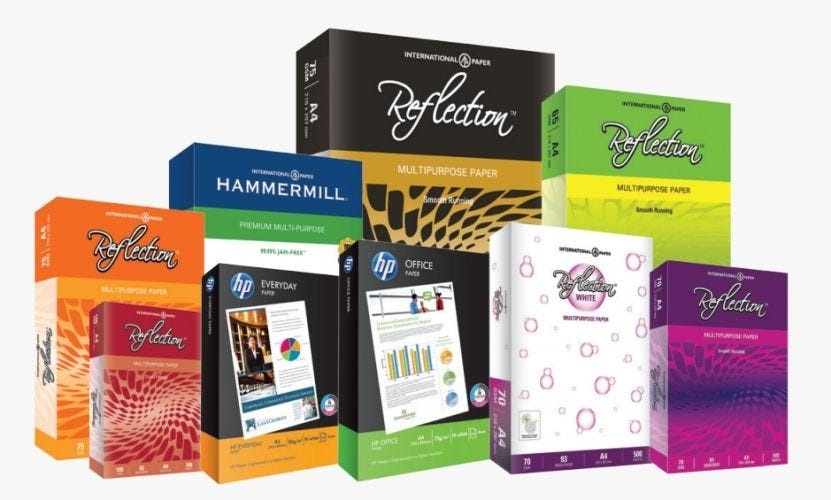
- Writing & Printing Papers: This includes SS Maplitho and Non-SS Maplitho — fancy names for the paper your textbooks are printed on — and the Reflection Copier brand, which fuels India’s printers with high-speed copy paper.
- Industrial & Packaging Papers: Used for cartons, wrappers, and that cardboard box your new smartphone came in. Also, Cupstock Paper — for your disposable chai cups.
- Specialty Papers: This is where Andhra gets fancy — Sapphire Range for wedding cards and envelopes, Thermal Paper for billing receipts, and Carbonless Paper for old-school duplicate forms.
With two plants — Rajahmundry (182,400 TPA paper, 200,000 TPA pulp) and Kadiyam (73,150 TPA paper) — the company can churn out 2.55 lakh tonnes annually. And