Anand Rathi Share & Stock Brokers Ltd Q3 FY26 – ₹248 Cr Quarterly Revenue, 78% Profit Jump, and a Balance Sheet That Lifts More Than It Should
1. At a Glance – Blink and You’ll Miss the Leverage
Anand Rathi Share & Stock Brokers Ltd is what happens when a traditional broking house puts on a slightly modern jacket, borrows aggressively, and discovers that operating leverage is a very addictive substance. As of mid-January 2026, the company commands a market capitalisation of roughly ₹3,969 crore, trades around ₹633 per share, and flaunts a trailing P/E of about 36.6×—which is not cheap, but also not delusional in a sector where growth, optics, and AUC bragging rights matter more than humility. The latest quarter (Q3 FY26) delivered revenue of ₹248 crore and PAT of ₹37.9 crore, translating into a year-on-year profit growth of nearly 78%. OPM is hovering north of 41%, ROE is a respectable ~23%, and ROCE is around 21%.
But the real headline is not margins—it’s the engine behind them. Assets Under Custody have ballooned to ₹81,368 crore by FY25, client count has crossed 8.86 lakh, and Tier-2 and Tier-3 India is doing most of the heavy lifting. This is not a sleepy broker living off BSE cash equity brokerage anymore; this is a distribution-plus-MTF machine with ambition, appetite, and a tolerance for debt that would make conservative investors clear their throat nervously. Curious already? Good. Let’s dig.
2. Introduction – From Ringing Phones to Ringing Cash Registers
Founded in 1991, Anand Rathi Share & Stock Brokers Ltd comes from the era when broking meant phones, paper contracts, and shouting across trading floors. Fast-forward three decades and the same firm is now listed (September 2025 IPO, ₹745 crore raised), digital-first in client acquisition, and deeply embedded in the broader Anand Rathi Group ecosystem spanning wealth management, lending, insurance broking, and asset management.
The company’s transformation is not unique—every Indian broker has tried to reinvent itself after discount brokers rewired customer expectations. What is interesting here is the route Anand Rathi has chosen: instead of racing to zero brokerage and praying for scale like a food-delivery app, it doubled down on full-service economics, margin trading facilities (MTF), and product distribution. The result? Higher revenue per client, higher operating margins, and a balance sheet that looks more like an NBFC than a classic broker.
Q3 FY26 is a good snapshot of this strategy at work. Revenues grew smartly, costs stayed under control, and profits jumped sharply. But behind the glossy numbers lies a simple truth: this business is increasingly sensitive to market volumes, interest rates, and risk management discipline. Which raises the obvious question—are these results sustainable, or just a bull-market sugar rush?
3. Business Model – WTF Do They Even Do?
If you had to explain Anand Rathi Share & Stock Brokers Ltd to a smart but lazy investor, here’s the one-liner: they help Indians trade, invest, borrow against shares, and buy financial products—while taking a cut at every step.
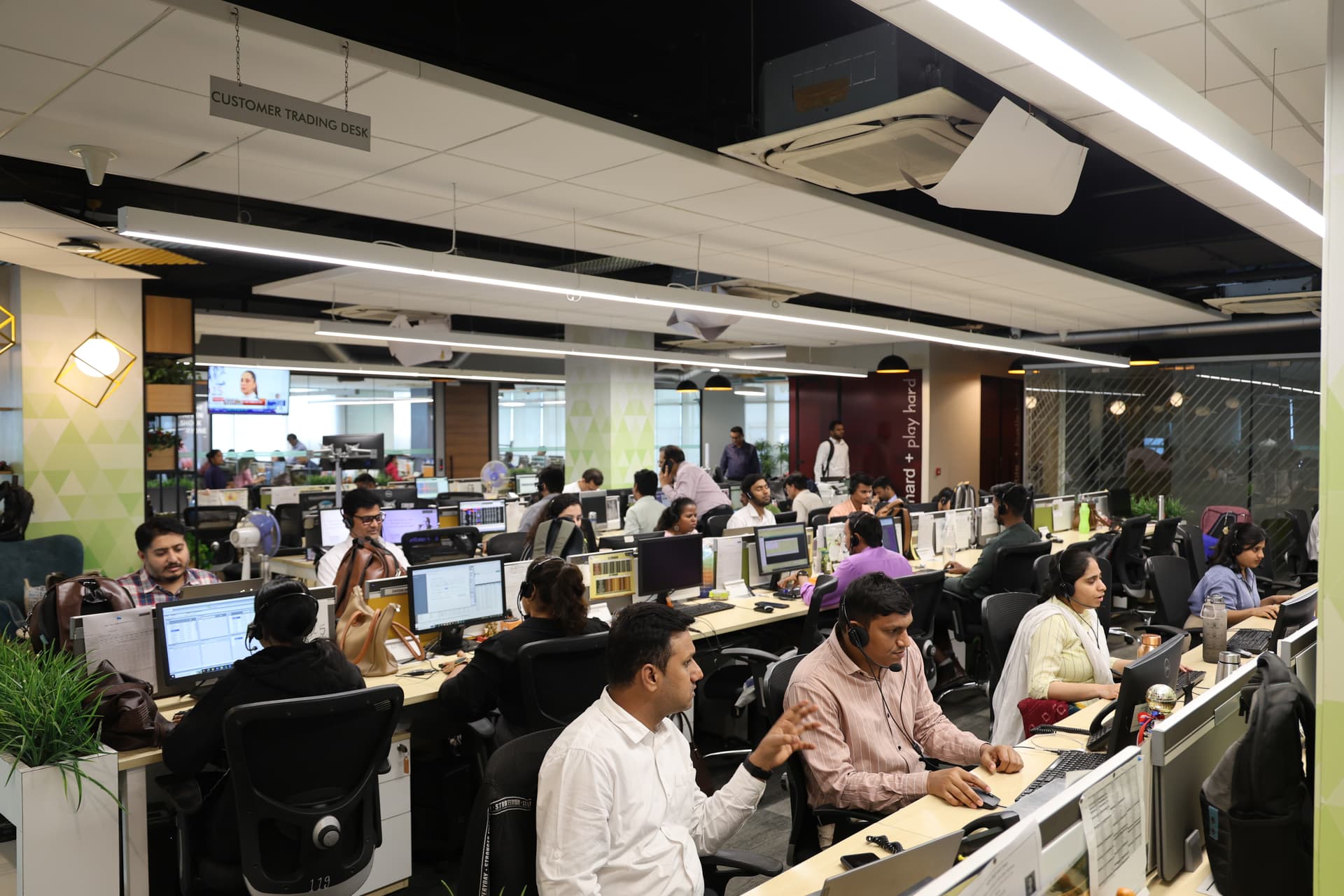
The core vertical is broking across equity, derivatives, commodities, and currency. This is delivered via 90 branches in 54 cities, 1,125 authorised partners across 290 cities, and a suite of digital platforms with names like Trade Mobi, Trade Xpress, AR Invest, and MF Client. Brokerage and related services still contribute about 60.3% of revenue, so despite all the buzz around diversification, trading remains king.
Then comes the real cash cow in a rising market—Margin Trading Facility. Roughly 13.5% of revenue comes from funding clients’ equity positions. This is essentially lending, dressed in broking clothes. When markets are calm and trending up, MTF income feels like free money. When volatility spikes, risk teams suddenly earn their salaries.
The third pillar is distribution of financial products—mutual funds, PMS, AIFs, bonds, and fixed deposits—contributing around 9% of revenue. The rest (~17%) comes from other income such as interest on fixed deposits and government securities. Put together, this model thrives on client stickiness, wallet-share expansion, and a steady pipeline of leverage-hungry traders. Sounds elegant—but also a little…