1. At a Glance
Ambuja Cements just proved that even dust can be profitable — as long as it’s cement dust. The Adani-owned grey giant delivered a Q2 FY26 revenue of ₹9,174 crore, up 21.5% YoY, and a PAT of ₹2,302 crore, up a jaw-dropping 234%. The stock trades at ₹577, giving it a market cap of ₹1.43 lakh crore, and a P/E of 24.8×, which is surprisingly modest for a company currently eating smaller cement firms for breakfast.
Operating margin stood at 18.8%, while ROCE 10.5% and ROE 8.7% show it’s more about scale than swagger. Debt? Just ₹1,271 crore, a rounding error for the Adani Group. Cement capacity now: 31 MTPA (stand-alone) and combined with ACC and Sanghi, over 106 MTPA, racing toward 155 MTPA by FY28.
In short — Ambuja’s no longer your grandpa’s Gujarat Cement Co. It’s now Adani’s weapon in India’s infrastructure war.
2. Introduction
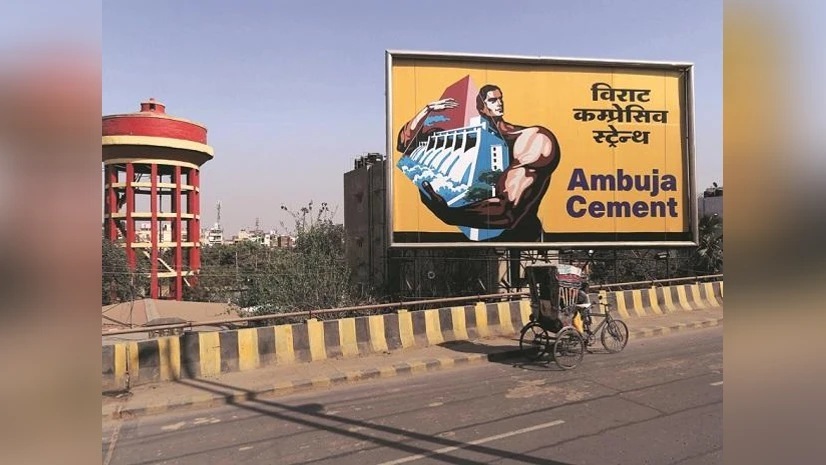
Remember when Ambuja Cements used to be that boring, steady Gujarat brand with quirky ads about “giant strength”? Fast forward to 2025 — it’s now an Adani powerhouse with corporate abs of steel and an appetite for M&A that makes Godzilla look patient.
Since the Adani Group takeover in 2022, Ambuja has transformed from a cautious cement maker to an aggressive empire builder. It swallowed ACC, then Sanghi Industries, and is now preparing to merge Penna Cement. The National Company Law Tribunal (NCLT) has basically turned into Ambuja’s cafeteria — one merger order after another.
Yet, under all that corporate drama, Ambuja’s financial discipline remains surprisingly intact. Margins have climbed back to 19%, PAT quadrupled, and capacity utilization hovers above 85%. Adani’s deep pockets and logistics backbone have turned cement into a logistics game — and Ambuja’s trucks are rolling.
Question: is this the rise of India’s first cement super-conglomerate or just another over-leveraged construction fantasy?
3. Business Model – WTF Do They Even Do?
Ambuja Cements does exactly what its name promises — makes cement, sells cement, and occasionally merges with anyone else making cement.
Product lineup includes:
- Ordinary Portland Cement (OPC) – for the old-school builder who trusts cement more than gravity.
- Portland Pozzolana Cement (PPC) – because adding fly ash is eco-friendly and cost-cutting disguised as sustainability.
- Water-repellent cement – to keep your walls from crying during monsoon.
- Plus, aggregates, ready-mix concrete, and blocks — because cement is nothing without accessories.
Revenue Split:
- Retail (B2C): 80%, the local hardware shop vibe.
- Institutional (B2B): 20%, the highway, metro, and real-estate builders.
Regional Split (FY21, still relevant):
North 35%, East 21%, West-South 24%, North-West 20%. Translation: there’s probably no Indian city without an Ambuja bag somewhere.
Capacity:
31 MTPA across 6 integrated plants and 8 grinding units, with captive power generation of 2,589 Mn units. Capacity utilization at 86.4% — your gym coach wishes