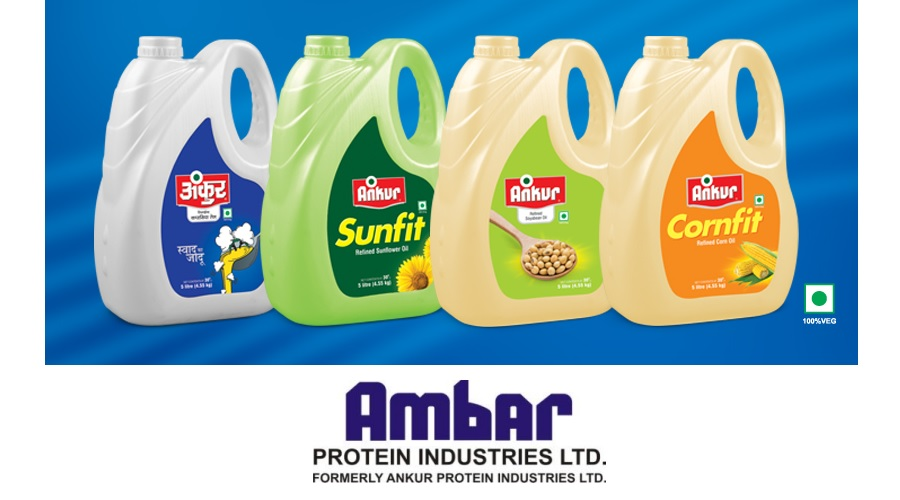
Ambar Protein is that small Gujarati edible oil player which sells “Ankur” brand oils, but unlike Marico or Patanjali, it doesn’t bombard you with TV ads of happy families frying pakoras in slow-motion. With sales of ₹446 Cr and profits of just ₹9 Cr, this is literally a low-margin ghee-free story. The company runs a refinery in Ahmedabad and mostly refines cottonseed, soybean, sunflower, and corn oil. Think of it as the shy cousin at the FMCG wedding — present in the group photo, but nobody remembers his name after.
2. Introduction
Incorporated in 1992, Ambar Protein has been pressing, refining, and selling oils for three decades, primarily under its “Ankur” brand. Gujarat households might be familiar with the 15-liter tins of refined cottonseed oil, but the company is still a niche player in the ₹3+ lakh crore edible oil industry.
Unlike flashy FMCG majors who diversify into hair oils, biscuits, or “ayurvedic immunity boosters,” Ambar has stuck to edible oils and some side products like oil cakes and “D” oil cakes (read: cattle feed with marketing).
But here’s the thing: edible oil in India is a commodity circus. Prices dance with monsoons, import duties, global palm oil tantrums, and even random Indonesia-Malaysia policy mood swings. For a small refinery like Ambar, this means margins are as thin as papad.
Yet, they’ve pulled off profit growth of 50% CAGR in 5 years. That’s like your neighbourhood farsan shop suddenly running a 5-star chain — improbable, but apparently true.
So, question to readers: would you ever trust a “commodity-only” company with 3% OPM for the long haul, or is this a classic “low-margin, high-volume” treadmill trap?
3. Business Model (WTF Do They Even Do?)
The model is straightforward — buy oilseeds, refine them, package them into consumer-friendly tins and pouches, and sell them under “Ankur.” Apart from edible oil, they also produce non-edible oil and oil cakes used as cattle feed.
Revenue is majorly from sale of refined cottonseed oil (~21,240 MT refined in FY22). They also purchase groundnut, sunflower, maize, mustard, and soybean oil for resale. In short, they’re a middleman with a refinery license.
They’ve got a 110-ton/day refinery capacity at Ahmedabad. By industry standards, that’s modest. Adani Wilmar processes thousands of tons daily; Marico laughs from the FMCG balcony; Patanjali screams “Bharat ka tel” on TV.
Ambar instead quietly sells oil pouches in Gujarat kirana shops. The moat? Not pricing power, but regional distribution stickiness. Customers trust “Ankur” like they trust their local dairy brand. But scaling beyond Gujarat? Tougher than frying jalebi in cold oil.
4. Financials Overview
Latest Quarterly vs YoY & QoQ
Metric
Latest Qtr (Jun ’25)
YoY Qtr (Jun ’24)
Prev Qtr (Mar ’25)
YoY %
QoQ %
Revenue (₹ Cr)
117.3
93.0
127.8
26.0%
-8.2%
EBITDA (₹ Cr)
2.14
2.94
3.79
-27.2%
-43.6%
PAT (₹ Cr)
0.75
1.72
2.48
-56.4%
-69.8%
EPS (₹)
1.3
2.99
4.31
-56.5%
-69.8%
Annualised EPS = ₹1.3 × 4 = ₹5.2 → P/E ≈ 47 (not meaningful since earnings fluctuate like oil prices).
Commentary: Revenue is growing, but profit swings like a frying pan splashing oil. One quarter looks edible, next quarter is burnt.
5. Valuation (Fair Value RANGE only)
P/E Method: TTM EPS = ₹15.2, Industry P/E ~26.5 → FV range ₹300–₹400.
EV/EBITDA Method: EV = ₹165 Cr; TTM EBITDA ~₹15 Cr → EV/EBITDA = 11. Using industry 12–15x → FV range ₹180–₹225.
DCF Method: Assuming sales grow at 7% CAGR, OPM ~3%, discount rate 12% → FV range ₹200–₹250.
Final FV Range: ₹200 – ₹300 (Educational only, not advice. Read again SEBI uncle: NOT ADVICE.)
6. What’s Cooking – News, Triggers, Drama
Q1 FY26 results showed 26% sales growth but 56% fall in profit. Classic case of