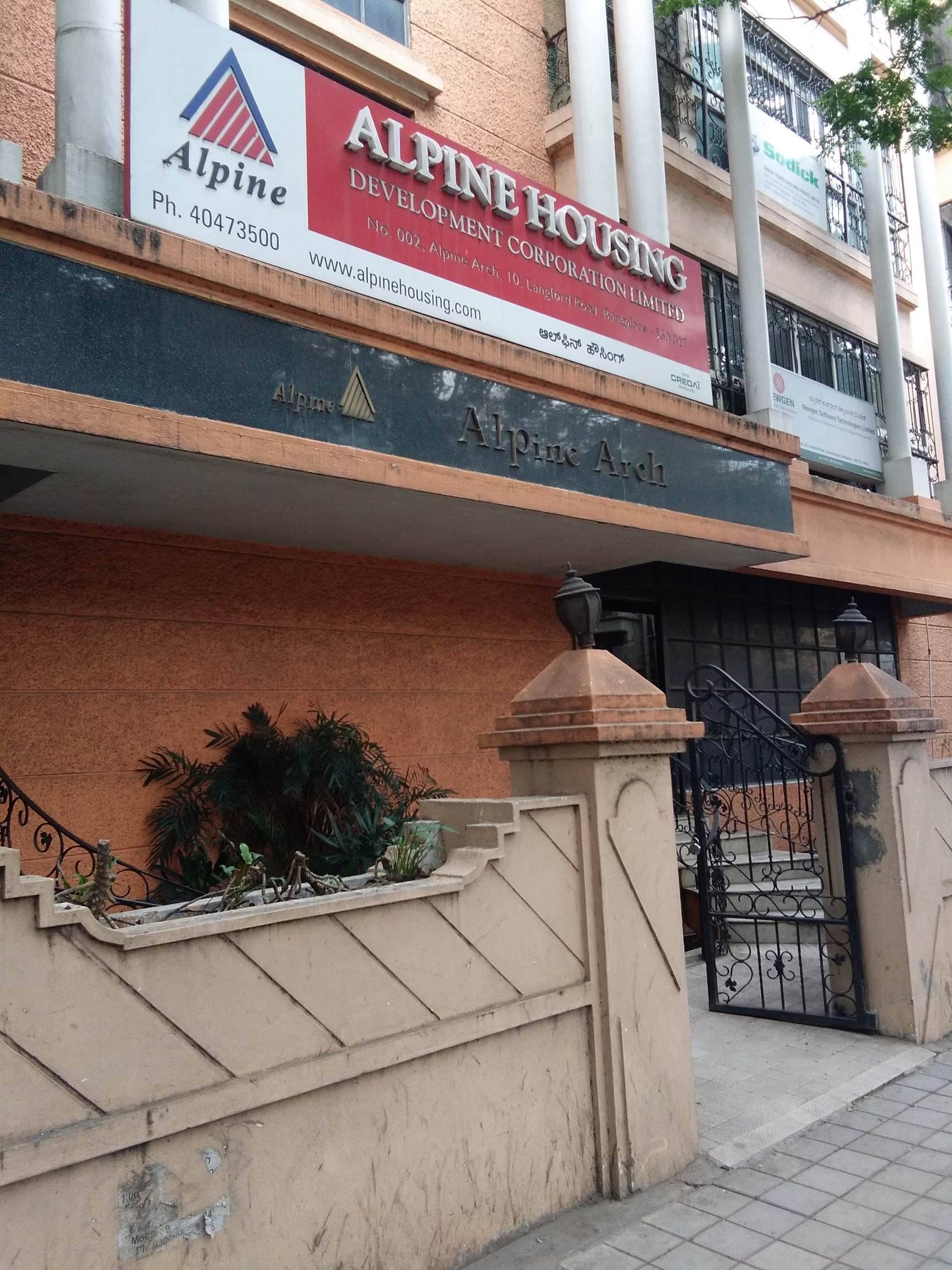
Alpine Housing FY26: A Realtor That Makes Railway Sleepers Grows Sales 37% While Other Income Vanishes
Spotted a factual error — a wrong number, date, or fact? Tell us and we will check the source.
General information and entertainment, not investment advice. The author is not a SEBI-registered adviser or research analyst. No recommendation, no promised returns. Markets carry risk including loss of capital. Figures may not be current. Consult a registered adviser before acting.
1. At a Glance
Alpine Housing closed FY26 with sales of ₹75.78 Cr, up from ₹55.38 Cr — a 37% jump that stands out against a five-year sales CAGR of 12%. Net profit reached ₹6.01 Cr, EPS ₹3.47. The market caps it at ₹163 Cr and pays 27x earnings.
But two numbers sit uneasily next to the headline. Other Income, which contributed ₹3.73 Cr in FY25 and ₹2.66 Cr the year before, turned to negative ₹0.05 Cr in FY26. So the entire profit growth had to come from the actual business — and it did: Operating Profit nearly doubled from ₹5.60 Cr to ₹10.74 Cr, with margins climbing to 14.17%.
Two more facts frame the story. Borrowings sit at ₹14.57 Cr against cash of ₹22.45 Cr — a net cash position. And receivables run at 205 debtor days, meaning payment collection takes most of a year.
This is a company that builds apartments in Bangalore and casts concrete railway sleepers in Gulbarga under one BSE ticker. The FY26 numbers finally leaned on operations rather than one-off gains. Whether that holds is the tension the rest of this entry lays out.
Does a doubling of operating profit matter more, or the fact that Other Income going to zero forced the business to carry the whole load?
2. Introduction
Incorporated in 1992, Alpine Housing Development Corporation Ltd runs an unusual two-body operation. One half develops residential and commercial real estate in Bangalore — sixteen named projects, from Alpine Vistula to Alpine Eco. The other half manufactures concrete railway sleepers and grey iron castings at a unit in Wadi, Gulbarga, supplying Central Railways in Mumbai.
The company reported its audited FY26 results at a board meeting on 27 May 2026, where profit was posted at ₹601.17 lakh and the statutory auditors issued an unmodified opinion. The board meeting ran from 3:30 p.m. to 8:45 p.m. — five hours to sign off on a ₹163 Cr company, which tells you the paperwork was thorough.
The business carries an order book of ₹75 Cr+ in concrete sleepers to be executed over two years, plus joint development agreements covering 6.5 acres at Hormavu and 15 acres on a revenue-sharing basis. Promoters — the Syed family — hold 73.86%, a figure that hasn’t moved in twelve reported quarters.
The equity base was expanded years ago through a bonus issue, taking shares to 1.73 crore. That count matters later when EPS and profit growth are compared.
3. Business Model: WTF Do They Even Do?
Picture a company where the sales team pitches three-bedroom flats in the morning and negotiates railway sleeper contracts in the afternoon. That is Alpine Housing.
Segment A — the Construction Unit — booked ₹53.06 Cr of FY26 segment revenue. Segment B — the Manufacturing Division making concrete sleepers and iron castings — booked ₹22.71 Cr. So real estate is roughly 70% of the top line, manufacturing 30%.
Here’s the twist the segment table reveals: the smaller division punches harder. Manufacturing delivered segment results (profit before interest and tax) of ₹5.36 Cr, while the much larger Construction Unit delivered ₹3.88 Cr. The concrete sleeper business — unglamorous, industrial, supplying Central Railways — out-earned the apartment business in absolute rupees on a third of the revenue.
The FY23 revenue mix put flats and other sales at roughly 86%, finished goods at 12%, lease rentals at 2%. So the company files under “Realty,” gets compared to DLF and Lodha, and quietly runs a foundry that carries the profit.
The real-estate side depends on long project cycles, which is why inventory sat at ₹52.98 Cr at year-end. Building flats means holding land, work-in-progress, and finished units for extended periods before revenue lands. The sleeper business, by contrast, ships against a defined railway order book. One half is patient capital; the other half is a factory with a purchase order.
4. Financials Overview
Figures are consolidated, in ₹ crore.
Metric
FY26
YoY (FY25)
Prev (FY24)
Revenue
75.78
55.38
54.88
Operating Profit
10.74
5.60
4.47
PAT
6.01
5.06
3.43
EPS (₹)
3.47
2.92
1.98
Revenue rose 37% and operating profit rose 92%, so margins expanded rather than just scaling flat. The audited filing puts full-year operating margin at 10.70% on its own definition; the data sheet’s OPM reads 14.17%. Both describe the same direction: a business earning more per rupee of sales than it did