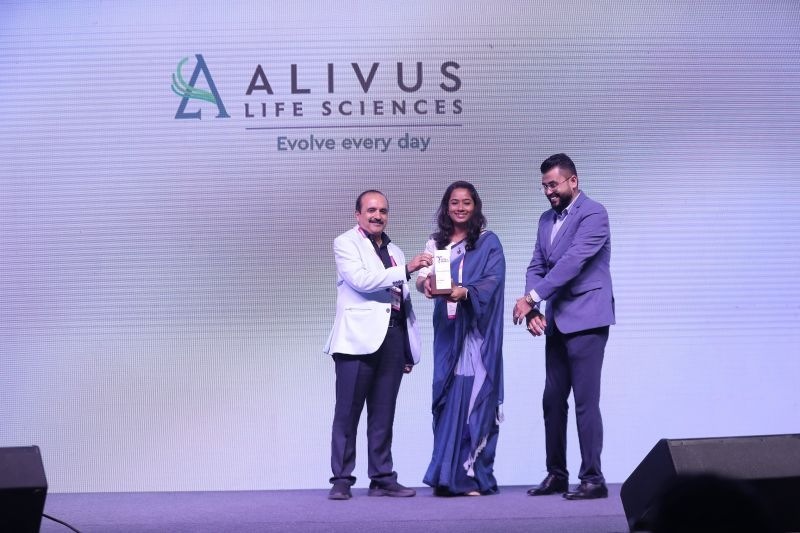
The artist formerly known as Glenmark Life Sciences has officially completed its Bollywood-style identity change and now performs under the name Alivus Life Sciences Ltd, post-Nirma’s blockbuster 75% acquisition. But don’t let the fresh name fool you — this ₹11,211 crore market cap API powerhouse still runs a chemistry lab that mints profits.
For Q2FY26, Alivus reported revenue of ₹5,879.8 million (₹588 crore), up 16% YoY, while PAT jumped 36.4% to ₹1,300 million (₹130 crore). That’s not a typo — their EBITDA margin hit a sweet 33%, a whole 480 bps higher YoY, proving once again that Nirma knows how to turn base chemicals into gold (and dividends).
At ₹915 per share, Alivus trades at a P/E of 21.1x, ROE of 18.7%, ROCE of 24.9%, and a debt-equity ratio of just 0.02. That’s cleaner than most pharma kitchens. But don’t ignore the -18% stock return in the last 6 months — clearly, Mr. Market is still processing the rebrand hangover.
So, what’s cooking in this lab full of APIs, audits, and acronyms? Let’s dissect Alivus the EduInvesting way — with sarcasm, spreadsheets, and a side of sodium hydroxide.
2. Introduction
Imagine your ex changing their name, haircut, and lifestyle overnight. That’s exactly what happened when Glenmark Life Sciences woke up one March morning and found itself renamed Alivus Life Sciences, now owned by detergent giant Nirma Ltd. Yes, the same Nirma whose jingle once haunted your childhood TV time is now making APIs instead of washing powder.
This ₹11,000+ crore company manufactures high-value, non-commoditized APIs — the kind of ingredients that make your chronic meds effective and your doctor richer. Alivus is no wannabe — it’s one of India’s leading API exporters, with 151 molecules and 520+ DMFs and CEPs filed across the US, Europe, Japan, and emerging markets.
In a world where Indian pharma firms are either battling USFDA bans or existential crises, Alivus is the clean lab rat — zero warning letters since 2015, zero pledged shares, and almost zero debt. It’s like the nerd in a class of rebels.
But despite delivering consistent profits (₹530 crore PAT in FY25, up 25% YoY), the market’s love for Alivus has been more lukewarm than a reboiler in winter. Maybe because the sales growth over five years — a mere 9.2% — is the equivalent of a snail doing yoga.
Will Nirma’s soap-scented synergy finally lather up the top line? Or will Alivus remain the underappreciated genius of APIs? Let’s find out.
3. Business Model – WTF Do They Even Do?
Let’s simplify. Alivus makes the raw chemical ingredients that go into finished drugs — the APIs (Active Pharmaceutical Ingredients). Without APIs, your painkiller is just a placebo wrapped in marketing.
Alivus operates in two main segments:
a) API Business (95% of Q3FY25 revenue): The main event. They make APIs for chronic diseases — the kind that don’t go away. Think cardiovascular drugs like Olmesartan and Telmisartan, CNS molecules like Zonisamide, diabetes drugs like Sitagliptin, and oncology compounds. Basically, if your body is old enough to complain, Alivus has an API for it.
They sell across 115+ countries, covering regulated markets (82%) like the US and EU, and emerging markets (18%) where regulations are more like suggestions.
b) CDMO Business (5% of revenue): This is the nerdy side hustle — Contract Development & Manufacturing Operations. They partner with innovators and specialty pharma firms, offering process chemistry, manufacturing, and analytical support. Translation: they help other pharma companies look smart.
Their product mix is diversified by therapy:
CVS: 44%
CNS: 14%
Diabetes: 5%
Pain Management: 4%
Others: 33%
With five manufacturing facilities across Gujarat and Maharashtra (and a sixth under construction in Solapur), Alivus runs an annual capacity of 1,423.8 KL, which will nearly double to 2,650 KL by FY27E.
So, they’re not just manufacturing APIs — they’re scaling up like your caffeine addiction.
That’s in line with the stated 21.1x, confirming our math department still works.
Commentary: Alivus’ profit margins look like they’re on steroids — 33% EBITDA, 22% PAT margin. The quarter’s YoY PAT jump of 36% proves that chemistry isn’t just about reactions; it’s about compounding.
5. Valuation Discussion – Fair Value Range Only
Method 1: P/E Approach
EPS (TTM): ₹43.3
Industry P/E: 32.8
Current P/E: 21.1
So if Alivus traded at the industry average: Fair Price = ₹43.3 × 32.8 = ₹1,420 If it stays where it is: ₹915
➡️ P/E-based fair value range: ₹900 – ₹1,420
Method 2: EV/EBITDA Approach
EV/EBITDA = 14.3
Industry median = ~20x for high-quality API players
EBITDA (FY25): ₹7,400 million
EV = ₹11,253 crore
If Alivus trades at 16–20x EBITDA, EV range = ₹11,840–₹14,800 crore Fair equity value = ₹960–₹1,200 per share
➡️ EV/EBITDA-based range: ₹950 – ₹1,200
Method 3: DCF (Simplified) Assume 8–10% growth, 12% cost of equity, 2% terminal growth → intrinsic value ~₹1,050–₹1,150
✅ Fair Value Range (Educational Only): ₹950 – ₹1,300 per share This fair value range is for educational purposes only and is not investment advice.
6. What’s Cooking – News, Triggers, Drama
Oh boy, Alivus had quite the dramatic fiscal year: