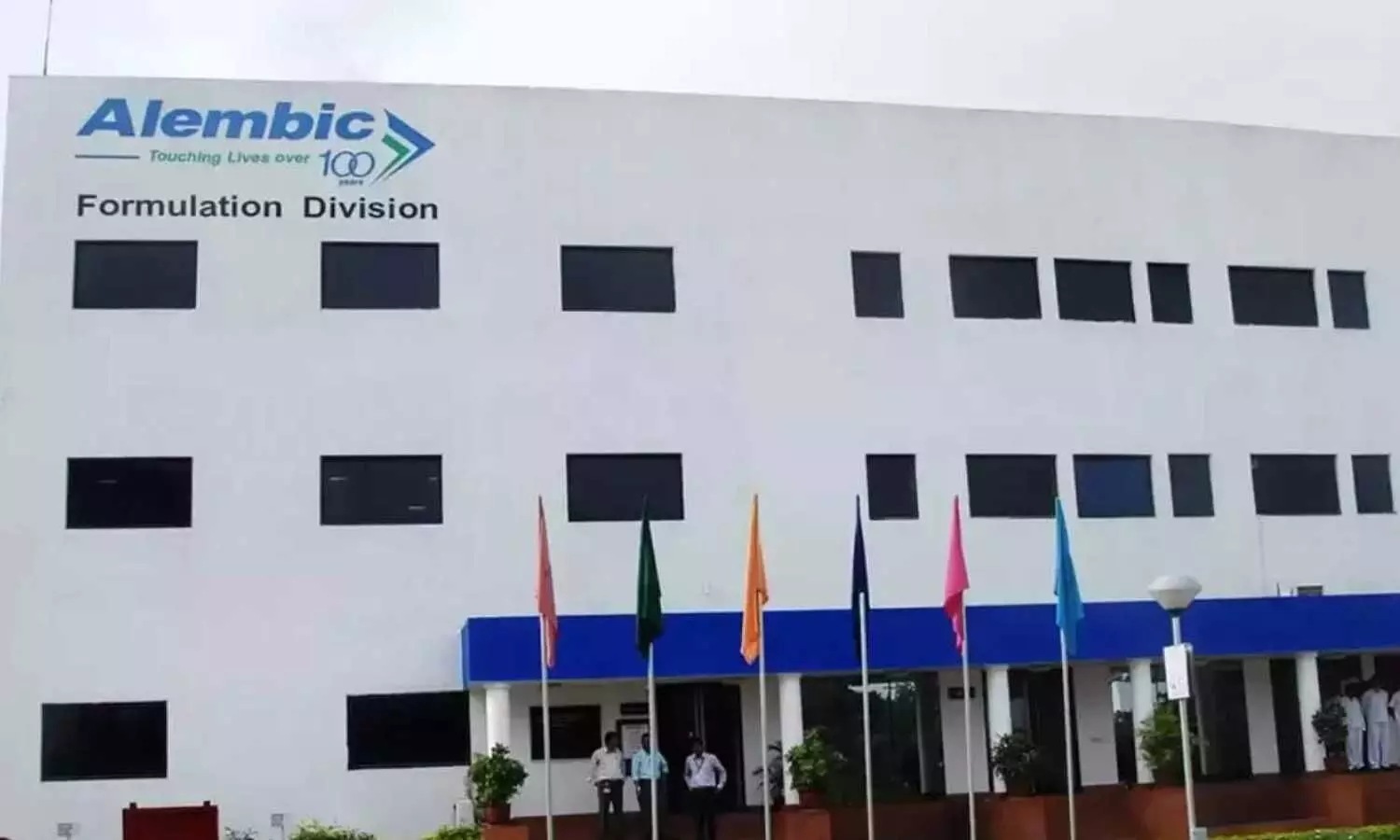
Alembic Pharma:
₹1,876 Cr Revenue. 11% Growth.
Pivya Lands. India Still Limping?
Biggest Q3 revenue in company history. US business resilient. But domestic formulations still acting like a confused teenager at a party. Meanwhile, they launched their first US branded drug and nobody’s talking about how risky that is.
The Pharmaceutical Glow-Up That’s Still Awkward in the Mirror
- 52-Week High / Low₹1,108 / ₹671
- Q3 FY26 Revenue₹1,876 Cr
- Q3 FY26 PAT₹167 Cr
- Q3 FY26 EPS₹8.50
- Annualised EPS (Q3×4)₹34.0
- Book Value (FY25)₹271
- Price to Book2.55x
- Dividend Yield1.57%
- Debt / Equity0.28x
- Return 1-Yr-12.4%
Alembic: The Overachiever Who Came Home with a B+ on the Report Card
Alembic Pharmaceuticals is one of India’s top 20 pharma companies — and if you don’t know what that means, it means they’re in a category with 19 other companies pretending to be special. Since 2010, it’s been manufacturing formulations and active pharmaceutical ingredients (APIs) like its life depends on it. Which it does. In pharma, you either ship pills or you’re irrelevant.
The company has three R&D centers, nine manufacturing facilities spread across Gujarat and Sikkim, and a portfolio of 204 domestic brands (yes, really, 204). They also have 163 commercialized products in the USA, which is where the actual money happens. Three years ago, the stock returned 13% cumulatively. Five years ago, it’s down 5.56%. That’s the kind of performance that makes even your friendly neighborhood mutual fund manager cry into their spreadsheets.
Q3 FY26 delivered the highest revenue in company history — ₹1,876 crore. Volume-led growth. International markets finally showing up to the party. And then management casually drops that their domestic business is still underperforming the market, and they just entered the US branded drug space, which is basically like launching a scooter against a Ferrari on the highway.
This isn’t a glamorous pharmaceutical powerhouse story. This is a company learning to walk while simultaneously trying to climb Everest.
How to Make Drugs So Generic That Even Generics Look Branded
Alembic operates in three big buckets. First: India Branded Formulations (35% of FY25 revenue). Think branded pills that cost ₹50 when the unbranded version is ₹2. Their market share is 1.4%, which is solid but not “we own this market” level. They sell cardiac drugs, gynecology stuff, anti-infectives, and other therapies that doctors prescribe and patients grudgingly swallow. Growth in India? A miserable 6% in FY25. Management admits the field force needs more ammo. Translation: they’re losing to competitors who are spending more on doctors.
Second: US Generics (29% of revenue). This is where the chaos happens. The US FDA approved 220 of their ANDA applications (out of 266 filed). They launched 2 products in Q3 alone, and management expects 4-5 launches in Q4. But the US market is brutal. Pricing pressure is relentless. A pill that cost $100 five years ago now costs $3. Alembic is still making money because they have scale and cost discipline, but it’s like playing a video game on hard mode.
Third: APIs and other international business (36% of revenue). They’ve set up nine manufacturing facilities to make Active Pharmaceutical Ingredients, which other pharma companies buy from them. Also, rest of world generics (EU, Australia, Canada, Brazil) are growing at 36% YoY — which is actually spectacular and nobody’s talking about it. And then there’s the new Pivya launch in the US (February 2026), which is their first branded drug. It’s an antibiotic for UTIs. Novel? Not really. But it’s their attempt to break into branded territory where margins are theoretically higher. Key word: theoretically.
Q3 FY26: The Numbers That Tell a Complicated Story
Result type: Quarterly Results | Q3 FY26 EPS: ₹8.50 | Annualised EPS (Q3×4): ₹34.0 | FY25 Full-Year EPS: ₹31.99
Source table
| Metric (₹ Cr) | Q3 FY26 Dec 2025 |
Q3 FY25 Dec 2024 |
Q2 FY26 Sep 2025 |
YoY % | QoQ % |
|---|---|---|---|---|---|
| Revenue | 1,876 | 1,693 | 1,910 | +10.8% | -1.8% |
| Operating Profit | 292 | 260 | 316 | +12.3% | -7.6% |
| OPM % | 16% | 15% | 17% | +100 bps | -100 bps |
| PAT | 167 | 138 | 184 | +21.0% | -9.2% |
| EPS (₹) | 8.50 | 7.04 | 9.40 | +20.9% | -9.6% |
Is ₹701 Actually Worth What You’re Paying?
Method 1: P/E Based
FY25 full-year EPS = ₹31.99. Industry median P/E for pharma = 27.9x (Alembic at 20.7x). But Alembic’s ROCE is 13%, much lower than peers earning 15-20% ROCE. Justified P/E: 18x–24x (accounting for lower capital efficiency).
Range: ₹575 – ₹768
Method 2: EV/EBITDA Based
9M FY26 EBITDA annualized ~₹1,230 Cr (assuming Q4 similar). Current EV = ₹14,633 Cr (MCap ₹13,778 + Net Debt ₹855). EV/EBITDA = 11.9x. Pharma peers trade 10x–14x. Assuming mid-range 11x–13x.
EV range (11x–13x): ₹13,530 Cr – ₹15,990 Cr → Per share:
Range: ₹616 – ₹728
Method 3: DCF Based
Standalone operating CF (FY25): ₹88 crore. But 9M FY26 shows improvement trajectory. Assume normalized FCF: ₹400–450 Cr. Growth: 10% for 5 years (conservative for their pipeline). Terminal growth: 3%. WACC: 9% (low-risk pharma).
→ Terminal Value (3% growth / 6% cap rate): ~₹9,000 Cr
→ Total EV: ~₹10,900 Cr (add net debt ₹855 Cr)
Range: ₹550 – ₹710
The Plot Twists Nobody Saw Coming (Okay, Maybe One)
🔴 The Big One: Pivya, The US Branded Drug That Haunts Margins
In February 2026, Alembic launched Pivya (pivmecillinam) — an oral antibiotic for uncomplicated UTIs in women. Market size: ~$200 million in the US. But here’s where it gets fun: management admitted the launch will “have an impact on near-term profitability” because they’re paying higher royalties and hiring medical reps. They expect prescription scaling over 12-18 months. In pharma years, that’s basically “we hope this works eventually.” The US team is “working on reimbursement,” which is corporate-speak for “fingers crossed that insurance companies cooperate.” Management couldn’t quantify the margin drag, which means they have no idea how badly this could hurt.
✅ International Markets on Fire
- • ROW (Rest of World) grew 36% in Q3 FY26
- • EU, Australia, Canada, Brazil all performing
- • 40 products commercialised in Chile in 2 years
- • First US prescription sale of Pivya in Feb 2026
- • 7 ANDA approvals in Q3, 2 launches
⚠️ India Branded Underperformance
- • Q3 growth: only 6% (vs market ~10%)
- • Management expects return to “market-like growth” in Q1 FY27 (!)
- • Shaunak Amin admitted company was “too conservative on doctor spend”
- • Field force not expanding further currently
- • Base normalisation post-COVID dragging numbers
✅ FDA Approvals & Product Pipeline Momentum
- • 270 cumulative ANDA filings as of Q3 FY26
- • 23 final approvals + 20 tentative approvals (220 total approved)
- • 7 approvals in Q3, expecting 4-5 in Q4
- • Feb 2026: Lamotrigine ODT approved ($27M market)
- • Feb 2026: Efinaconazole approved ($500M market)
⚠️ Capacity Utilisation Still Poor
- • New facilities F2, F3, F4 at <50% utilisation
- • F5 (injectable) at <15% utilisation
- • Underabsorption of overhead: ~₹150 Cr in FY25
- • Management betting on out-licensing agreements
- • Margin expansion tied to utilisation ramp
The Fort’s Still Standing, But It’s Got Cracks
Source table
| Item (₹ Cr) | Sep 2025 | Mar 2025 | Mar 2024 | Latest: Sep 2025 |
|---|---|---|---|---|
| Total Assets | 8,397 | 7,773 | 6,446 | 8,397 |
| Net Worth (Eq + Reserves) | 5,319 | 5,191 | 4,818 | 5,319 |
| Borrowings | 1,489 | 1,258 | 513 | 1,489 |
| Other Liabilities | 1,589 | 1,324 | 1,114 | 1,589 |
| Total Liabilities | 8,397 | 7,773 | 6,446 | 8,397 |
Borrowings went from ₹513 Cr (Mar 2024) to ₹1,489 Cr (Sep 2025). Why? Working capital. They built up inventory ahead of launches. CRISIL reports working capital buildup of ~₹875 crore due to “delay in planned launches.” Translation: they spent money before they made it. This should normalize post-launches.
Sep 2025 CWIP: ₹903 Cr (down from ₹837 Cr in Mar 2025, but ₹1,846 Cr in FY23). They’re still building capacity but slower. Pithampur facility in Indore commissioned in April 2025 for ₹205 Cr. FY26 capex: ₹400-450 Cr budgeted.
D/E at 0.28x (Sep 2025) vs 0.09x (Mar 2024). Still manageable, but trending wrong. Interest coverage at 13.28x (FY25) — comfortable. But at this debt growth trajectory, they need launches to scale ASAP.
Sab Number Game Hai: A Three-Act Drama
Source table
| Cash Flow (₹ Cr) | FY23 | FY24 | FY25 |
|---|---|---|---|
| Operating CF | +724 | +803 | +88 |
| Investing CF | -448 | -321 | -568 |
| Financing CF | -262 | -438 | +444 |
| Net Cash Flow | +14 | +45 | -37 |
When Numbers Tell You This Company Isn’t as Special as It Thinks
Three Years of “We’re Growing But Profits Are Flat” Syndrome
Source table
| Metric (₹ Cr) | FY23 | FY24 | FY25 | TTM (9M FY26 Ann.) |
|---|---|---|---|---|
| Revenue | 5,653 | 6,229 | 6,672 | 7,320 |
| Operating Profit | 682 | 932 | 1,008 | ~1,120 |
| OPM % | 12% | 15% | 15% | 15.3% |
| PAT | 342 | 616 | 582 | ~670 |
| EPS (₹) | 17.40 | 31.33 | 29.68 | ~34.0 |
Revenue is growing at 8% CAGR, but profits are limping along at 3.2%. Why? Because they’re spending like crazy on capex and building facilities that aren’t generating returns yet. It’s the pharmaceutical version of “we’re investing in the future” — which is corporate-speak for “things are going to hurt short-term.” This is the exact moment to watch. If launches don’t scale capacity utilization soon, this is a value trap.
Alembic vs The Pharmaceutical Big Leagues (Spoiler: They’re Outmatched)
Source table
| Company | P/E | ROCE % | Rev (TTM) | Growth 3Y % | Quality |
|---|---|---|---|---|---|
| Alembic Pharma | 20.7x | 13.0% | ₹7,267 | 3.2% | Low |
| Sun Pharma | 36.1x | 20.2% | ₹56,809 | 7.2% | High |
| Dr Reddy’s | 19.8x | 22.7% | ₹34,682 | 9% | High |
| Cipla | 22.5x | 22.7% | ₹28,351 | 6% | High |
| Lupin | 21.6x | 21.3% | ₹26,150 | 8% | High |
Alembic has the lowest ROCE (13%) and lowest 3-year profit growth (3.2%) among peers, yet trades at a respectable 20.7x P/E. Dr Reddy’s earns 22.7% ROCE and still trades at 19.8x. The market is essentially saying: “Alembic, you need to prove it.”
Who Owns Alembic? The Amin Family, Obviously.
- Promoters (Nirayu Pvt + Alembic Ltd)69.74%
- DIIs (incl. DSP, LIC, Kotak)16.30%
- Public9.84%
- FIIs4.23%
Pledge: 0%. Shareholders: 87,000 (Dec 2025). LIC holds 4.32%. DSP Mutual Fund holds 4.23%.
The Amin Dynasty
Chirayu Ramanbhai Amin founded Alembic Ltd in 1907. His descendants (Nirayu Pvt Ltd holds 35.65%, Alembic Ltd holds 28.54%, plus individual family trusts) control 69.74%. Zero pledges. This family isn’t desperate to sell. They’re also running foundations and hospitals on the side. If you’re buying this stock, you’re betting on the Amins to run it well for the next 20 years.
Management Changes in FY26
Resident Director Ashok Pandya superannuated on Jan 31, 2026. Head of International Business Prashant Khandelwal resigned Dec 1, 2025. These are operational exits, not board-level upheaval. But they signal that people at the top are questioning the strategy. New blood is needed, and it looks like it’s arriving.
Angels or Devils? CRISIL Says AA+/Stable, So… Angels?
✅ The Clean Governance Record
- ✓ CRISIL reaffirmed AA+/Stable rating (July 2025)
- ✓ 50% independent directors on board
- ✓ 13% woman directors (token, but present)
- ✓ Dedicated investor grievance redressal
- ✓ Dividend payout: 39.4% (healthy, not desperate)
- ✓ Strong ESG: 12 MW solar, 0.04 LTIFR (worker safety)
- ✓ Net zero 2050 target (because everyone’s doing it)
⚠️ The Watch List
- ⚠ Working capital buildup: ₹875 crore (not ideal)
- ⚠ Capacity utilisation <50% for F2, F3, F4
- ⚠ 2025 operating CF crashed to ₹88 Cr (alarming)
- ⚠ Debt jumped 190% in 18 months
- ⚠ FDA inspection (Feb 2026): 2 observations at Karakhadi facility
- ⚠ Tax dispute: ₹42 Cr electricity invoice from MGVCL (minor)
CRISIL’s latest rationale (July 2025) acknowledged “profitability remains constrained by sub-optimal utilisation” and flagged “exposure to intensifying pricing pressure and regulatory risk.” Translation: everything looks fine on paper, but execution is the weak link. The rating committee basically said: “Your numbers check out, but don’t screw up the launches.” Which is exactly what investors are worried about.
Pharma: Where Everyone’s Playing Monopoly, But The Rules Keep Changing
🩺 India Branded Market: 1.4% Market Share Feels Small
Alembic holds 1.4% of the Indian pharma market (IPM). That’s 20th place. Market grew 10% in 2025, but Alembic grew 6%. Gap = they’re losing share. Why? Field force underinvestment. They admitted being “too conservative on doctor spend.” In India, if you’re not taking doctors out to five-star restaurants and conferences, your competitors are. Alembic’s domestic business growth is lagging, and management explicitly targets Q1 FY27 to “return to market-like growth” — which means they’re hoping operational improvements kick in by then. That’s 6 months away.
🚀 ROW Market: The Dark Horse Winning
Rest of World grew 36% in Q3 FY26. That’s insane for a mid-sized pharma player. EU, Australia, Canada, Brazil all ramping. Chile had 40 commercialised products in two years. This segment is quietly becoming the growth engine. If ROW maintains 25-30% annual growth, Alembic’s entire growth narrative changes. But it’s not sexy enough to move stock prices, so nobody talks about it.
💊 US Pricing Pressure: The Gravity That Never Stops
US generic pricing declines persist. A drug that was $100 five years ago is now $3. Alembic’s US business grew +6% in Q3, but that’s volume growth offsetting price declines. They’re making money because they have cost discipline, but margins are structurally under pressure. Pivya (branded launch) is an attempt to escape this. But branded = regulatory risk, reimbursement risk, and margin risk until it scales. Too many moving parts.
🔬 Capacity Utilisation: The Ticking Time Bomb
New facilities F2, F3, F4 at <50% utilisation. F5 (injectable) at <15%. This is why EBITDA margins are stuck at 15-16% instead of 18-20%. Overhead underabsorption: ₹150 Cr wasted capacity. Once launches scale these facilities, margins should expand 2-3%. But that's a 12-18 month story at best. Until then, you're paying 20.7x P/E for a company stuck in transition.
Competitive intensity: Sun Pharma, Dr Reddy’s, Lupin all have superior ROCE (20%+ vs Alembic’s 13%). Cipla is integrating FMCG-style distribution. Generics competition is brutal. Alembic is mid-pack and acting like it knows where it’s going. They don’t.
Regulatory headwinds: FDA inspection at Karakhadi (Feb 2026) had 2 observations. Not major, but monitorable. Data integrity issues could sink a pharma company. India’s NPPA price controls continue to cap domestic growth. Brazil’s importing is competitive. Nothing catastrophic, but a thousand cuts.
The Pharmaceutical Report Card
Alembic Pharmaceuticals is at an inflection point. Q3 FY26 delivered record revenue. International markets are firing. US approvals are coming. And they just launched a branded drug that will test their execution capabilities like never before. But the stock has delivered negative returns for 5 years, profit growth is anemic at 3.2% CAGR, and ROCE is declining. This is a company investing aggressively without yet proving it can compound capital at acceptable rates.
The Bull Case: Capacity ramp-up should unlock 200-300 basis points of margin expansion. If ROW maintains 25%+ growth and India domestic stabilizes at market rates (10%+), FY27-28 could see 12-15% PAT CAGR. Pivya scaling could add ₹100+ crore incremental PAT if successful. At ₹701, you’re paying 20.7x P/E for a 3% grower, but you’re betting on 12%+ growth emerging. That’s a 2-year story.
The Bear Case: Capacity utilisation continues to disappoint. Launches miss schedules (déjà vu?). Working capital remains inflated. Pivya fails to scale. Debt servicing becomes a drag. US pricing pressure intensifies. India branded keeps lagging. You end up with a mid-cap pharma company earning 11-12% ROCE on ₹13,778 crore market cap. That’s not a multiple you pay 20.7x earnings for.
Management Commentary (Feb 2026 Concall): Pranav Amin (MD) guided US business to grow 10-12% in FY26 full year and “mid-teens” (10-15%) medium-term. Shaunak Amin acknowledged India execution gaps and promised return to market-like growth in Q1 FY27 (!!). CFO tied margin expansion to capacity utilisation improvement. All of it is conditional on launches scaling. This is a company one or two quarters away from proving whether the narrative holds or breaks.
✓ Strengths
- ₹1,876 Cr Q3 revenue — all-time high
- ROW markets growing 36% YoY
- 220 ANDA approvals in US (70 filings remain)
- 9 manufacturing facilities + 3 R&D centers
- Zero borrower pledges; 69.7% promoter holding
- CRISIL AA+/Stable rating (financial stability)
✗ Weaknesses
- ROCE 13% (peers: 20%+)
- India business +6% (vs market +10%)
- Capacity utilisation <50% for F2, F3, F4
- Operating CF crashed to ₹88 Cr (FY25)
- Debt jumped ₹1,489 Cr (from ₹513 Cr in 2 years)
- PAT growth 3.2% CAGR (3-year)
→ Opportunities
- Capacity ramp-up: 200-300 bps margin upside
- Pivya scaling (branded drug in US market)
- Pipeline: 46 ANDA approvals pending + 4-5 launches in Q4
- ROW expansion (Chile, Brazil, Australia ramping)
- Injectable facility ramp (F5 at 15% utilisation)
⚡ Threats
- Launches miss timelines (working capital already inflated)
- Pivya reimbursement challenges in US
- India market share loss continues
- US generic pricing declines accelerate
- Regulatory findings (FDA inspections)
- Debt servicing if cash flow remains weak
Alembic Pharmaceuticals is a solid company in a risky moment.
The financials are clean. The governance is AAA-rated. The market opportunity is enormous. But the stock is transitioning from “proven cash generator” to “bet on execution.” After spending ₹400-450 crore annually on capex and building capacity, they’re now in the prove-it phase. If launches scale utilisation from 15-50% to 60-80%, ROCE could climb to 16-18% in 18-24 months. If they don’t, you’re stuck with a mid-cap pharma company earning 11% ROCE on expensive debt. The fair value range reflects this uncertainty: ₹550–₹768 gives you a fair entry point somewhere in the middle to lower end of that range. At ₹701, you’re paying full price for optionality. Which is fine if you believe in the optionality. Most of the market doesn’t.