General information and entertainment, not investment advice. The author is not a SEBI-registered adviser or research analyst. No recommendation, no promised returns. Markets carry risk including loss of capital. Figures may not be current. Consult a registered adviser before acting.
1. Opening Hook
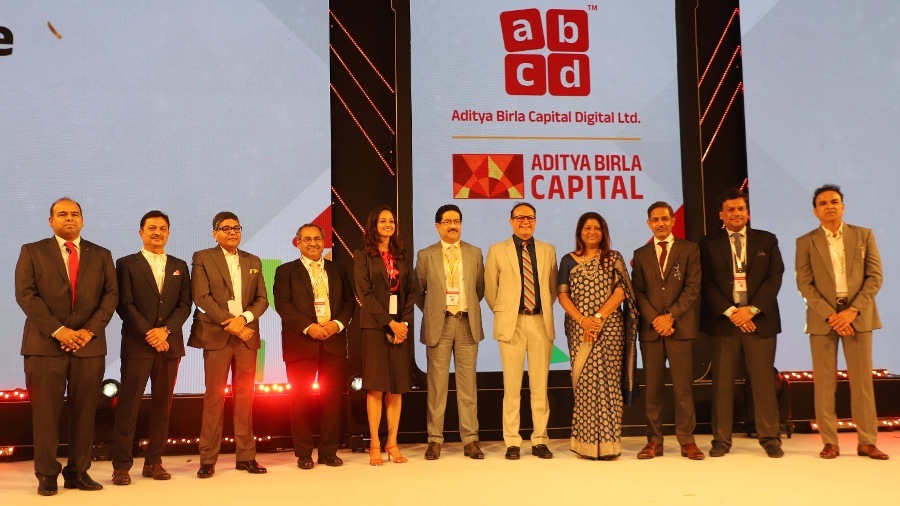
Eight business CEOs filed onto one earnings call, and every single one of them had grown something by double digits. NBFC AUM crossed ₹1.6 lakh crore. Housing finance AUM jumped 53% to ₹47,452 crore. Health insurance premium rose 39%. The mutual fund book sat at ₹4.36 lakh crore. Consolidated profit after tax, stripped of one-offs, climbed 30% year-on-year to ₹1,124 crore for the quarter. On paper, this was a victory lap with eight victory-lappers.
Then the analysts arrived, and the first question was about why NBFC margins had shrunk by four basis points. The second was also about margins. So was the third. A conglomerate that grew almost everything spent its Q&A defending the one number that didn’t move. Stay for the part where four basis points eats forty minutes.
2. At a Glance
- Consolidated PAT (ex one-offs), Q4 – Up 30% to ₹1,124 Cr. The “ex one-offs” is carrying its own luggage.
- FY26 net profit (data sheet) – ₹3,864 Cr, up from ₹3,410 Cr. Three-year profit CAGR still sits at negative 7%, because FY23 once printed ₹4,824 Cr and refuses to be forgotten.
- NBFC margin – 6.08%, down 4 bps QoQ. The number that launched a thousand questions.
- HFC AUM – ₹47,452 Cr, up 53%. PBT up 98%. The newest engine, running hottest.
- Dividend payout – 0%. Eleven consecutive years of profit, eleven consecutive years of keeping it.
- Debt to equity – 5.22. It is a lender; this is the job, but the number is the number.
3. Management’s Key Commentary
The call was a relay race of confidence, so here is the baton being passed.
Vishakha Mulye opened with the macro: “The Indian economy continues to demonstrate resilience amid heightened global uncertainty and supply chain disruptions arising from the war.” (Every concall now opens with a geopolitics weather report. The forecast is always “resilient, with monitoring.”)
On the AI theme that ran through all eight scripts: “AI is now becoming a core operating layer for us.” (A core operating layer, deployed across underwriting, sales, voice calling, audit, compliance, customer service and operations — i.e. everything, which is the trouble with describing it as a layer.)
Rakesh Singh on the NBFC: “We nearly doubled our AUM and profits in last three years demonstrating a track record of building a franchise that delivers industry leading growth.” (Doubling in three years is real. The phrase “industry leading” is the part that does push-ups before every sentence.)
Pankaj Gadgil on housing, where the ambition was loudest: “This expansion will support us to achieve ₹1 lac crore AUM in the next 24 to 30 months.” (From ₹47,452 crore to ₹1 lakh crore in 30 months. The branches haven’t opened yet, but the AUM target has.)
Mayank Bathwal, health insurance, on the moat: “This business model, which now other competitors are also trying to look at seriously but needs a large investment commitment and persistent efforts over many years to mature.” (Translation: it’s a great moat, and the proof is that copying it would be hard. The competitors haven’t copied it. Yet.)
Kamlesh Rao on the life-insurance assumption change, the quarter’s most elegant euphemism: “It may be a prudent step to do at this point in time.” (“Prudent” — the word that turns a negative variance into a character reference.)

4. Numbers Decoded
The data sheet tells a flatter story than the eight CEOs did. Full-year figures, consolidated.
| Metric (Consolidated, FY26) | Value | One dry line |
|---|---|---|
| Revenue | ₹45,509 Cr | Up 12% on FY25’s ₹40,632 Cr — the slowest growth line on a 10-year sheet that averaged 18.8%. |
| Net Profit | ₹3,864 Cr | Above FY25, still under the ₹4,824 Cr printed in FY23. |
| EPS | ₹14.37 | The reported full-year figure, not a quarter multiplied by hope. |
| ROE | 12% | The 3-year ROE is 12.2%; the 5-year is 14.4%. The trend line points the wrong way. |
| Borrowing | ₹1,79,538 Cr | A lender’s borrowing. Debt-to-equity of 5.22 is the business, stated plainly. |
| P/E | 28.3 | The market pays 28.3x, against an industry P/E of 31.5. |
The interest line alone was ₹11,622 crore for the year. Financing margin held at 11%, exactly where it sat the prior year. Growth across eight businesses; the consolidated margin stood still.
5. Analyst Questions
The Q&A was a study in asking about margins five different ways.
Chintan Shah (ICICI Securities): When do NBFC margins improve, and what’s the secured-versus-unsecured yield gap? (A two-part question; he got the first part answered and the delta filed under “around 11%.”) Rakesh Singh’s reply: every 200 bps shift in the unsecured mix buys 25–30 bps of margin, over the next two-three quarters.
Zhixuan Gao (Schonfeld): Unsecured mix rose, so why is the margin flat? (The same question, rephrased as bewilderment.) The answer: the mix is still only 13.4%, everything else grew too, so the dial barely moved.
Avinash Singh (Emkay): How are you priced versus competition? Management put NBFC yield in this segment at “almost 12.2-12.2% odd.” (Quoted the same number twice in one breath — the rare answer that’s precise and a typo simultaneously.)
Arun Antony (JM Financial): Why has opex growth outpaced AUM growth for three quarters? The reply: investment in retail and MSME, “There’s no specific reason for sharp rise in this quarter.” (The reassuring non-reason — the rise is sharp, but rest assured it means nothing.)
6. Guidance & Outlook
Management’s numbers, attributed to management.
On the NBFC, Rakesh Singh guided to “2.5% ROA by the end of this year” from 2.31% now, with credit cost held at 1.1–1.2% even as unsecured grows. The full-year credit cost of 1.18% already beat the prior 1.2–1.3% guide, so the bar is being raised on a number already cleared.
On housing, Pankaj Gadgil laid out the arithmetic openly: opex-to-loan-book near 2.13%, credit cost at 28 bps, a pre-tax ROA of 2.72% translating to “an ROA between 2.10% to 2.15%.” He also flagged that ROE will fall — “the ROE will be lesser than the last financial year”, into 11.5–12% from 14.27%, because ₹2,750 crore of fresh capital has to be put to work before it earns. Growth dilutes the ratio first and rewards it later; management said the crossover back above 15% is 12–24 months out.
On life, Kamlesh Rao reiterated the standing promise: grow individual first-year premium at “a CAGR of 20%+ for the next 3 years” while holding VNB margin in the 18–20% band. The assumption that nobody mentioned a slowdown is, as ever, doing quiet work in the background.
7. Risks & Red Flags
- Margin compression is the recurring guest. NBFC NIM slipped to 6.08%; housing NII fell from 5.22% to 5.03%, which management attributed to seasonality, competitive pressure and a G-Sec mark-to-market loss.
- Credit costs are at historic lows. Management itself guided them up from 1.04% toward 1.1–1.2%. The only direction left from “lowest ever” is the other one.
- ROE is structurally diluted by the capital raise. Housing ROE drops to ~11.5–12% before recovering, per management.
- The three-year profit CAGR is negative 7%, an artifact of the ₹4,824 crore FY23 base that later years haven’t reclaimed.
- Geopolitical exposure stays on watch. Management noted “no material impact from the geopolitical tensions in West Asia” while pledging to keep monitoring — a clean bill of health with a renewal date.
- A regime change is mid-flight. Life insurance is shifting from IGAAP to IFRS, with a forbearance requested to move in FY27; the assumption changes have already produced negative operating variance.
8. Badi Badi Baatein Vadapao Khate, Will Management Walk the Talk?
Here the track record is kinder than the average concall, and the dump shows it.
Housing said at the start of FY26 it would hit 2.0–2.2% ROA over six-to-eight quarters — and reported 2.07% in Q4, ahead of its own clock. Management’s word: “we have accelerated this journey.” That one was walked.
The NBFC guided full-year credit cost to 1.2–1.3% and delivered 1.18%, “better than the guided range.” Also walked.
The wobble lives in the holding-company math. The data sheet shows a 5-year profit CAGR of 27.6% sitting next to a 3-year figure of negative 7.44% — both true, the gap created entirely by the towering FY23 number. So when eight CEOs each report double-digit growth and the consolidated three-year profit line still reads negative, the credibility question isn’t whether the businesses grew. It’s whether the whole ever adds up to more than the sum of its very impressive parts. Eleven years of profit and zero years of dividend is its own statement about where management thinks the money is best left.
9. EduInvesting Take
The facts, both columns.
Strengths: the lending franchise nearly doubled AUM and profit in three years; housing PBT rose 98%; NBFC GS2+GS3 fell to a five-year low of 2.4%; credit costs are the lowest the company has printed; the ₹2,750 crore Advent capital into housing closed in April. These are real and they are on the sheet.
Weaknesses, equally real: consolidated revenue growth of 12% is the slowest in a decade; financing margin has been stuck at 11% for two years; ROE has drifted from a 5-year 14.4% to a trailing 12%; the three-year profit CAGR is negative; and the dividend remains, as it has every year on record, zero.
What to watch next quarter, all company metrics: whether NBFC margin actually expands the promised 25–30 bps as the unsecured mix climbs; whether housing ROE bottoms near 11.5% before the capital starts earning; whether the IFRS transition in life insurance throws further assumption-change variance; whether the 100+ planned housing branches open on the schedule that the ₹1 lakh crore AUM target depends on; and whether credit costs hold as they normalize off the floor.
Both sides are now on the table.
10. Conclusion
Aditya Birla Capital is a financial-services department store where every counter posted record footfall, and the analysts spent the whole call asking why the cash register’s margin needle barely twitched. Eight CEOs, double-digit growth almost everywhere, a profit line that beat last year — and a three-year CAGR that still reads negative because one extraordinary quarter in FY23 is taking a very long time to forgive. The businesses are walking the talk. The conglomerate is still deciding whether the arithmetic agrees.
Written by EduInvesting Team
Sources: Aditya Birla Capital Q4 FY26 Earnings Conference Call transcript (May 04, 2026); Screener.in company data sheet.