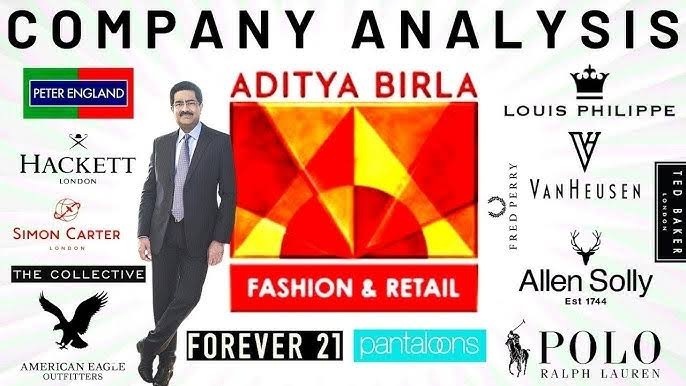
Aditya Birla Fashion & Retail Ltd (ABFRL) Q2FY26 – The Great Indian Wardrobe Split: Rs 1,982 Cr Sales, Rs 295 Cr Loss, and a Demerger That’s More Fashionable Than Profitable
Date of Publishing -
Spotted a factual error — a wrong number, date, or fact? Tell us and we will check the source.
1. At a Glance
Aditya Birla Fashion & Retail Ltd (ABFRL) just dropped its Q2FY26 lookbook — and let’s just say, the numbers are walking the ramp in minus territory. With consolidated revenue of ₹1,982 crore, the company continues to lose weight — not from the waistline, but from the bottom line — posting a net loss of ₹295 crore. Market cap stands around ₹10,275 crore, and the stock is currently trading near ₹84, roughly 27% below its 52-week high of ₹115.
The real runway show, however, isn’t in the P&L but in the boardroom — ABFRL has spun off its Madura Fashion & Lifestyle division into a new listed entity, Aditya Birla Lifestyle Brands Ltd (ABLBL). Think of it as the Birla Group’s version of a designer collab: one part “heritage menswear royalty” (Louis Philippe, Van Heusen, Allen Solly, Peter England), another part “mass retail mall king” (Pantaloons), and a sprinkle of digital-first brands trying to TikTok their way to relevance.
With ₹5,665 crore in debt and a negative ROE of -10.9%, the company’s wardrobe looks overstuffed — too many brands, too little cash flow. Yet, like a die-hard fashion influencer, ABFRL keeps smiling for the camera, promising expansion, demergers, and ₹2,500 crore of fresh equity within 12 months.
The question is: can this empire of fabrics finally stitch profits into its seams, or will it keep ripping at the EBITDA edges? Let’s unfold.
2. Introduction – Fashionably Late to Profits
Aditya Birla Fashion & Retail Ltd (ABFRL) is the Aditya Birla Group’s haute couture experiment in trying to dominate everything from luxury sarees to streetwear hoodies. Formed in 2015 after merging Madura Fashion and Pantaloons, ABFRL was supposed to be India’s “Zara meets Macy’s.” Instead, it often feels like “Pantaloons meets P&L stress.”
On paper, ABFRL should be killing it. It owns some of India’s most iconic fashion brands — Louis Philippe, Van Heusen, Allen Solly, and Peter England — and even flirts with high-end couture like Sabyasachi, Tarun Tahiliani, and Masaba. The problem? Style sells, but not always sustainably.
After years of acquisitions, store launches, and digital adventures under its TMRW platform (which houses Bewakoof, The Indian Garage Co., and others), ABFRL finds itself fighting for margins. The EBITDA margins of 8.5% look decent in the mirror, but after interest, depreciation, and taxes — the reflection gets brutal.
Still, if corporate fashion had a Met Gala, ABFRL would be a headliner: glitzy demergers, celebrity designers, global tie-ups (Reebok, Ralph Lauren, Ted Baker), and a network of over 4,247 brand stores across India. That’s a lot of fabric, a lot of rent, and a lot of ambition.
Now that the Madura Fashion & Lifestyle arm has officially been separated into ABLBL, investors finally get two wardrobes to pick from — one focusing on aspirational brands, the other on mass retail and ethnic wear. The company says it’s about “value unlocking.” We call it a fashionable escape from consolidated red ink.
3. Business Model – WTF Do They Even Do?
ABFRL’s business model is like a full-service thali — everything from ₹499 T-shirts to ₹4 lakh wedding lehengas. Here’s how they mix it up:
Madura Fashion & Lifestyle (MFL): The power-suit gang — Louis Philippe, Van Heusen, Allen Solly, and Peter England. These brands target India’s white-collar dreamers — the “PowerPoint warriors” who buy two shirts on discount but still think they’re luxury connoisseurs. It also houses The Collective and global names like Ralph Lauren, Ted Baker, American Eagle, and Hackett London. Basically, the imported blazers section of your favorite mall.
Pantaloons: Acquired from Future Group in 2012, Pantaloons is the middle-class fashion Mecca — a one-stop shop for the urban family. It contributes roughly 32% of total revenue and remains the company’s bread-and-butter retail format.
Ethnic Wear Empire: The Birlas have gone full shaadi season mode. From Sabyasachi to Shantanu & Nikhil, Masaba, Tarun Tahiliani, and Jaypore, ABFRL has been hoarding ethnic brands like aunties collect wedding invites. Ethnic wear now contributes 10% of revenue, a figure that’ll likely grow as desi couture continues to outsell boardroom blazers.
TMRW (Digital-First Brands): The “Gen Z collection” — featuring Bewakoof, TIGC, Urbano, Veirdo, and more. TMRW’s contribution is still small (4%), but it gives ABFRL a presence in e-commerce streetwear. Essentially, the influencer economy’s experimental cousin.
In total, ABFRL operates 4,247 brand stores, 417 Pantaloons, and over 37,000 multi-brand outlets, covering 11.9 million sq. ft of retail space. Add in 10 factories and 11 warehouses — this company has more real estate than some REITs.
So yes, ABFRL does everything. The only thing it hasn’t done yet? Profit consistently.
4. Financials Overview
Quarterly Comparison (Consolidated Figures in ₹ crore)
Metric
Latest Qtr (Sep’25)
YoY Qtr (Sep’24)
Prev Qtr (Jun’25)
YoY %
QoQ %
Revenue
1,982
3,644
1,831
-45.6%
+8.2%
EBITDA
116
358
106
-67.6%
+9.4%
PAT
-295
-215
-234
-37.2%
-26.0%
EPS (₹)
-2.16
-1.74
-1.74
—
—
Commentary: Revenue dropped nearly 46% YoY thanks to the Madura Lifestyle demerger and a slowdown in festive-season sales. EBITDA held its own above water, but the PAT still collapsed into a ₹295 crore