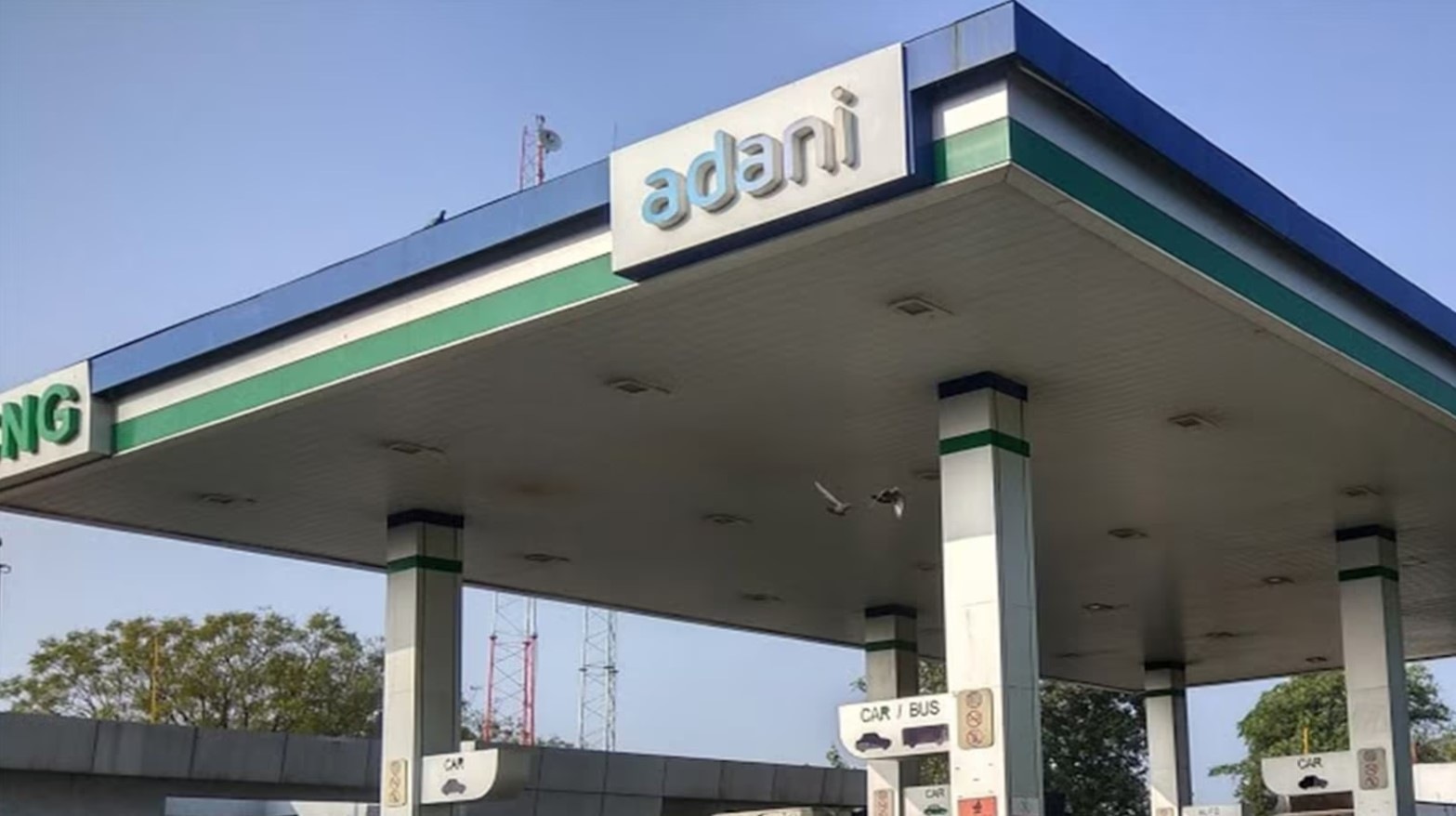
01 — At a Glance
The Regulated Gas Poker Game Where Everyone’s Bluffing
- 52-Week High / Low₹798 / ₹454
- Q3 FY26 Revenue₹1,507 Cr
- Q3 FY26 PAT₹159 Cr
- Q3 FY26 EPS₹1.44
- Annualised EPS (Q3×4)₹5.76
- Book Value₹41.0
- Price to Book11.8x
- Dividend Yield0.05%
- Debt / Equity0.45x
- CNG Volume Growth+17% YoY
Auditor’s Opening Note: Adani Total Gas closed Q3 FY26 with ₹1,507 crore revenue (+16.4% YoY), ₹159 crore PAT (+11.4% YoY), and CNG volumes growing at 17% year-on-year. The stock is trading at 82.7x P/E — nearly 5x the gas utility peer median of 16.5x. The premium exists because ATGL owns 34 city gas licenses across India with zero franchise risk and regulated tariff protection. But when the regulator rewrote tariffs mid-quarter, the stock fell 20% in 12 months anyway. Make of that what you will.
02 — Introduction
Pipes, Regulations, and the Art of Institutional Patience
Adani Total Gas Limited is a joint venture between the Adani Group (37.4%) and TotalEnergies SE (37.4%), with the public holding the rest. On paper, it’s a utility that pipes natural gas into homes and CNG pumps for vehicles across 34 geographic areas (GAs) spanning 95 districts in 13 states. In reality, it’s a regulated monopoly with exemption from price competition — you either have access to Adani’s network or you don’t.
The business splits roughly 67% CNG (compressed natural gas for vehicles) and 33% PNG (piped natural gas for homes, industries, and businesses). Volume growth has been a steady 15%+ for the past two years. Margins hover around 20% operating profit margin. The company is expanding into 19 more GAs in partnership with Indian Oil Corporation through a 50:50 joint venture. It’s also quietly scaling EV charging infrastructure through a wholly owned subsidiary, with 5,000 charge points already live.
And yet the stock crashed 20.5% over one year, despite revenue growing 17% and volumes grinding ahead 15%+. The reason? Growth expectations, regulatory headwinds, and the fact that a P/E of 82.7x leaves no room for disappointment. Not even in a company with a moat deeper than a medieval castle.
Q3 FY26 delivered the highest quarterly revenue in company history. But the market yawned. Let’s find out why, and whether that yawn was justified.
Concall Insight (Jan 2026): “We are not looking to see what’s coming as a savings for us… the main aim is to grow volume and bring affordability.” Management’s response to regulatory tariff changes. Translation: we’re cutting prices to grow faster, not to boost margins.
03 — Business Model: Piping Dreams
How to Make Money When You’re the Only Pipe in Town
City Gas Distribution (CGD) is one of India’s most regulated industries, precisely because it’s a natural monopoly. Once you’ve buried steel pipes under 1,000 kilometers of road, a competitor isn’t coming along to build duplicate pipes. The Petroleum and Natural Gas Regulatory Board (PNGRB) controls tariffs, geography allocation, and infrastructure timelines. It’s like being handed a monopoly license where the regulator also sets your margins.
Adani Total Gas buys natural gas from three sources: APM gas (Administered Price Mechanism — cheapest, ~49% in Q3), NWG/Intervention gas (more expensive, growing share), and R-LNG (imported, priciest). It transports this through steel pipelines (24,906 inch-km as of FY25), blends with local gas where possible, and sells to three customer segments: domestic households (~1.05 million PNG connections), industrial/commercial users (~9,750 customers), and CNG stations (680 stations, with 18 added in Q3 alone).
The distribution margin is regulated. CNG and domestic PNG fall under “priority” allocation with tariff protection. Industrial and commercial gas faces competition from LPG and propane — hence the margin pressure management complained about in the concall. The real money comes from scale: every new household, every new CNG pump, every new industrial customer either increases margin dollars in absolute terms or stabilizes it by spreading fixed costs.
Expansion into new GAs involves capex of ₹8,500 crore over five years. That’s funded 60% internally (operating cash flow) and 40% via debt and ECB (external commercial borrowing) lines. The company lined up USD 375 million in ECB in September 2024 — of which USD 315 million was sanctioned and ~USD 255 million remained undrawn as of March 2025.
CNG Growth+17%9M FY26 YoY
PNG Growth+3%Q3 FY26 YoY
Revenue CAGR22%5Yr FY20–FY25
OPM20.4%Stable, 4 quarters
Regulatory Tailwind Alert: In October 2024, PNGRB shifted to a two-zone transmission tariff model, where CNG and domestic PNG segments pay Zone-1 tariff (₹54/MMBtu) “irrespective of distance.” Prior to this, some GAs were paying Zone-2 tariff (~₹42–70 range). Management immediately passed the savings to consumers via price cuts, driving volume additions. Classic regulated utility playbook: capture regulatory favor, grow volume, expand the pie.
💬 Do you think PNGRB will raise tariffs again to offset ATGL’s volume growth? Or has the regulator essentially given away margin upside for the next 5 years? Drop your view!
04 — Financials Overview
Q3 FY26: The Numbers Game
Result type: Quarterly Results | Q3 FY26 EPS: ₹1.44 | Annualised EPS (Q3×4): ₹5.76 | 9M FY26 EPS: ₹4.38
| Metric (₹ Cr) |
Q3 FY26 Dec 2025 |
Q3 FY25 Dec 2024 |
Q2 FY26 Sep 2025 |
YoY % |
QoQ % |
| Revenue | 1,507 | 1,294 | 1,451 | +16.4% | +3.9% |
| Operating Profit | 305 | 265 | 295 | +15.1% | +3.4% |
| OPM % | 20% | 20% | 20% | +0 bps | +0 bps |
| PAT | 159 | 142 | 163 | +11.4% | -2.5% |
| EPS (₹) | 1.44 | 1.29 | 1.49 | +11.6% | -3.4% |
Revenue Milestone: Q3 FY26 at ₹1,507 crore is the highest quarterly revenue in ATGL’s history. Volume growth delivered this — CNG volumes +17% YoY, PNG volumes +3% YoY. But here’s the kicker: the two-zone tariff change came mid-quarter, so most of the regulatory benefit hasn’t hit the P&L yet. Management ate pricing power to grow volume instead of hoarding margin. In a regulated utility obsessed with shareholder returns, ATGL is playing the long-term volume game.
05 — Valuation: The Painful Math
Can a Utility Justify 82.7x P/E?
Join 10,000+ investors who read this every week.