1. At a Glance – The Sun Is Shining, But So Is The Debt Meter
There are companies that grow.
Then there are companies that seem to be trying to terraform the planet.
Adani Green looks less like a listed company and more like someone gave a project finance spreadsheet steroids.
5.1 GW added in one year.
Operational capacity up to 19.3 GW.
Target 50 GW by 2030.
37.6 billion units sold.
91% EBITDA margins.
And debt sitting at ₹91,252 crore net. That is not a typo. That is a sovereign-looking balance sheet wearing a corporate badge.
This is where the story gets delicious.
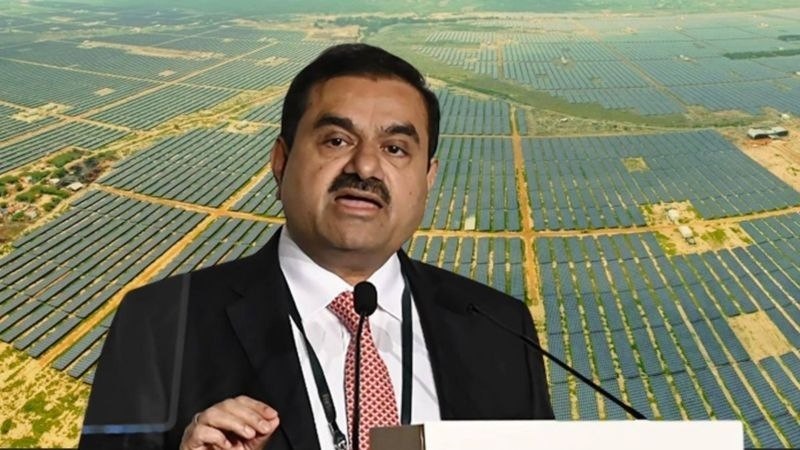
On one hand, this is probably India’s boldest clean energy scale-up story. Massive 25-year PPAs. Sovereign counterparties. ENOC digital monitoring. Khavda looking like Elon Musk and a PSU jointly designed a desert.
On the other hand…
Interest coverage 1.28x.
Debt/equity 5.19.
Free cash flow still negative.
P/E 112.
This stock is priced like God personally signed the power purchase agreements.
And yet — unlike many “green dreams,” this one actually throws operating cash. FY26 operating cash flow crossed ₹10,135 crore.
Question for readers:
When a business grows 35% in capacity but debt grows even faster, are you watching compounding… or controlled chaos?
That’s the central mystery.
Because this may be India’s renewable crown jewel.
Or the world’s most elegant leveraged machine.
Maybe both.
And honestly, that’s what makes it fascinating.
2. Introduction – Utility Company or Infrastructure Empire in Disguise?
Traditional utilities bore people.
Adani Green somehow made power generation feel like geopolitical theater.
Most power companies debate tariffs.
These people discuss 30 GW desert cities.
Most utilities worry about one transmission line.
These people casually mention 10+ GWh BESS ambitions.
That is not normal.
And maybe that is the point.
The market usually gives utilities 15–25 P/E.
AGEL trades at 112.
Because the market is not valuing it as a utility.
It is valuing it as a long-duration growth infrastructure compounder.
That is very different.
And very dangerous if growth slips.
Now look at management execution.
Jan 2026 concall had warned about grid evacuation delays at Khavda and monetization delays. Management said transmission augmentation was coming and storage would absorb curtailed power.
Did they walk the talk?
Yes… surprisingly.
Capacity moved from 17.2 GW to 19.3 GW.
1,376 MWh BESS operationalized.
Khavda operational base hit 9.4 GW.
That’s management actually doing what management said.
Rare species.
But market ignores one awkward truth:
Return on capital is still just 7%.
That means the empire is gigantic…
…but capital efficiency still looks sleepy.