The Indian pharmaceutical excipient landscape is witnessing a quiet but aggressive takeover by Accent Microcell (AML). In a financial year defined by strategic capital raises and massive capacity expansion, AML has posted a staggering 51% growth in quarterly sales, reaching ₹210 crore in the latest March 2026 results. This isn’t just a number; it is a declaration of market share capture.
While the broader pharmaceutical sector grapples with pricing pressures in generic formulations, Accent is sitting comfortably in the “bricks and mortar” of the pill—the excipients. With Microcrystalline Cellulose (MCC) as its primary weapon, the company is moving from a domestic player to a global powerhouse, servicing over 200+ customers and exporting to 36+ countries.
The intrigue lies in the execution. Management didn’t just talk about expansion; they funded it through a surgical combination of an IPO (₹78.40 crore) and a subsequent Rights Issue (₹39.77 crore). The “what next” is even more compelling: a massive jump from 9,600 MTPA to 24,000 MTPA total capacity is in the works. Investors are watching closely as the company transitions from a mid-sized manufacturer to a heavyweight in a fragmented market.
1. At a Glance – The Numbers That Scream Ambition
Accent Microcell is currently a high-octane growth engine disguised as a chemical company. The latest data reveals a Sales CAGR of 32% (TTM) and a Profit CAGR of 33% (TTM). This alignment of top-line and bottom-line growth is rare and indicates that the company isn’t just buying growth—it’s earning it through operational efficiency.
The Curiosity of the Pivot
The company is currently pivoting its product mix. While MCC remains the bread and butter (contributing ~85% of revenue), the real excitement is in the Unit 3 Kheda Phase 1 expansion. This unit targets premium excipients like Croscarmellose Sodium (CCS) and Sodium Starch Glycolate (SSG). Why does this matter? Because CCS is a “rapid disintegrant” that commands pricing 3.5 times higher than MCC.
The Scare Factor: Red Flags to Watch
Despite the stellar growth, the auditor’s lens reveals a few thorns:
- Debtor Days Spikes: Receivables have elongated from 80 days to 95 days. Management attributes this to liberal credit terms given to Indian MNCs to capture market share. While strategic, it ties up cash.
- Raw Material Volatility: Wood pulp is the primary input. Any global supply chain shock or spike in specialized pulp prices (which vary from ₹60 to ₹85/kg) directly hits the OPM.
- Asset Heavy Transition: The company is moving from a low-debt model to massive capex. Capital Work in Progress (CWIP) stands at a whopping ₹102 crore. If the ramp-up (expected at 60% in year one) stalls, the depreciation will eat into the PAT.
Can Accent Microcell maintain its 16% OPM while tripling its capacity? This is the billion-rupee question.
2. Introduction
Accent Microcell Limited is essentially the “hidden ingredient” company. If you have taken a medicine tablet recently, there is a high probability that the Microcrystalline Cellulose (MCC) holding that tablet together was manufactured by AML. Established in 2012, the company has mastered the art of manufacturing 22 different grades of MCC.
The business operates out of Gujarat, with two existing units in Pirana and Dahej (SEZ). The Dahej unit is particularly strategic, being an SEZ unit that provides significant tax benefits and caters primarily to the export market, which accounts for roughly 53% to 61% of total revenue.
In the last 24 months, the company has transformed its balance sheet. From a closely held public limited company in 2022 to an NSE SME listing in 2023, and a Rights Issue in 2025, AML is now a well-capitalized entity. This capital is being deployed into Unit 3 (Kheda), which is designed to make the company “fully integrated.” Instead of buying raw materials like CMC to make CCS, they will now manufacture everything in-house.
This vertical integration is a classic move to protect margins. In an industry where “regulatory stickiness” is high—meaning pharma companies hate switching suppliers once their filing is approved—Accent is building a moat that is difficult to bridge.
3. Business Model – WTF Do They Even Do?
Let’s simplify this: Pharmaceutical companies make the active “drug.” Accent Microcell makes the “stuff” that makes the drug usable.
They manufacture Pharmaceutical Excipients. Think of excipients as the delivery vehicle. Without MCC, a drug might not compress into a tablet, or it might not dissolve at the right speed in your stomach.
The Product Trio:
- MCC (The Bulker): Used as a binding and coating agent.
- CCS (The Disintegrant): This is the high-value product. It makes the tablet “explode” and dissolve quickly in the body.
- Magnesium Stearate (The Lubricant): Ensures the tablets don’t stick to the machines during manufacturing.
The business model is “High Trust, High Stickiness.” You can’t just sell MCC to Pfizer or Dr. Reddy’s overnight. It takes 6 months to 2 years of audits and sampling. Once you are “in,” you are part of their regulatory filing. Switching suppliers requires the pharma company to re-file with the FDA—a headache no one wants.
Is this business a high-tech lab or just a sophisticated flour mill for pharma? While the process seems simple, the 22 grades and the US-DMF certifications suggest it’s more about “quality consistency” than just grinding pulp.
4. Financials Overview (H2 FY26 vs H2 FY25)
The latest results for the half-year (H2) ended March 31, 2026, show a massive surge in scale.
| Metric (₹ in Crore) | H2 FY26 (Latest) | H2 FY25 (YoY) | H1 FY26 (QoQ) |
| Revenue | 209.67 | 138.54 | 139.37 |
| EBITDA | 33.00 | 23.00 | 24.00 |
| PAT | 25.79 | 16.60 | 18.07 |
| EPS (Restated) | 10.75 | 7.48 | 7.53 |
Financial Wisdom: Management “walked the talk” here. During the August 2025 concall, they promised a CAGR of 15–20%. The H2 performance shows them running much faster, clocked at over 50% YoY growth.
Annualised EPS Calculation
Following the rule for H1 and H2 results:
- H1 FY26 EPS = ₹7.53
- H2 FY26 EPS = ₹10.75
- Total FY26 EPS = ₹18.28 (As reported in audited P&L)
- P/E Ratio: Based on the CMP of ₹476 and FY26 EPS of ₹18.28, the P/E stands at 26.1x.
This is slightly lower than the industry median P/E of 30.0x, suggesting the market is still digesting the massive growth.
5. Valuation Discussion – Fair Value Range
To find the fair value of Accent Microcell, we must account for the massive capacity expansion (24,000 MTPA target) and the shift toward high-margin CCS.
Method 1: P/E Multiple
- FY26 EPS: ₹18.28
- Industry Average P/E: 30x
- Growth Premium P/E: 32x (Due to 30%+ growth)
- Value Range: 18.28 \times 30 = ₹548 to 18.28 \times 32 = ₹585
Method 2: EV/EBITDA
- EBITDA (FY26): ₹57 Crore
- Enterprise Value (Current): ₹1,124 Crore
- Current EV/EBITDA: 19.7x
- Target EV/EBITDA: 22x (Reflecting capacity doubling)
- Fair Value: ₹530
Method 3: Discounted Cash Flow (DCF)
Assuming a 15% growth rate for 5 years (conservative vs management’s 20% guide) and a 12% discount rate:
- Projected Free Cash Flow (FCF) recovery post-capex: ₹55-60 Cr.
- Intrinsic Value: ₹515
Fair Value Range: ₹515 – ₹585
Disclaimer: This fair value range is for educational purposes only and is not investment advice.
6. What’s Cooking – News, Triggers, Drama
The “Drama” in this sector often comes from the competitors. Management noted a “unfortunate incident” at a peer (Sigachi), which led to an increase in inquiries and business traction for Accent. This is the classic “one man’s loss is another man’s gain” scenario in the pharma supply chain.
Key Triggers:
- The Mystery Multi-Thousand Ton Order: Management recently confirmed a “final confirmation” from a global multinational company for MCC supply after 4 years of sampling. This is expected to bring in “multiple thousand tons” of volume over the next few years.
- Unit 3 Phase 1 Launch: Commercialization of the premium excipient plant is slated for late 2025/early 2026. This is the margin-expansion trigger.
- Credit Rating Upgrade: On March 25, 2026, CARE upgraded the company’s long-term rating to CARE A-; Stable. This lowers the cost of future debt—a “seal of approval” for their financial health.
Question for the reader: Can Accent handle a global MNC’s volume without compromising on quality? Drop your thoughts in the comments.
7. Balance Sheet – The Heavy Lifting
The company has successfully used the equity route to clean its house. Borrowings have stayed negligible despite massive asset building.
| Particulars (₹ in Crore) | Mar 2026 (Latest) | Mar 2025 | Mar 2024 |
| Total Assets | 321.71 | 228.37 | 205.14 |
| Net Worth | 275.48 | 194.79 | 156.40 |
| Borrowings | 0.87 | 1.51 | 1.45 |
| Other Liabilities | 45.36 | 32.07 | 47.29 |
| Total Liabilities | 321.71 | 228.37 | 205.14 |
- Debt-Free Flex: The company is basically running on its own steam and investor money; the banks are barely in the picture.
- The “Work in Progress” Ghost: CWIP is at ₹101 Cr. This is a lot of “potential” money still locked in bricks and mortar.
- Cash Stash: They still have significant unutilized IPO and Rights Issue funds sitting in FDs (over ₹10 crore).
8. Cash Flow – Sab Number Game Hai
This is where the “Detective” narrator gets worried. The cash flow from operations (CFO) has dipped compared to the EBITDA.
| Cash Flow (₹ in Crore) | Mar 2026 | Mar 2025 | Mar 2024 |
| Operating (CFO) | 18.64 | 24.67 | 35.97 |
| Investing (CFI) | (48.88) | (8.61) | (82.16) |
| Financing (CFF) | 35.74 | (13.69) | 72.51 |
Where is the money? The Operating Cash Flow dropped from ₹24 Cr to ₹18 Cr despite higher profits. Why? Receivables. The company is selling more but collecting later. They are using Financing cash (Rights Issue) to fund the Investing cash (New Plant).
Financial Wisdom: High growth often kills cash flow in the short term. The “Working Capital Trap” is real—watch out for it.
9. Ratios – Sexy or Stressy?
| Ratio | Value (Mar 2026) | Status |
| ROE | 18.6% | Sexy (Healthy for an SME) |
| ROCE | 24.9% | Sexy (Efficient use of capital) |
| Debt to Equity | 0.00 | Ultra-Sexy |
| PAT Margin | 12.6% | Stable |
| Debtor Days | 95 Days | Stressy (Rising trend) |
Judgement: The return ratios are solid, but the efficiency ratios (Debtor Days/Cash Conversion) are starting to sweat under the weight of high-volume growth.
10. P&L Breakdown – Show Me the Money
| Year | Revenue (₹ Cr) | EBITDA (₹ Cr) | PAT (₹ Cr) |
| Mar 2026 | 349 | 57 | 44 |
| Mar 2025 | 265 | 42 | 33 |
| Mar 2024 | 246 | 39 | 30 |
The P&L is a beautiful staircase. The operating profit margin (OPM) is steady at 16%.
Management Walk the Talk: In 2025, they promised 20% CAGR; they delivered ~31% revenue growth in FY26. They aren’t just walking; they are sprinting.
11. Peer Comparison
Accent is currently the “small but aggressive” kid in the playground dominated by Sun Pharma and Cipla (who are customers/competitors in different ways).
| Company | Revenue (₹ Cr) | PAT (₹ Cr) | P/E |
| Lupin | 7,474 | 1,468 | 17.6 |
| Sun Pharma | 15,520 | 3,381 | 36.0 |
| Accent Microcell | 349 | 44 | 26.1 |
Note: Comparing an excipient SME to Lupin is like comparing a tire maker to Ferrari. However, within the niche, Accent’s 24.8% ROCE beats Sun Pharma’s 20.2%. The “small” guy is more efficient with his money.
12. Miscellaneous – Shareholding and Promoters
The promoters hold a solid 55.47%. There has been a slight increase (0.03%) in promoter holding recently—a small but positive signal.
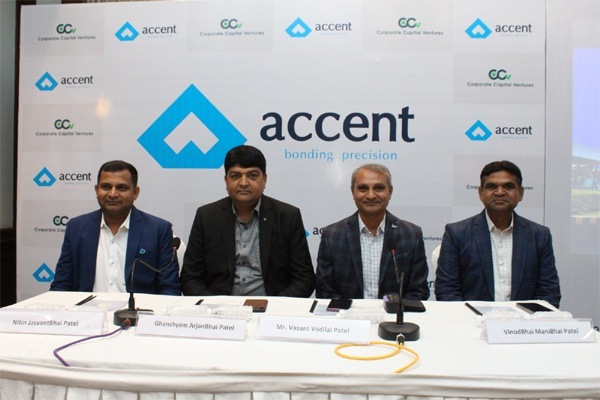
- Promoter Roast: The four Patels (Vasant, Ghanshyam, Nitin, Vinod) have been running this for 20 years. They are so conservative that they barely take any debt, but they aren’t shy about asking the public for money (IPO + Rights Issue).
- Institutional Interest: FIIs and DIIs have started creeping in, now holding ~4% combined. Negen Undiscovered Value Fund is a notable name here.
13. Corporate Governance – Angels or Devils?
Accent recently approved the re-appointment of its entire leadership for another 3 years. This provides stability.
- The Auditor’s Check: TR Chadha & Co LLP gave an unmodified opinion.
- Related Party Transactions (RPT): There was some drama regarding land purchase from promoters for a warehouse. Management claims it was at “arm’s length” and necessary because it was adjacent to the plant.
- Independent Directors: The board seems to be following the SME listing norms, but as the company migrates to the mainboard (expected eventually), scrutiny will increase.
14. Industry Roast and Macro Context
The pharmaceutical excipient industry is basically the “sidekick” that everyone forgets until the hero (the drug) fails. Globally, the industry is fragmented.
The Industry Roast: Everyone wants to be the next Pfizer, but no one wants to do the boring job of making Cellulose powder. Accent is king in a “boring” niche.
Macro Context: With the “China+1” strategy, global pharma MNCs are looking for Indian suppliers who have US-DMF filings. Accent is perfectly positioned here. The only risk? A sudden drop in global drug demand (unlikely) or a massive spike in wood pulp tariffs.
Question: Is being the “king of powder” better than being a “generic drug maker”?
15. EduInvesting Verdict
Accent Microcell is at an inflection point. It has the cash, the capacity expansion is on track, and the product mix is shifting toward higher-value items.
SWOT Analysis
- Strengths: Debt-free, US-DMF certified, high customer stickiness.
- Weaknesses: Rising debtor days, sensitivity to wood pulp prices.
- Opportunities: Tripling capacity to 24,000 MTPA, expanding CCS/SSG margins.
- Threats: Competitive pricing from Taiwan/Japan, regulatory changes in SEZ.
The history of the company shows a steady rise from a partnership firm in 2002 to a listed player. The headwind is the “execution risk” of the new Kheda plant. If they fill that capacity, the revenue could realistically double again in 2-3 years. If the MNC orders don’t materialize, the depreciation will be a heavy burden.
Final Thought: Accent isn’t a speculative play; it’s an execution play. The numbers show a management team that knows how to build factories and sell “white powder” to the world’s biggest pharma companies.
Disclaimer: This fair value range and financial analysis are for educational purposes only and do not constitute a recommendation to buy or sell. Please consult with a SEBI-registered financial advisor before making any investment decisions.