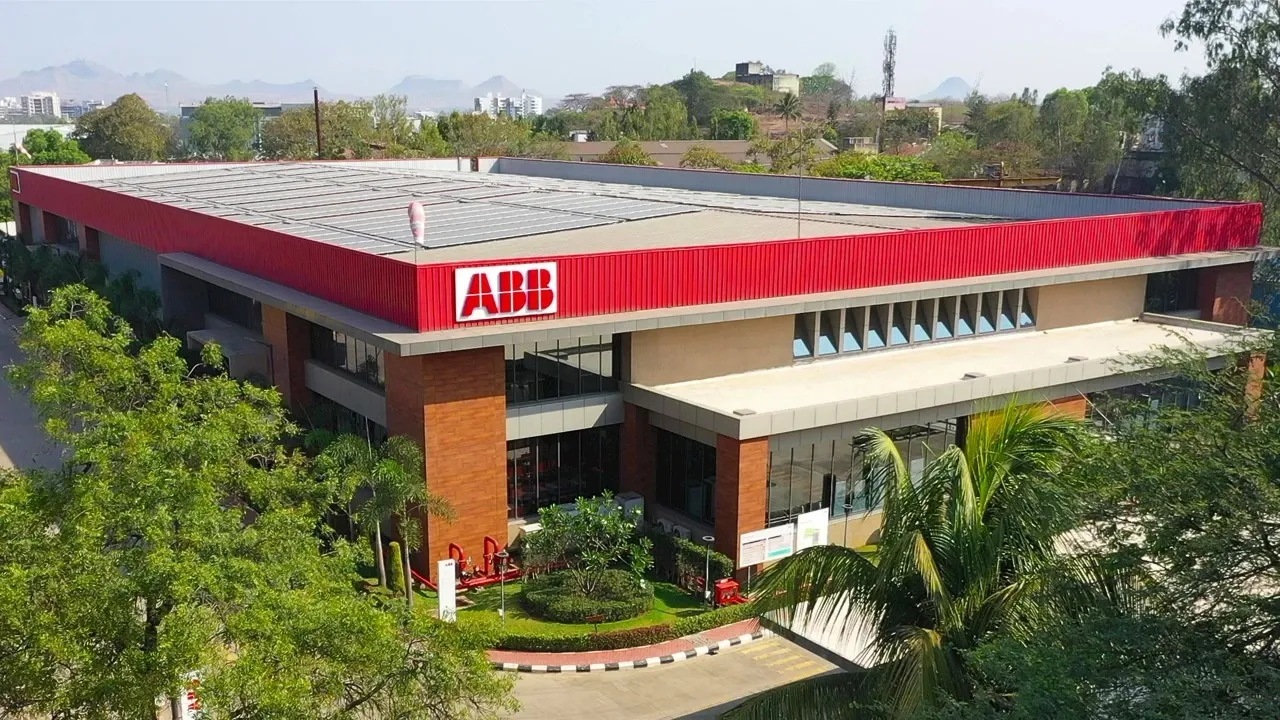
The engineering giant ABB India has just dropped a financial bombshell that has sent ripples through the industrial sector. In a quarter where most large-cap heavyweights are grappling with margin pressures and global supply chain volatility, ABB has reported a net profit of ₹1,784 crore for the first quarter ended March 31, 2026. This isn’t just a routine growth story; it is a massive outlier driven by a high-stakes corporate restructuring that has fundamentally altered the company’s balance sheet.
Investors are currently staring at a profit figure that is nearly four times the previous quarter’s performance. While the operational revenue grew by a modest 6% YoY, the headline profit was catapulted into the stratosphere by a one-time gain of ₹1,658.48 crore from the sale of its Robotics business. This move wasn’t just about cash—it was a bold “slump sale” to a separately listed entity, signaling a pivot toward a more streamlined, automation-heavy future.
However, behind the spectacular gain lies a nuanced operational reality. The company’s core “Continuing Operations” actually saw a dip in profit before tax, falling from ₹613.66 crore last year to ₹461.87 crore this quarter. We are seeing a classic “restructuring play” where the optics of a massive gain might be masking short-term operational headwinds in the core segments.
Is the market overvaluing the one-time cash windfall, or is this the beginning of a leaner, more profitable ABB 2.0? With the order book standing at a staggering ₹9,958 crore, the company is literally sitting on a mountain of future work. Yet, the question remains: Can they execute these orders without the margin dilution we saw this quarter?
1. At a Glance
The numbers coming out of ABB India’s latest filing are nothing short of a statistical anomaly. The company reported a net profit of ₹1,783.65 crore for Q1 FY26. To put that in perspective, that is more than the entire profit they made in the full year of 2023. This is not organic growth; this is the result of a surgical corporate maneuver.
The primary driver is the “slump sale” of the Robotics division to ABB Robotics India Pvt Ltd for a consideration of over ₹1,568 crore. This has left ABB India with a massive cash pile but a slightly smaller operational footprint. While the robotics segment only contributed about 5% to the revenue mix, its departure marks a significant shift in the company’s long-term identity.
The order book is the real “hero” of the narrative, currently valued at nearly ₹10,000 crore. In just the first three months of 2026, the company bagged new orders worth ₹3,751 crore. This reflects a massive appetite for electrification and motion solutions in the Indian market, particularly from sectors like data centers, railways, and renewables.
But here is where the “scare” factor comes in: Operating margins have taken a hit. The PBIT (Profit Before Interest and Tax) for the Electrification segment dropped from ₹335.55 crore to ₹236.97 crore YoY. Similarly, the Automation segment saw its segment results slide from ₹96 crore to ₹70 crore.
Management has attributed this margin compression to the “Quality Control Order” (QCO) and a strategic shift to higher-cost imported materials to maintain compliance. Essentially, they are sacrificing short-term margins to ensure they don’t run into regulatory or quality walls later. This is a classic “auditor’s red flag”—when costs rise faster than revenues, the “efficiency” story starts to leak.
Total revenue from operations for the quarter stood at ₹3,184 crore, a steady but unspectacular 5.78% increase. This suggests that while the order book is full, the “execution engine” isn’t necessarily speeding up. The market is paying a premium P/E of over 97, which assumes that these orders will eventually translate into high-margin realizations. If they don’t, the valuation looks like a house of cards.
2. Introduction
ABB India is the poster child for the “India Capex” theme. As a subsidiary of the global powerhouse ABB Ltd, it operates as the bridge between cutting-edge Swiss-Swedish engineering and the raw, growing infrastructure needs of the Indian subcontinent. It doesn’t just sell products; it sells the “brains” behind the power grid and the “muscles” behind the factory floor.
The company’s operations are divided into four clear pillars: Electrification, Motion, Process Automation (now renamed simply as Automation), and Robotics. Each of these serves a critical niche in the industrial ecosystem. When you see a high-speed train moving or a massive data center humming, there is a high probability that ABB’s switchgear or motors are doing the heavy lifting.
What makes ABB fascinating right now is its extreme proximity to the “Golden Themes” of 2026:
- Data Centers: Now accounting for nearly 11% of the backlog.
- Railways: Strategic partnerships like the one with Titagarh Rail are filling the Motion segment’s coffers.
- Energy Transition: Solar inverters and EV infrastructure are no longer “side projects”; they are core to the Electrification segment.
Despite being a seven-decade-old entity, the company is acting like a startup in its pursuit of new technologies. It recently partnered with an AI startup, UptimeAI, to bring predictive maintenance into heavy industries. This shows a management that is painfully aware that “heavy metal” engineering alone won’t sustain a 97 P/E ratio—they need “silicon” and “software” in the mix.
The recent management shuffle, with TK Sridhar set to take the helm as MD in 2027, suggests a focus on financial discipline and long-term strategic continuity. However, the immediate challenge is managing the transition after losing the Robotics segment. Will the remaining divisions be able to pick up the slack, or has ABB