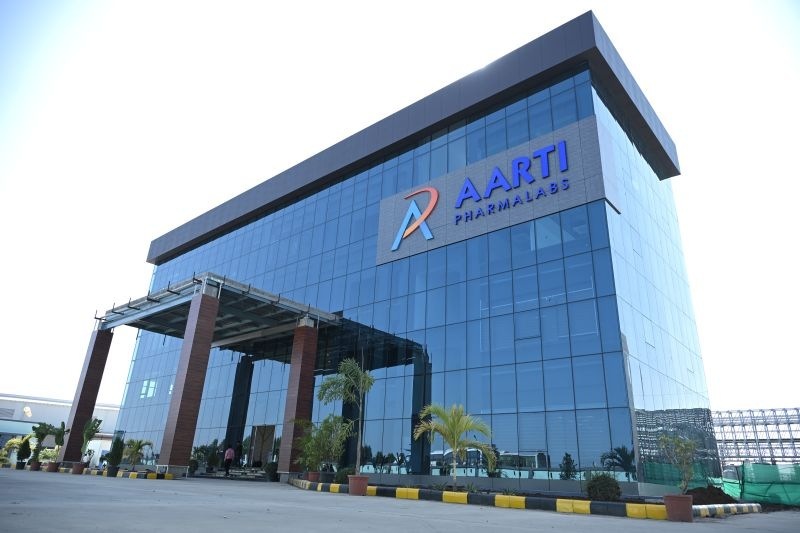
Aarti Pharmalabs Mar 2026: The ₹685 Crore Debt Clue Behind the Caffeine Rush
Date of Publishing -
Spotted a factual error — a wrong number, date, or fact? Tell us and we will check the source.
Section 1 — At a Glance
Aarti Pharmalabs completed its fiscal year 2026 performance with a set of numbers that highlights a profound mismatch between physical capacity expansion and bottom-line optimization. Consolidated operational revenue for the full year stood at ₹1,819.44 crore, down 14.0% compared to ₹2,115.10 crore in the previous fiscal year. This topline deceleration was accompanied by a sharper compression in profitability, with net profit plunging 35.9% to ₹174.70 crore from ₹272.40 crore in fiscal year 2025.
The primary operational dilemma lies in the aggressive capital deployment cycle running concurrently with external margin pressures. Total debt ballooned from ₹396.40 crore to ₹685.60 crore in a span of twelve months, driven by the commissioning of Phase 1 of the greenfield Atali project and ongoing brownfield expansions at Tarapur. While the company succeeded in logging record quarterly sales within its contract development and manufacturing organization (CDMO) and Xanthine business units during the final quarter, these volume achievements were heavily offset by asset startup costs, double-digit inflation in core chemical inputs like methanol and urea, and an escalating financing cost architecture. Long-term structural visibility remains tied to customer asset dedication timelines, even as near-term returns face severe dilution from under-absorbed overheads. Profitability contraction highlights the fundamental reality that scaling physical capacity is entirely distinct from capturing economic surplus. Investors are left analyzing whether this multi-crore investment blueprint will translate into market leadership or permanent margin degradation.
Section 2 — Introduction
Aarti Pharmalabs represents the textbook corporate case study of a spin-off navigating its teenage years. Born out of the demerger from its parent entity, Aarti Industries, in October 2022, the company was designed to operate as a nimble, focused player in the pharmaceutical ingredients space. Fast forward to 2026, and the independent entity finds itself in the deep end of a capital expenditure cycle, trying to establish its own global footprint away from the protective shadow of the broader group.
The corporate strategy involves transitioning from low-margin intermediates into regulated active pharmaceutical ingredients (APIs) and high-margin CDMO services. To achieve this, management has spent the last few years turning cash into stainless-steel reactors across Maharashtra and Gujarat. However, as the latest financial performance demonstrates, the global pharmaceutical supply chain is rarely sentimental about new capacity additions, forcing the company to balance heavy depreciation charges with structural pricing headwinds.
Section 3 — Business Model: WTF Do They Even Do?
If you have ever consumed an energy drink or an over-the-counter cold medication, there is a high probability you have indirectly contributed to Aarti Pharmalabs’ topline. The company essentially splits its operations across three segments that look like they belong to completely different corporate personalities.
First is the Xanthine Derivatives division, contributing 49.6% of the revenue mix. Here, the company behaves like a global industrial utility, holding a 15-20% global market share in synthetic caffeine. Sixty-five percent of this output goes straight to the beverage industry to keep global consumers awake. Second is the API & Intermediates division (41% of revenue), which manufactures complex molecules for oncology, cardiovascular, and diabetic treatments. Finally, there is the CDMO/CMO business (9.6% of revenue), where they act as an outsourced laboratory and factory for global drug innovators. It is a business model that attempts to marry the steady, predictable cash flows of soda consumption with the high-risk, high-margin lottery of clinical drug trials.
Section 4 — Financials Overview
Figures are consolidated, in ₹ crore.
Consolidated Performance Matrix
Metric
Latest Quarter (Mar 2026)
YoY (%)
QoQ (%)
Revenue
583.00
+3.37%
+34.95%
EBITDA
113.00
-22.60%
+10.78%
PAT
61.12
-30.68%
+27.08%
EPS (₹)
6.74
-30.87%
+27.41%
The sequential jump of 34.95% in revenue looks spectacular until you notice that expenses outpaced it, rising 37.1% QoQ to ₹470.00 crore. The primary culprit behind this margin pressure was a severe asymmetry in cost pass-through capability.
What is Management Promising in the Coming Quarters?
During the latest earnings deliberations, management maintained a highly confident posture regarding the execution timeline of its expanded assets. The Chief Executive Officer noted:
“Having cleared the customer audits, the site is well positioned to support CDMO and intermediate production. Phase 1 at Atali is likely to become completely operational by the end of this current quarter.”
Furthermore, management issued a bold forward framework, targeting a 15% to 18% revenue and EBITDA compound annual growth rate (CAGR) over the next 3 to 4 years. They