Aartech Solonics FY26: A ₹40 Crore Engineer Where Operating Profit Multiplied 5x and a Factory Caught Fire in the Same Year
Spotted a factual error — a wrong number, date, or fact? Tell us and we will check the source.
General information and entertainment, not investment advice. The author is not a SEBI-registered adviser or research analyst. No recommendation, no promised returns. Markets carry risk including loss of capital. Figures may not be current. Consult a registered adviser before acting.
1 — At a Glance
Aartech Solonics closed FY26 with standalone revenue of ₹40.18 crore, a record, up from ₹35.70 crore the year before. The line that does the real talking sits one row below: operating profit jumped from ₹0.88 crore to ₹5.00 crore, lifting the operating margin from 2.46% to 12.44%. For a company that spent FY24 squeezing ₹0.40 crore of operating profit out of ₹32.69 crore of sales, a five-fold move is the kind of number that makes you read the row twice.
PAT landed at ₹3.50 crore against ₹2.04 crore, and reported EPS rose to ₹1.10 from ₹0.64. The market currently pays 43x those earnings, against an industry P/E of 38.5 and a peer median near 38.
And yet the same year recorded a fire at the Mandideep factory on 16 October 2025, which damaged inventory and fixed assets. Debtor days stretched from 105 to 148. Operating cash flow stayed negative for a third year. A company whose margins finally arrived also sent its working capital wandering.
The tension here is simple to state and hard to settle: the profit-and-loss statement had its best year in a decade while the balance sheet and cash flow kept their own counsel. Which one is telling the truth about FY26?
2 — Introduction
Aartech Solonics was incorporated in 1982 and has spent four decades describing itself as an application-engineering specialist for the energy sector. It listed on the BSE SME platform, then migrated to the main boards of both BSE and NSE in 2023 — a graduation that takes most SMEs years and takes some forever.
The recent corporate history is busy in the way small caps often are. In FY24 the company ran a share split and a 1:2 bonus issue, which is why the share count on the data sheet jumps from roughly 1.06 crore shares to 3.18 crore adjusted shares and why per-share figures across years are restated to match. In FY26 the company laid the foundation stone for a new energy-storage manufacturing facility near Narmadapuram in Madhya Pradesh, aligned with the Make-in-India framing the management favours.
The headline product lines remain Bus Transfer Systems, Control & Relay Panels, ultracapacitors, and a growing defence-applications basket. Management characterises the operating environment as turbulent and its own strategy as taking entrepreneurial risk on newer technologies rather than defending a narrow legacy book — a posture that explains both the margin swings and the long project cycles.
The board also appointed M/s Simran Khanuja & Co. as internal auditors for FY27, a firm established in 2023. The statutory auditor’s report carried an unmodified opinion with one emphasis-of-matter note, which Section 13 returns to.
3 — Business Model: WTF Do They Even Do?
Strip away the brochure language and Aartech sells electrical reliability — the boxes and panels that keep power flowing when something upstream blinks. The legacy bread-and-butter is the Control & Relay Panel line, running since the 1980s. Management itself calls this line “very price-sensitive” with “very, very tough competition in terms of margins.” It is the volume that pays the salaries, not the line that makes the margin sing.
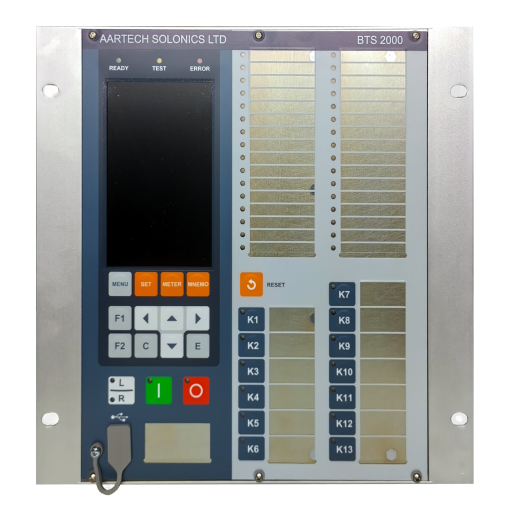
The Bus Transfer System (BTS 2000) is the rugged classic — installed bases that management expects to run for a decade without drama, which is excellent for the client and means the segment increasingly leans on retrofit demand rather than fresh installs. Management put export margins on BTS at roughly 35–40%, then noted blended profitability tapers to a net 10–15% once the competitive products dilute it.
Then there is the defence basket — the AAPM (Alternative Adaptive Power Module) and EMLS (Electromagnetic Launch Systems) — which management frames as the “sunrise” area: higher margins, very high entry barriers, long gestation. The honest translation: the most exciting products are also the slowest to turn into invoices. Management stated AAPM completed validations across the Indian Army’s Northern, Western and Southern commands and that a patent is expected in 12 to 18 months. Promising, unscheduled.
The revenue mix the company has disclosed leans heavily domestic — management estimated exports at roughly 10% of revenue, with about 90% sold at home, citing geopolitical unpredictability as the reason for not pushing harder abroad.
So: a price-war volume business funding a slow-burn innovation business, with a margin that depends entirely on which mix shows up in any given quarter. Which is exactly what the quarterly numbers do — they lurch.
Does a 35–40% export margin matter when the product mix only lets 10–15% reach the bottom of the page?
4 — Financials Overview
Figures are standalone, in ₹ crore.
Metric
Latest Q (Mar 2026)
YoY (Mar 2025)
QoQ (Dec 2025)
Revenue
17.46
10.13
7.38
Operating Profit
1.17
-2.58
2.31
PAT
0.73
-2.50
0.63
EPS (₹)
0.23
-0.79
0.20
The Q4FY26 quarter swung the company from a loss-making Q4 last year to a profitable one —