General information and education, not investment advice. The author is not a SEBI-registered adviser or research analyst. No recommendation, no promised returns. Markets carry risk including loss of capital. Figures may not be current. Always consult a SEBI-registered adviser.
1. At a Glance
Asarfi Hospital runs two hospitals inside one district of Jharkhand. Revenue from operations for the three months to June 2026 was ₹47.34 crore, against ₹35.66 crore a year earlier, a rise of 32.8%. Operating profit was ₹9.42 crore against ₹7.03 crore. Net profit was ₹4.27 crore against ₹3.20 crore. Earnings per share came to ₹2.17.
The surgical theatres logged 1,980 procedures in the quarter, up from 1,549. That works out at roughly 22 surgeries a day, which is either a hospital or a very well-organised production line. Both descriptions are on the record.
Occupancy at the cancer unit moved from 42% a year ago to 56%. The super-specialty unit went the other way, from 64% to 59%. The company attributes the dip in average revenue per occupied bed there to the addition of 20 critical care beds. The presentation describes that dilution as temporary, since new beds arrive empty and nobody has yet invented a bed that shows up pre-occupied.
Elsewhere in the quarter, the company held a two-day Cancer Conclave in Dhanbad attended by more than 200 oncologists. It also ran a medical education session in Koderma and a hoarding campaign in Godda, Sahibganj and Pakur.
Trade receivables, the money billed but not yet collected, moved from ₹54.07 crore at the end of March to ₹64.65 crore at the end of June on a standalone basis.
A board meeting was set for 25 August 2026. Its agenda includes an item on leaving the SME platform entirely.
2. Introduction
Asarfi Hospital Limited was incorporated in 2005 in Dhanbad, Jharkhand. The corporate journey reads like a masonry project that kept going. An inpatient department arrived in 2008 and a burn department in 2009. The Block-A expansion in 2016 took capacity to 120 beds. A cardiac department and Block-B construction followed in 2017.
Land for the cancer hospital was allocated in 2019 and construction started in 2022. In July 2023 the company raised ₹26.94 crore through an initial public offering and listed on the BSE SME platform, the exchange’s segment for smaller companies. In 2024 the cancer hospital at Ranguni was made operational with an initial capacity of 50 beds.
In 2025 the company signed a memorandum of understanding with Gleneagles Hospital, Chennai. The company describes the result as Jharkhand’s first Multi-Organ Transplant Unit. In 2026 it upgraded the cath lab with a Philips Azurion 5 M12 system and installed a GE dual-detector SPECT gamma camera.
Two decades, one district, and a slide labelled “Journey Over The Years” that needs a smaller font each year to fit everything in.
The legal history is on record too. In June 2024 the Supreme Court disposed of Civil Appeal 6781-6782/2023 in the company’s favour, relating to land allotted by the State of Jharkhand for the cancer hospital. In March 2025 the Jharkhand High Court removed Asarfi Hospital from a civil case relating to cancer hospital land. Building a hospital in India involves acquiring land, and acquiring land in India involves acquiring, eventually, a case number.
The rating history has its own arc. CARE, a credit-rating agency, rated the company from 2022 and revised it to ‘CARE BB+’ in September 2024. In September 2025 CARE published the rating as issuer not cooperating, citing non-furnishing of information for monitoring. In October 2025 Crisil, another rating agency, assigned ‘Crisil BBB-/Stable’ to ₹46.5 crore of bank facilities. Crisil’s rationale cites established market position, promoter experience, a healthy financial risk profile and sound operating efficiencies. Crisil sets against those its geographic concentration and working-capital-intensive operations.
The subsidiary is Asarfi Educational Foundation, consolidated fully.
US
Now live
US Stocks terminal is live
13,000+ US tickers · EDGAR fundamentals · screener and filings feed — the same terminal, for American markets.
Explore →
3. Business Model: WTF Do They Even Do?
They run 350 beds in Dhanbad. That is the whole model, and it is considerably more complicated than that sentence.
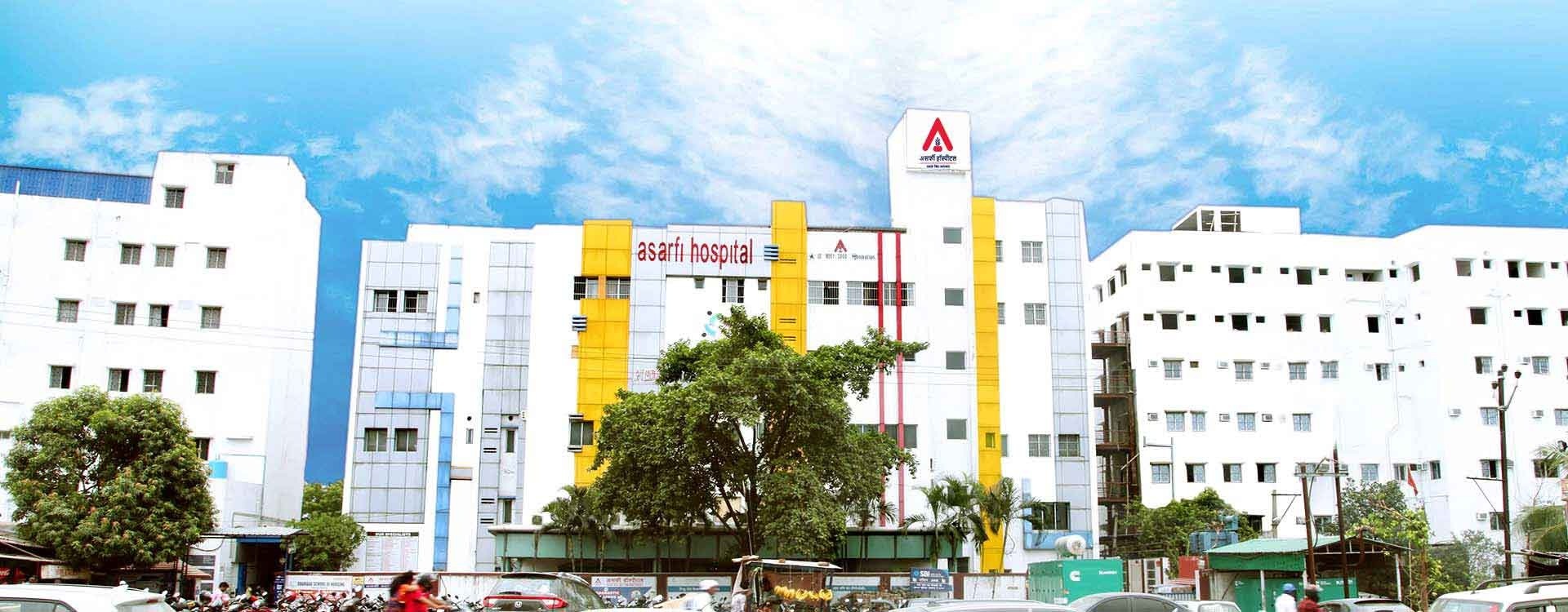
Unit one is a 285-bed super-specialty hospital at Baramuri. The company describes it as the first and only such facility in the Dhanbad region, offering more than 23 specialised departments under one roof. The list runs from neurosciences and cardiology through nephrology, ophthalmology and dental sciences. Physiotherapy, nutrition and pain management sit on it as well. When a hospital’s own slide needs three columns to list its departments, the phrase “under one roof” is doing structural work.
Unit two is the 65-bed Asarfi Cancer Institute at Ranguni, operational since 2024. It sits on 9.55 acres leased from the Jharkhand Industrial Area Development Authority. The company describes it as one of only three dedicated cancer hospitals in Jharkhand, and the only one within a 200 km radius. It runs the Varian TruBeam radiation machine.
Unit three is a Research Institute at Ranchi, 4 km from the airport, on 5.6 acres acquired for ₹13.5 crore. The company plans medical and non-medical research management courses there by the year to March 2028. Through Asarfi Education Foundation it also plans an integrated B.Com LLB programme, with Bar Council of India approval to be sought this financial year for the 2027 academic session. A hospital company quietly building a law programme makes a business-model summary sit down and think for a minute.
Money arrives from two doors. In the three months to March 2026, 84% of revenue came from inpatients and 16% from outpatients. At the super-specialty unit in the three months to June 2026, cardiology brought 23% of revenue, neurosciences 17% and general medicine 12%. The top three specialties there made up 52%, against 60% a year earlier. At the cancer unit, medical oncology is 53%, radiation oncology 18%, surgical oncology 6% and others 23%.
Staffing runs to more than 103 doctors, of whom 70 are full-time in-house, plus more than 1,580 nursing and