Akanksha Power FY26: Revenue Up 16%, Fixed Assets Up 154%, and a Factory That Barely Sold Anything Yet
Spotted a factual error — a wrong number, date, or fact? Tell us and we will check the source.
General information and entertainment, not investment advice. The author is not a SEBI-registered adviser or research analyst. No recommendation, no promised returns. Markets carry risk including loss of capital. Figures may not be current. Consult a registered adviser before acting.
1. At a Glance
Akanksha Power and Infrastructure closed FY26 with revenue of ₹91.62 crore, up from ₹78.74 crore — a 16.36% climb that management attributes to steady order execution. Net profit reached ₹5.83 crore. Operating profit did the heavier lifting, rising to ₹11.39 crore from ₹8.23 crore, pushing operating margin from 10.45% to 12.43%.
Then there’s the balance-sheet line that dwarfs everything else. Fixed assets jumped from ₹15.54 crore to ₹45.60 crore — the presentation flags a 153.94% increase, driven by the acquisition and commissioning of a Medium Voltage capacitor line and technology from TDK, live from 11 February 2026. A plant that expensive, commissioned six weeks before year-end, contributed little to FY26 sales by management’s own account.
So the company spent big on capacity that hasn’t earned yet, while borrowings climbed from ₹26.76 crore to ₹43.08 crore. The market pays roughly 28.5x earnings for the result.
A capacitor maker in Nashik that suddenly weighs like a much larger business — the question is whether the machines start paying rent. Read on.
2. Introduction
Founded in July 2008 by Bipin B. Dasmohapatra, Akanksha Power makes electrical equipment — capacitors, transformers, vacuum contactors, and power-quality panels — for industries and utilities. It listed on the NSE SME Emerge platform in January 2024, raising ₹27.49 crore for capex and working capital, per the Crisil rationale.
FY26 was, in the company’s telling, a year of rewiring. The headline move was the TDK capacitor facility, relocated, commissioned, and commercialized during the year. Around it sat a cluster of announcements: a brand-label agreement with Schneider Electric India for LV-APP capacitors (₹15–20 Cr per year, deliveries from March 2026), a ₹21.59 crore purchase order under Maharashtra’s RDSS programme in April 2025, and the earlier acquisition of a majority stake in Famous Power Limited, a solar subsidiary that holds a letter of award from the Government of Odisha.
Two structural things also happened. CFO Chaitali Dasmohapatra resigned on 23 January 2026, with Sandeep Kedar appointed from 5 February 2026. And a former subsidiary, Akanksha Hanbit Smart Technologies, saw the company’s stake fall from 55% to 23%, ceasing to be a subsidiary as of March 2026 — which management notes makes prior-year figures not strictly comparable.
3. Business Model: WTF Do They Even Do?
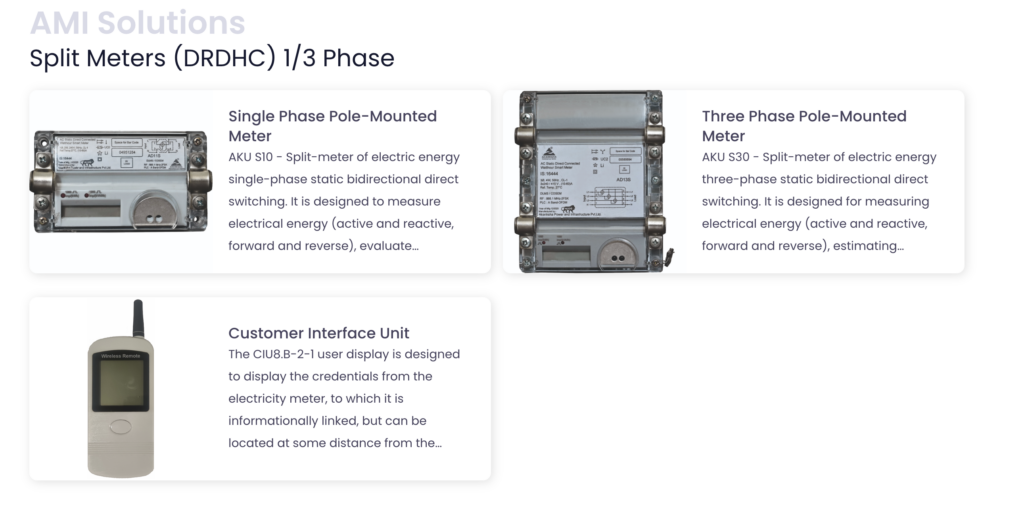
Akanksha sells the unglamorous plumbing of electricity. When a factory’s power factor sags and its motors draw sloppy, inefficient current, someone has to install the boxes that fix it. Akanksha makes those boxes: shunt, surge and pulse capacitors rated up to 40 kV, series reactors, vacuum contactors, current and voltage transformers, residual voltage transformers, and smart meters.
The pitch is a framework the company brands DNA — Diagnose, Navigate, Action — which is a tidy way of saying they measure your power-quality problem, plan a fix, and sell you the hardware to implement it. On top of the metal sits software: a billing-and-analytics platform for utilities that turns meter data into invoices.
By the FY23 disclosures, roughly 54% of revenue came from product and 46% from services and turnkey projects, and the client list reads seriously — Military Engineer Services, HAL, Coal India, Hindalco, IOCL, L&T. The presentation adds newer names it says it won within a short window of the TDK line going live: GE Vernova, NEI, and EPKOM.
The pulse-capacitor brochure lists applications including radar, pulsed lasers, and MRI machines — which is a wide spread for a company doing ₹91 crore of revenue. The product range is broad; the scale underneath it is not. That tension runs through the whole entry.
4. Financials Overview
Figures are consolidated, in ₹ crore. The result type here is half-yearly; the latest reported half is the six months to September 2025.