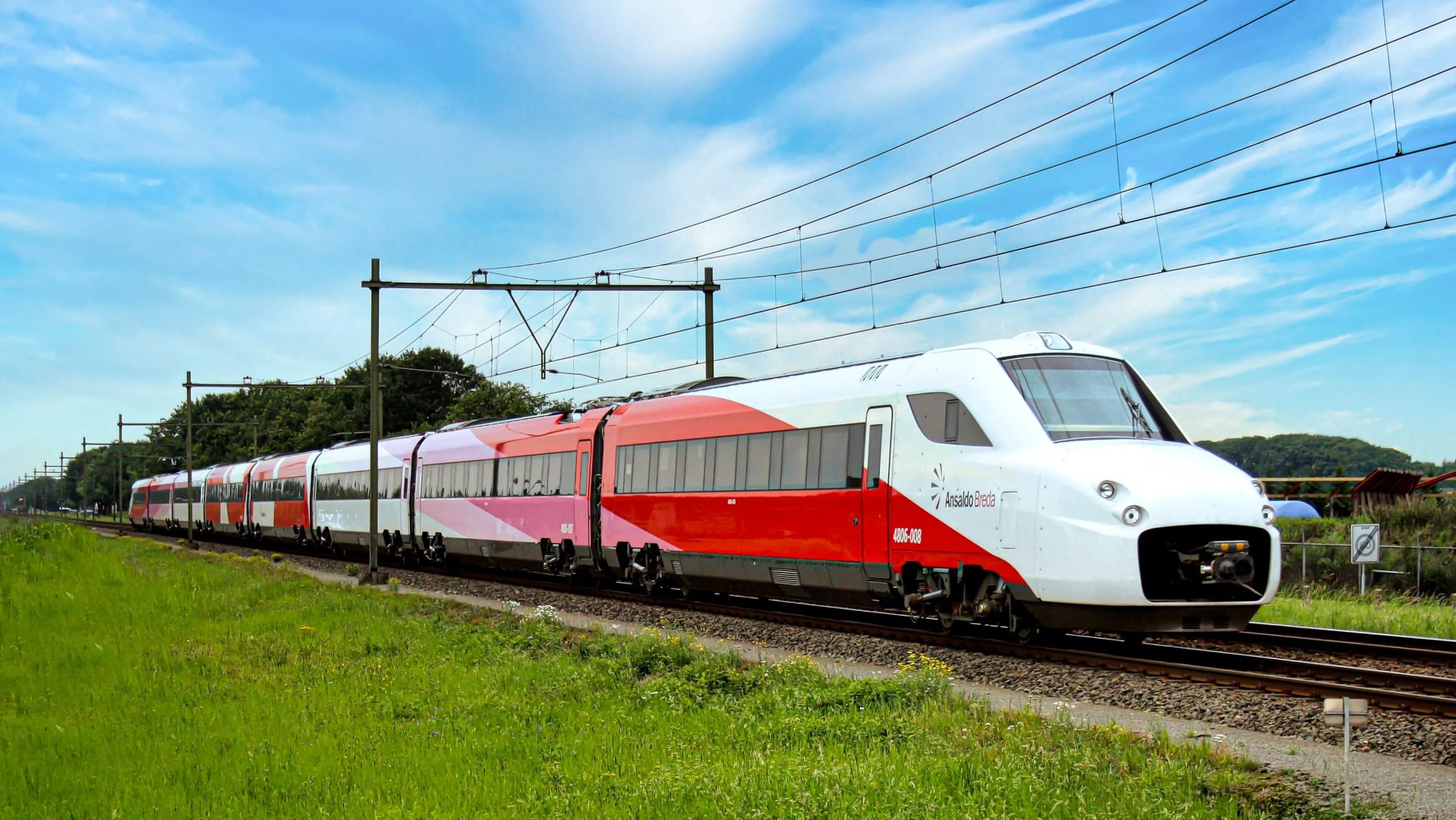
Titagarh Rail FY26: The Freight Engine Shifts to Passenger
General information and entertainment, not investment advice. The author is not a SEBI-registered adviser or research analyst. No recommendation, no promised returns. Markets carry risk including loss of capital. Figures may not be current. Consult a registered adviser before acting.
1. At a Glance
Revenue fell 18% year-on-year to ₹3,186 Cr in FY26—the first decline since the pandemic reset. But passenger coaches hit a production record: 63 units versus 12 the prior year. Net profit shrank 55% to ₹123 Cr, weighed by a ₹270 Cr write-down on the Italian associate’s collapse and an exceptional one-time export reversal on a dormant Singapore subsidiary.
Strip the noise and the freight wagon business held terrain: 9,431 units dispatched, stable margins, no new orders to fear about next year. The passenger segment? Racing 15 metro orders and 1,280 Vande Bharat coaches on the ledger. Order book sits at ₹27,755 Cr—a 77% tilt toward passenger revenue pipelines.
A company mid-pivot. Freight is autopilot. Passenger is the plot.
2. Introduction
Titagarh Rail Systems was born in 1997 as a wagon maker. For 25 years it remained one—market share leader, workhorse for Indian Railways, 12,000-wagon annual capacity. Then came 2019: a metro order from Maharashtra, a foothold in passenger trains, a jetport to Italy (Firema), and the dream of becoming a diversified rail transport manufacturer.
FY26 marks the reckoning. Firema, which consumed equity, loan advances, and collateral guarantees without producing returns, was handed to Italy’s state railways in March 2026. Management took a ₹270 Cr hit to the P&L and declared it “complete exit”—no further bleeding. A Singapore shell (TSPL, incorporated 2008 but dormant) was sold for ₹1.46 Cr, reversing its prior impairment. These were housecleaning moves.
In parallel, the shipbuilding arm was spun off into a separate subsidiary (Titagarh Naval Systems) with its own capex roadmap and government shipbuilding subsidy to pursue vessel production without consuming the rail balance sheet. The CEO of that shipbuilding unit resigned.
What remains: a pure-play rail systems company redrawing its growth narrative around passenger trains.
3. Business Model: WTF Do They Even Do?
Titagarh makes two things now: wagons for freight and coaches for passengers.
Freight Rolling Stock (93% of FY26 operating revenue): Steel wagons—open-top, flat, hoppers—for coal, minerals, grain, containers. Specialized variants include ballast discharge rakes for railways, vendor-supplied wheels (until recently), bogies, couplers, shells, and defense/bridge subassemblies. The model is volume-driven, price-sensitive, anchored to Indian Railways’ tender rhythm. Margins hover 11-12%. Capacity: 12,000 wagons/year. Actual FY26 dispatch: 9,431—a 12% decline on FY25’s 8,389. The miss came from wheelset supply bottlenecks from the Rail Wheel Factory in Bangalore, not demand collapse.
Private wagon orders (15-20% of freight orderbook) carry better margins and fixed prices but shorter windows. Government orders are the prize—spread across suppliers, long execution windows, built-in price escalators. A leasing license was obtained mid-year; first contract signed with Balmer Lawrie for 2 rakes on a 10-year operating lease. Leasing is framed as a product wrapper, not a standalone business.
Passenger Rail Systems (81% of FY26 operating revenue despite 51% revenue decline YoY): Metro coaches, Vande Bharat sleeper trains, propulsion systems, traction motors. FY26 output: 63 coaches versus 12 in FY25. The ramp is real but lumpy—design, prototype approval, then volume. Pune metro delivered 34 trains (first batch finished its defect liability period, a milestone). Option order won for 12 more Pune trains. Gujarat metros (Ahmedabad, Surat) in supply phase; target: 34 trains by end-FY27. Mumbai Metro (Lines 5 & 6) awarded ₹4,000 Cr order in FY26—240 coaches, designs advanced, first car body production planned Q2 FY27. Bangalore metro: target completion FY27, possible spillover 1-2 quarters. Vande Bharat: 1,280 coaches on backlog, first two trains promised end-Q3 or Q4 FY27. Aluminium coaches entered the mix via Pune; management claims unique domestic breadth (stainless steel and aluminium capability). Backward integration underway: capex to manufacture aluminium flat-packs domestically by FY28 (previously imported from Firema).
The wheelset joint venture (VD Ramkrishna Titagarh Rail Wheels, 50-50 with Ramakrishna Forgings) starts production June 2026—supplies locked in at 80,000 wheels/year for 20 years from Indian Railways, plus internal usage and potential third-party sales. IGBT propulsion systems are under joint development with ABB in a separate JV. Vande Bharat maintenance contract was awarded to a BHEL consortium in which Titagarh plays a support role.
Both segments are operations-intensive, design-heavy on the passenger side, supply-chain fragile, and exposed to government procurement whim. Capex of ₹1,000 Cr is committed over FY26-FY27 to expand coach capacity from 300 to 850 per year and backward integrate into propulsion/castings. Margins are modest but steady on freight; improving on passenger as volume scales and operating leverage kicks in.
4. Financials Overview
Figures are consolidated, in ₹ crore. Result type is Annual (Full Year).
Metric
FY26
FY25
YoY Change
Revenue
3,186
3,868
-18%
EBITDA
381
409
-7%
PAT
123
276
-55%
EPS (₹)
9.13
20.52
-55%
The top line contracted for the first time since FY21, driven by weak freight dispatch (wheelset bottleneck) and passenger segment still ramping (lower volumes despite higher mix %). EBITDA margin compressed to 12% from 11% prior year—a function of the freight slowdown hitting fixed costs. Net profit fell sharply not from operations but from the Firema write-down (₹270 Cr exceptional charge) and TSPL reversal (₹7.2 Cr). Adjusting for these one-time items, operating profit on a like-for-like basis was flat.
Quarterly trajectory: Q4 FY26 showed stabilization. Revenue: ₹875 Cr (Q3 was ₹832 Cr). Operating profit: ₹92 Cr (Q3: ₹91 Cr). Net profit: ₹54 Cr (Q3: ₹45 Cr). Q4 was cleaner than Q3 because Q3 absorbed most of the Firema write-down (₹270 Cr exceptional loss). Wagon production in Q4: 1,700 units versus 1,600-1,700 typical range.
Concall color: Management attributed FY26 passenger revenue compression to a reporting artifact—the segment flipped from 19% of sales in FY24 to 81% in FY25 (when Shipbuilding was reclassified as discontinued ops). FY26 shows 81% again but on a smaller absolute base because freight declined. Going forward, management projects passenger to “follow orderbook percentages”