Arihant Foundations & Housing Ltd FY26: From Hidden to Hustling
General information and entertainment, not investment advice. The author is not a SEBI-registered adviser or research analyst. No recommendation, no promised returns. Markets carry risk including loss of capital. Figures may not be current. Consult a registered adviser before acting.
1. At a Glance
Revenue doubled in FY26, hitting ₹420 Cr against ₹206 Cr in FY25—a company waking up after a long sleep.
Net profit swung from flat to ₹59 Cr, up 38% year-on-year. The operating margin compressed slightly (from 31% to 23%) because volume wins have a cost when a builder is still learning to walk and run at once.
The stock trades at 14.5x FY26 EPS (₹59.17) and 2.3x book value. Debt sits at ₹400 Cr, offset partly by ₹38 Cr cash. The company holds ₹11.2k Cr in GDV across all projects—most waiting to be built, sold, and recognized.
The central tension: a small Chennai real estate firm is scaling fast on the back of a partnership with Prestige Estates and land acquisitions that look opportunistic. But velocity in real estate is measured in quarters and years, not months. Does the runway matter if the plane is still being assembled?
2. Introduction
Arihant Foundations & Housing makes residential, commercial, and senior-living projects across Chennai. The company has been around since 1992—four decades of existence, one decade of visible growth.
FY26 was the year the earnings surprised. Sales jumped 104% year-on-year (₹420 Cr from ₹206 Cr). This is not a random spike. The investor presentation filed in early June 2026 shows pre-sales for FY26 at ₹514 Cr, up 28% YoY. Q4 alone clocked ₹183 Cr in pre-sales, a 46% quarter-on-quarter jump.
In May 2025, the company tied up with Prestige Estates on a framework agreement to develop mixed-use projects in Chennai. The same month, warrant conversion added ₹32.29 Cr to equity capital through 8,96,873 warrants exercised at ₹480 per share. Warrants mean management expected the stock to go higher; holders voted with their wallets.
In March 2026, Arihant and Prestige acquired 16.33 acres in Padi for a 3.6 Mn Sq Ft development with ₹5,000 Cr GDV—the largest deal in Chennai real estate in 15 years, as the company claims. That land was acquired within three months of the Prestige tie-up. The speed suggests confidence, but also that capital is now flowing to the venture.
Recent equity raises brought in strategic investors: CaratLane founders (Mithun and Siddhartha Sacheti), Madhusudan Kela’s Lotus Family Trust, and Category II AIF subscriptions to NCDs. These are not betting on nostalgia; they are betting on growth.
3. Business Model: WTF Do They Even Do?
Arihant builds real estate. The official business is spread across four segments: residential (luxury, mid-income, plotted), commercial (Grade A offices), senior living (retirement communities), and IT parks.
The model is unusual for Indian real estate: ~95% of all delivered area comes from joint developments. This is not pure development management. The company either owns land (or licenses it from families) and brings in institutional capital or partners (like Prestige) to fund and co-develop. Revenue gets recognized as projects are handed over, not when they are sold.
In FY26, the company recognized ₹420 Cr in revenue against ₹514 Cr in pre-sales for the year. This gap—pre-sales ahead of revenue—signals either long cycle projects or the company is selling faster than it is completing. Both are true. Commercial projects (IT parks and offices) often take 3–5 years from land to occupancy. Residential projects cycle at 2–4 years.
The company has 25 Mn Sq Ft already delivered over its life. The current pipeline is 8.1 Mn Sq Ft under development and 2.9 Mn Sq Ft planned (from the investor presentation). That’s roughly a decade of runway at the current sales velocity.
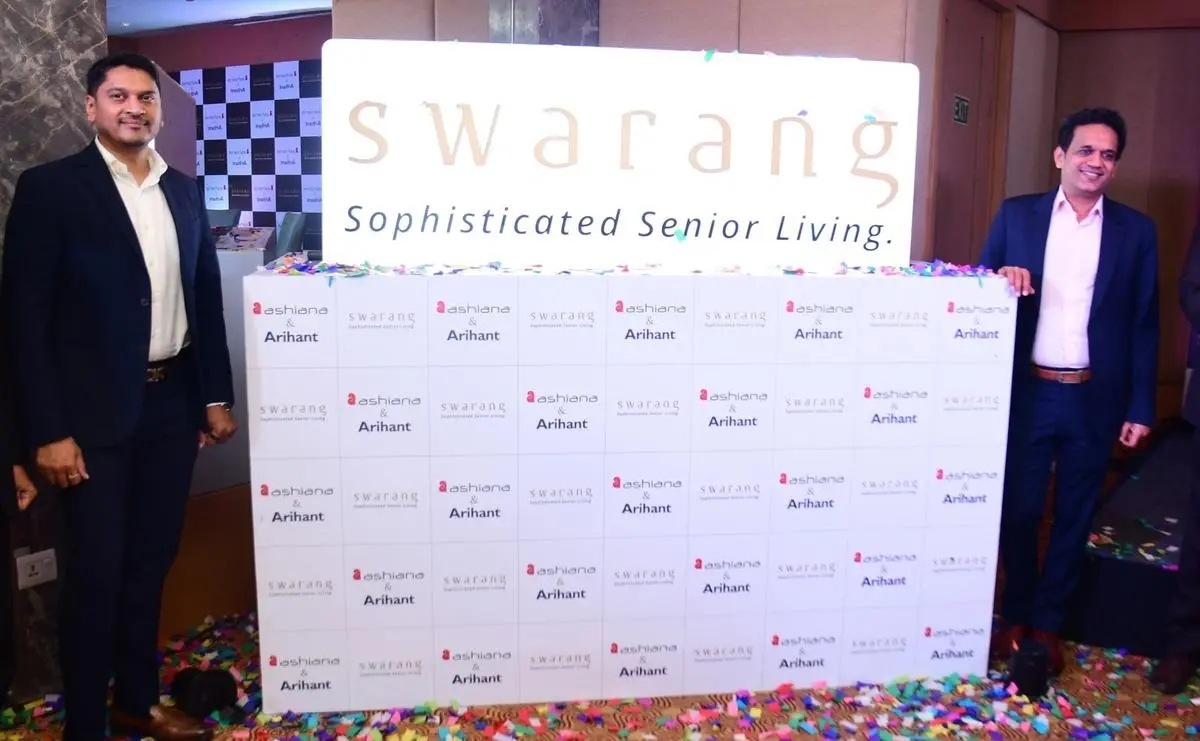
Senior living is a niche and a bet on demographics. India is aging slowly compared to the West, but it is aging. The company has 10.8 Lakh Sq Ft in senior housing projects, a segment it pioneered in Chennai with Ashiana Housing in 2014. First-mover advantage is real; first-mover liability is equally real if the market doesn’t show up.
The JDA with Prestige changes the math. Prestige is bigger, listed, and institutional. A smaller builder suddenly gains access to capital and execution that would take years to build in-house. The trade-off: Prestige’s margin is also Prestige’s cut.
4. Financials Overview
Figures are consolidated, in ₹ crore.
Metric
Latest Q (Q4 FY26)
YoY Change
Prior Q (Q3 FY26)
Revenue
147.61
–
87.80
EBITDA
21.01
–
23.90
Net Profit
4.29
-62.6%
20.04
EPS (reported)
4.30
–
20.11
FY26 Full Year (Consolidated)
Revenue rose to ₹420.32 Cr from ₹206.44 Cr in FY25 (104% YoY). EBITDA was ₹108.75 Cr (from FY26 investor presentation), implying a 26% EBITDA margin. PBT was ₹82.41 Cr, and net profit landed at ₹58.97 Cr (38% YoY).
The Q4 quarterly result shows a dip in net profit (₹4.29 Cr) versus Q3 (₹20.04 Cr). This is the balancing figure between full-year audited results and nine-month unaudited results. The company books handover of completed units lumpy; one quarter’s large handover pushes profit up; the next quarter may see less. Q3 saw ₹20.04 Cr in net profit; Q4 backed out to ₹4.29 Cr as a residual.
EPS for FY26 was ₹59.17 (reported). For Q4, it was ₹4.30 (not annualized). Annualizing Q4 at ×4 would overshoot because Q4 (March) is the full-year closing; the actual FY26 EPS is the ₹59.17 figure already reported.
On the Concall & Presentation
Management flagged pre-sales of ₹513.70 Cr for FY26 (28% YoY growth) against ₹401 Cr in FY25. The forward pipeline fills the visibility gap for FY27. Collections for FY26 were ₹359.56 Cr (49% YoY), a strong signal of customer confidence and project traction.
5. Market Expectations & Historical Multiples
This section describes how the market is currently pricing the company and how that compares with its own history and peer group. It is descriptive, not predictive.