General information and entertainment, not investment advice. The author is not a SEBI-registered adviser or research analyst. No recommendation, no promised returns. Markets carry risk including loss of capital. Figures may not be current. Consult a registered adviser before acting.
1 — At a Glance
Revenue hit ₹391 Cr in FY26, up 11.5% year-on-year. Net profit stayed flat at ₹25.3 Cr—no growth to write home about.
The company’s stock has returned 410% in one year, 181% over three years. On the raw numbers: the company paid no dividend. Ever. So returns are pure capital appreciation.
A modest honey processor with a booming share price and a question mark the size of a balance sheet.
The multiple trades at 32.7x earnings—well above the food-processing peer median of 18.7x. An arbitrage between street buzz and fundamentals.
2 — Introduction
Apis India was incorporated in 1983, then bought by Deepak Anand’s family in 2006. The Anands—now run by Amit and Vimal—own 74.7% of the company.
The equity capital structure went haywire in Dec 2025 when the board issued a 24:1 bonus. Pre-bonus, the company had ₹5.5 Cr shares outstanding; post-bonus, ₹138 Cr shares. That is, the nominal count exploded, but the economics didn’t budge.
The company sits in Roorkee, Uttarakhand, with a honey processing capacity of 100 metric tonnes per day. It also has a Dubai facility.
Revenue used to be 85% honey (FY18). By FY25, that had shrunk to 70-75%, diluted by dates, cornflakes, soya, vermicelli, pickles, jams, and tea. A portfolio spread that is strategic, if not yet profitable.
Exports account for roughly 45% of revenue—a cushion against domestic price wars. Top 10 customers represent 45-50% of sales. Concentration risk with a global exit ramp.
3 — Business Model: WTF Do They Even Do?
Core play: honey.
The company sources raw honey (mostly from mustard-flower seasons, so inventory swells and shrinks), processes it in-house, and sells flavoured variants (ginger, lemon, tulsi, organic, honey with nuts, with comb) to B2B and B2C.
B2B: bulk sales to food companies, institutional buyers. B2C: retail brands like “Apis” on e-commerce, modern trade, direct sales. The latter got its own subsidiary (Anantdrishti Smart India) in July 2023—an attempt to sandbox retail away from wholesale cycles.
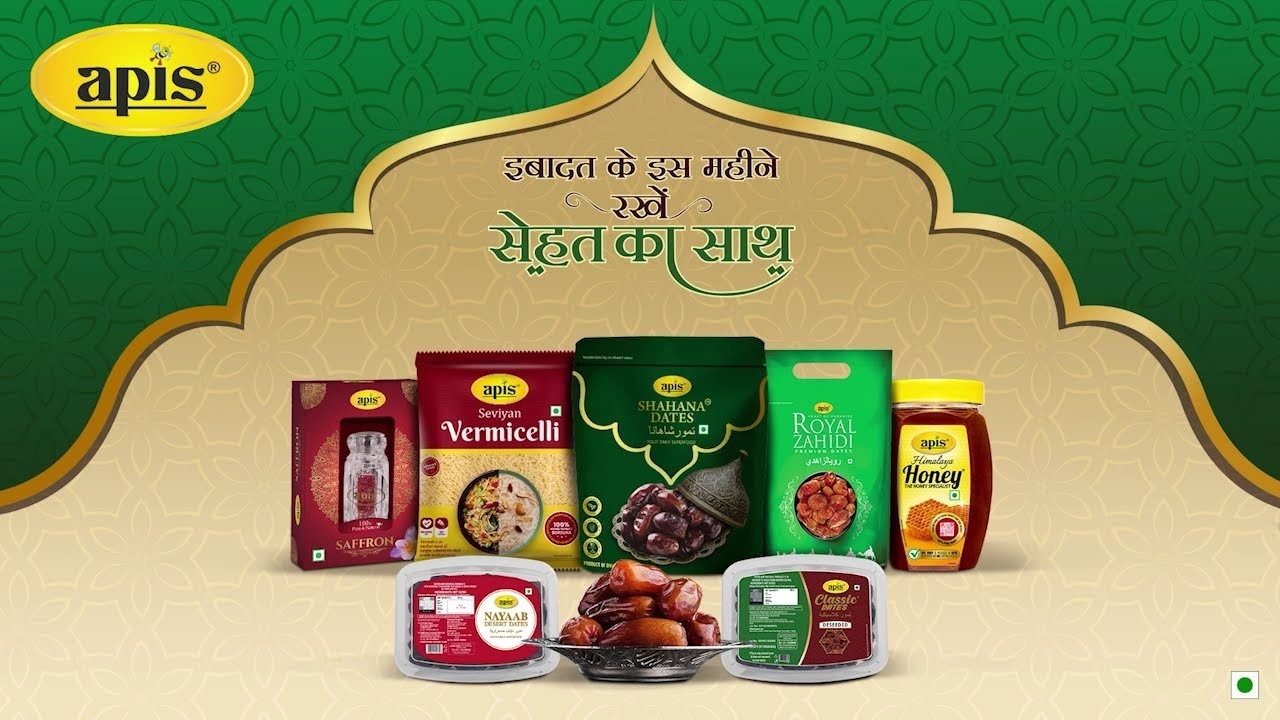
The pivot into dates, cornflakes, pickles, and preserves is real, but marginal. These are the undercard items. Honey is still the ring.
The margin tension is built-in: raw material is 60% of sales, so any slip in procurement or commodity pricing kills operating profit. The company’s OPM has swung from 5% to 16% over recent years—a sign that cost control and product mix both matter.
4 — Financials Overview
Figures are consolidated, in ₹ crore.
Metric
FY25
FY26
YoY Change
Revenue
350.3
390.5
+11.5%
EBITDA
40.3
41.4
+2.7%
PAT
25.3
25.3
+0.1%
EPS (₹)
1.84
1.84
—
Quarterly performance (Q4 FY26):
Q4 sales were ₹97.9 Cr (+8.6% QoQ), but net profit came to ₹10.4 Cr (+27.3% QoQ). The quarter was lumpy—other income spiked at ₹4.05 Cr (vs. ₹0.74 Cr in the prior quarter), padding the bottom line.
What the numbers show:
Top-line momentum is real (11.5% full-year), but profit has gone nowhere. EBITDA grew only 2.7% while revenue grew 11.5%—a sign of margin compression on the back of higher employee costs (₹39.5 Cr in FY26 vs. ₹27 Cr in FY25, +46%). The company added 356 employees to its roll (from 221 to 577 between FY25 and FY26). That’s ambitious hiring—either the company is gearing up for a scale play, or running burn in labour-heavy channels like retail.
5 — Market Expectations & Historical Multiples
This section describes how the market is currently pricing the company and how that compares with its own history and peer group. It is descriptive, not predictive.
Metric
Current
5-Yr Average
Peer Median
P/E
32.7x
35.9x
18.7x
ROE
13.6%
16.0%
17.2%
ROCE
14.6%
—
17.8%
OPM
9.2%
10.5%
11.2%
The market currently pays 32.7x earnings here, sitting below its own five-year average of 35.9x but nearly double the peer median of 18.7x. At current multiples, the market is pricing in a story: either faster profit growth, or structural margin improvement, or both.
ROE at 13.6% lags the peer set at 17.2%; ROCE at 14.6% also trails peers at 17.8%. Yet the earnings multiple is nearly 2x higher. The gap suggests the market is pricing a recovery in capital efficiency—a bet on