General information and entertainment, not investment advice. The author is not a SEBI-registered adviser or research analyst. No recommendation, no promised returns. Markets carry risk including loss of capital. Figures may not be current. Consult a registered adviser before acting.
1. At a Glance
A cotton spinner sitting at ₹656 Cr revenue with pre-tax margins collapsing into single digits. Earnings fell 19% year-on-year while sales grew 3% — the classic disconnect between top-line momentum and profit delivery.
The balance sheet hides no catastrophe: ₹92 Cr borrowed against ₹164 Cr net worth. Cash is thin at ₹0.75 Cr. Operating cash flow clocked ₹23 Cr, reasonable, but the company paid down debt like it had somewhere else to put capital.
But here’s the tension worth watching: the market prices it at 135x earnings while the company’s own return on capital (ROCE) sits at 10.1%. Something has to give — either the market’s pricing story or the company’s ability to deploy cash productively.
2. Introduction
Pashupati Cotspin Ltd, incorporated 2017, is a Kadi-based cotton ginning and spinning outfit under the Pashupati umbrella — a group two decades deep in textiles. The company spins cotton yarn and makes cotton bales, selling what amounts to commodity fiber to knitting and weaving units.
It’s listed on the NSE SME platform, promoter-owned to 66%, and has spent the last three fiscal years tilting toward capacity. Installed spinning capacity jumped from 12,050 MT (FY22) to 51,840 spindles (later data points), while ginning capacity scaled to 63,000 MT per annum.
In May 2026, a board reshuffle: cost auditor and internal auditor appointed for FY27. Nothing seismic, but a sign the oversight machinery was being oiled.
3. Business Model: WTF Do They Even Do?
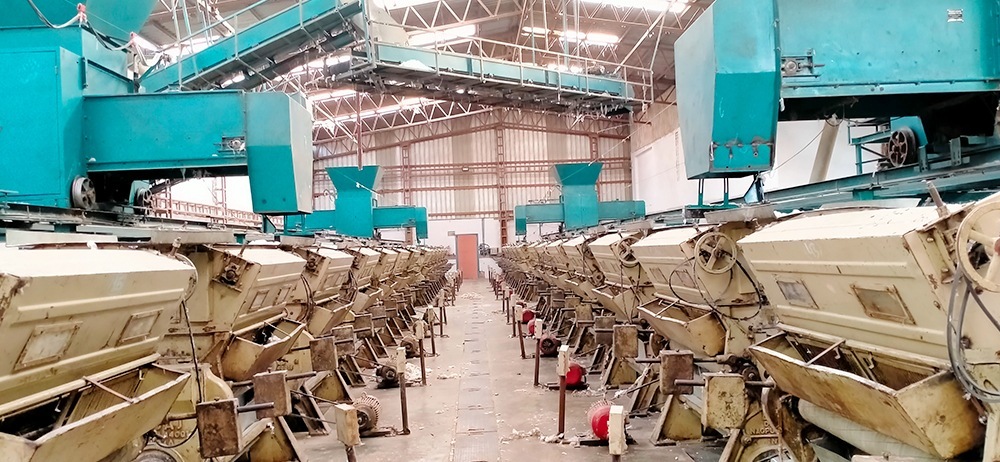
Cotton ginning: the company buys raw cotton and separates seed from fiber, producing cotton bales and black cotton seeds. Revenue breakup from FY23 shows yarn sales at ~50%, by-products at ~32%, other operating revenue ~17%.
Spinning: the ginned cotton feeds into spindles. The company produces Ne 20s to 40s yarn — grades for knitting and weaving applications. Certified under BCI, Organic, Fair Trade standards, a nod to buyer preferences.
The model is old: buy raw material, process, sell commodity output. Margins depend on input cost (raw cotton is priced in global markets) and production efficiency. The company’s OPM has sat between 3–5% for years. That’s tight. A spike in cotton costs or a dip in realized prices can evaporate operating profit within a quarter.
Capacity is 37,000 spindles and 63,000 MT ginning per annum, but utilization data is sparse in filings. If spinning is running at 60%, you’re making far less yarn than installed capacity suggests — a clue the business sits in a buyer’s market where demand pulls, not capacity pushes.
4. Financials Overview
Figures are consolidated, in ₹ crore.
FY26 Annual Results:
Metric
FY26
YoY
QoQ (vs FY25)
Sales
656
3.0%
+3.0%
Operating Profit
24
-18%
Compressed
Pat
10.4
-19%
Decline
EPS
0.66
-19%
Decline
The FY26 story: revenue nudged up, but operating margins got squeezed. Operating profit fell from an implied ₹30 Cr (FY25) to ₹24 Cr, a ₹6 Cr hit. Other income cushioned the P&L — ₹9.99 Cr booked in FY26 versus ₹13.96 Cr in FY25. Strip other income out, and the core business eroded harder.
Q4 FY26 (Quarter ended Mar 2026):
Sales of ₹160 Cr, down from ₹241 Cr in Q2 FY26 and ₹147 Cr in Q3. Net profit collapsed to ₹1.62 Cr in the final quarter. Operating profit was ₹7.39 Cr, an OPM of 4.6%. A year ago, the same quarter reported ₹2.36 Cr net profit on ₹156 Cr sales.
The numbers flag a business in reactive mode — swinging between tight margins and rare profitable quarters.
5. Market Expectations & Historical Multiples
This section describes how the market is currently pricing the company and how that compares with its own history and peer group. It is descriptive, not predictive.
Valuation Snapshot:
Metric
Current
5-Year Average
Peer Median
P/E
135x
61x
25x
EV/EBITDA
43x
n/a
~18x
P/B
8.5x
n/a
1.8x
ROE
6.5%
7.5%
7.4%
The market currently pays 135 times FY26 earnings for Pashupati. Its own five-year average stands at 61x, and the textile peer group median sits near 25x.
The gap is stark: the stock trades at more than five times the peer multiple on comparable or weaker return metrics. What explains this? The most likely reading is that the market is pricing two things: (a) a belief that FY26 earnings are a floor, not a trend, and (b) hope that ongoing capacity investments will unlock margin recovery downstream.
Alternatively, low float on the SME platform and retail concentration may inflate the multiple artificially. The stock has returned 33% over the last year and 102% over three years. Retail momentum and scarcity premiums can co-exist alongside weak fundamentals.
ROE stands at 6.5%, slightly below the peer group average of 7.4%. ROCE is 10.1%, above some peers but below the spread — a sign that fresh capital deployed is not earning more than its cost in the near term.
The market appears to be pricing recovery, not current performance.
6. What’s Cooking
Equity Split Approved (March 2026): Shareholders voted to sub-divide the face value from ₹10 to ₹1 per share. This increases the share count (mechanically) but does not alter cash, assets, or earnings per share post-adjustment. A stock at ₹88.99 becomes ₹8.90, with 15x more shares outstanding. Liquidity on the SME platform may improve; intrinsic value does not.
Board Audit Appointments (May 2026): Cost and internal auditors appointed for FY27. Standard compliance machinery; no drama.
Final Dividend Recommended (May 2026): Board recommended ₹0.05 per share for FY26, a payout ratio of ~8%. Modest. Suggests management is retaining cash for capex or debt paydown.
FII Entry (Oct 2024–Present): Foreign institutional holdings climbed from 0% in Sep 2024 to 13.2% by Mar 2026. Craft Emerging Market Funds hold ~7% combined. A turnabout in ownership structure, though the promoters remain at 66%.
Credit Rating Downgrade (Dec 2023): Brickwork Ratings downgraded the long-term bank loan facility (₹137 Cr) from BWR B Stable to BWR C in December 2023, citing the company’s non-cooperation and absence of forward projections. The short-term rating (₹7.5 Cr) held at BWR A4. The “Issuer Not Cooperating” tag flags opacity in lending relationships.
Promoter Selling (Oct 2024): The shareholding chart shows the Pashupati Texspin Export LLP (a promoter vehicle) reduced its stake from 7.07% in Mar 2024 to 2.11% by Mar 2026. A parallel reduction across individual promoter holdings hints at gradual dilution, possibly to create public float or to raise capital discreetly.
The balance sheet is bland in the best sense: no hidden land banks, no equity investments that scream undervaluation. Fixed assets are ₹120 Cr, mostly plant and machinery. Other assets (mostly debtors and stock) are ₹136 Cr.
Working capital is a joke. Debtors sit at ₹49 Cr, inventory at ₹49 Cr. Cash is ₹0.75 Cr. The company is essentially financing its