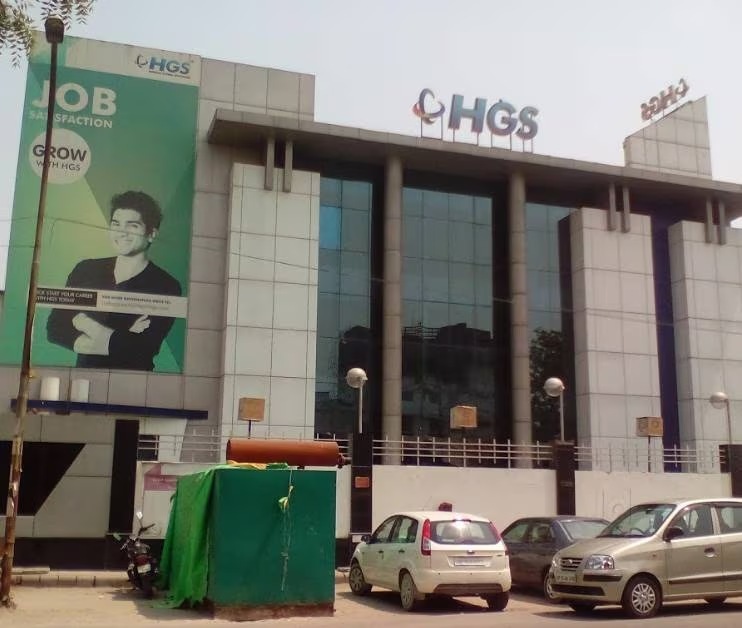
Hinduja Global Solutions Q4 FY26: Transformation Pain Runs Deep
General information and entertainment, not investment advice. The author is not a SEBI-registered adviser or research analyst. No recommendation, no promised returns. Markets carry risk including loss of capital. Figures may not be current. Consult a registered adviser before acting.
Prices referenced are not live and are as of 11 June 2026.
1. At a Glance
The year was sold to shareholders as “disciplined transformation”—cost-cutting, AI investment, operational simplification. But the financials land like a puzzle with missing pieces.
Revenue fell to ₹4,307 crore in FY26 from ₹4,404 crore a year prior. That’s a 2% retreat. Net profit collapsed: from ₹121 crore to ₹32 crore. The company will propose a dividend—₹5 per share—yet sits on a net cash pile of ₹5,346 crore and burning through working capital fast. Operating margins have flatlined at 2.3% in Q4.
The BPM division lost clients. The media business (NXT Digital) bleeds: management acknowledged “steep losses” of ₹175 crore for the year but declined to give a turnaround date. New AI solutions like Agent X have 23 active customers. The 79 new logos management boasted about FY26 are supposed to drive recovery, but the top line suggests they haven’t landed yet.
The market still waits to see which story is true: recovery in the making, or a business cycling down under structural pressure. The tension sits unresolved on the balance sheet.
2. Introduction
Hinduja Global Solutions is a 200,000-person Hinduja Group company doing three things: business process management (contact centers and back-office work), digital broadband and TV via NXT Digital, and data analytics and AI services. The group owns Ashok Leyland, IndusInd Bank, and investments in renewable energy and finance.
HGS acquired NXT Digital in late 2022—a big, media-heavy bet. The media business was supposed to diversify beyond the BPM grind. Instead, it became a drag: linear TV declining, broadband struggling, and the merger lit a tax audit fuse. In October 2025, the tax panel ruled the NXTDigital acquisition a “disguised avoidance” under GAAR rules and slapped HGS with a ₹282-crore tax demand. Company has appealed and obtained interim stay.
FY26 was billed as “year one of simplification”—cutting layers, consolidating the BPM and digital arms into a single go-to-market, and pivoting to AI-led solutions. Management pointed to 200 basis points of margin improvement via “real estate, technology and infrastructure” cost-outs. Yet the reported margin contraction tells a different story.
Recent moves: In June 2026, the UP government announced “Project Ganga”—HGS to deploy broadband across 2 million homes in the state over 2–3 years under a CM-backed scheme. The capital will come from the state; HGS supplies expertise and operates the network as a Digital Service Provider. Separately, HGS will skill 100,000 youth in UP in digital trades.
3. Business Model: WTF Do They Even Do?
The business split three ways:
BPM (~55% of FY26 revenue): Contact centers, back-office processing, payroll outsourcing across North America, UK, Europe, Middle East. Clients span telecom, retail, BFSI, healthcare. The division is mature, margin-thin, client-concentration-prone, and being nibbled by automation and competition from WNS, Genpact, Firstsource.
Media (~30% of revenue): NXT Digital and subsidiaries—digital TV (INDigital brand, satellite-delivered HITS platform) and broadband (iSpeed, OneOTT). Operates across 1,500+ Indian cities, serving ~4 million TV customers and ~1.3 million broadband subs as of Q3 FY26. The DTV business is structurally under pressure (OTT siphoning eyeballs, government free-to-air DD Free Dish eating lunch). Broadband is the growth play but faces entrenched competition from Jio and Airtel.
Digital & Data Analytics (~15% of revenue): New business—TEKLINK acquisition, Celeritics (telecom and enterprise networking), DaVinci (interaction intelligence platform), packaged solutions like AMLens (anti-money laundering), Agent X (AI workflow automation). This is where management pins its recovery hopes.
The portfolio reads like a company trying to be three things at once—legacy commodity services, traditional media, and AI-forward tech platform—with uneven footing in each.
4. Financials Overview
Figures are consolidated, in ₹ crore.
Metric
Q4 FY26
YoY Change
FY 2026
FY 2025
FY 2024
Revenue
1,085
-6.6%
4,307
4,404
4,616
EBITDA
27
-38.0%
99*
263
360
Net Profit (Loss)
(8.3)
(NM)
32
121
133
EPS (₹)
(1.78)
(NM)
6.92
26.10
28.63
EBITDA = Operating Profit + Depreciation; FY26 reflects reported figures from the data sheet.
The top line is in retreat. FY26 revenue of ₹4,307 crore is down from ₹4,404 crore the year before. Management blamed “client rampdowns” in legacy BPM—a polite word for losses. The media division compounded the wound: linear TV churn offset by broadband growth, but broadband margins are still thin.
Operating profit flatlined at ₹99 crore for the full year, a margin of 2.3%—a haircut from the historical 6–8% range. Other income—mostly treasury returns on the ₹5,346 crore net cash hoard—swelled to ₹688 crore and kept the boat afloat. Strip away other income and the business is loss-making.
Net profit landed at ₹32 crore for FY26 against ₹121 crore the prior year. Standalone (India operations), the company lost ₹160 crore, per the CFO on the Q4 call. The consolidated profit is a mirage: built on group treasury income, not operations. Dividends were zero in FY25 and FY26, a shift from historical 20%+ payout ratios. Management now proposes ₹5 per share (50% of face value), subject to approval.
5. Market Expectations & Historical Multiples
This section describes how the market is currently pricing the company and how that compares with its own history and peer group. It is descriptive, not predictive.