Technocraft Industries (India) Ltd: FY26 & Q4 — Five Segments, One Tariff Headwind, One Margin Test
General information and entertainment, not investment advice. The author is not a SEBI-registered adviser or research analyst. No recommendation, no promised returns. Markets carry risk including loss of capital. Figures may not be current. Consult a registered adviser before acting.
1. At a Glance
Revenue climbed to ₹2,759 crore in FY26, from ₹2,596 crore a year prior—a 6% topline move masked by a much messier story underneath.
Profit after tax arrived at ₹285 crore, a 8% bounce from ₹263 crore, yet the margin profile inverted: operating margins held flat at 17% while the P/E multiple languished at 19.8x—below the peer median of 21.5x—suggesting the market has priced in future turbulence rather than growth.
The scaffolding segment, which swallowed nearly half of the business, crumpled under a 50% US tariff regime for much of the year; management conceded volumes halved from July to November, recovering only in December as tariff interpretation eased and US capex spending unlocked.
Net debt retreated to ₹227 crore (from ₹290 crore prior year), a genuine bright spot: ROCE held at 16.1%, ROE dipped to 15%, and cash accrual remained sturdy at ₹243 crore, even under tariff siege.
The tipping point: drum closures and engineering services delivered resilience; textiles remained a loss sink. Scaffolding margin recovery hinges on whether US tariff interpretation favors the company’s cost pass-through.
2. Introduction
Technocraft began in 1972 as a drum closure shop, a category where it now commands 36% of the global market (excluding China).
By 1994 it had pivoted into steel tubes and scaffolding; by 1997, cotton yarn and garments; in 2006, it acquired a US engineering firm; in 2024, it commissioned two new subsidiaries—one for aluminium extrusions, one for monolithic formwork—betting on India’s construction boom and global formwork demand.
The company derives 69% of revenue from export markets, with manufacturing footprints in India and China and marketing offices spread across 80+ countries.
Five consolidated divisions now carry the load: drum closures (23% of FY26 revenue), scaffolding and formwork (49%), textiles (20%), engineering services (10%), and a defence unit that remains immaterial.
The FY26 year closed 28 May 2026; prices are referenced as of 10 June 2026 and are not live.
3. Business Model: WTF Do They Even Do?
Drum Closures — the crown jewel. The company manufactures steel and plastic closures for oil drums, chemical containers, and food packaging, competing on patented technology, in-house tool-and-die shops, and relationships with Mauser, B-POL, Schutz, and August Berger globally. Customers absorb tariff costs, but Technocraft had been absorbing 25% of a 50% US tariff until February 2026, when tariffs on non-steel content fell to 18%—a margin gift if the company’s pass-through holds.
Scaffolding & Formwork — the growth charade. The division manufactures steel scaffolding (ringlock, modular systems) and two flavours of aluminium formwork. In May 2024, the company commissioned a 1,500 MT/month extrusion plant in Aurangabad; in parallel, a 60,000 sqm/month fabrication unit. These were built to feed the MachOne aluminium formwork system, a kit-based modular solution for high-rise construction. The segment claims 50% of revenue from overseas markets. Demand logic is sound—India’s affordable housing, infrastructure, and export formwork orders are climbing. The US market, half of scaffolding sales, cratered under tariffs; Europe sputtered; India held.
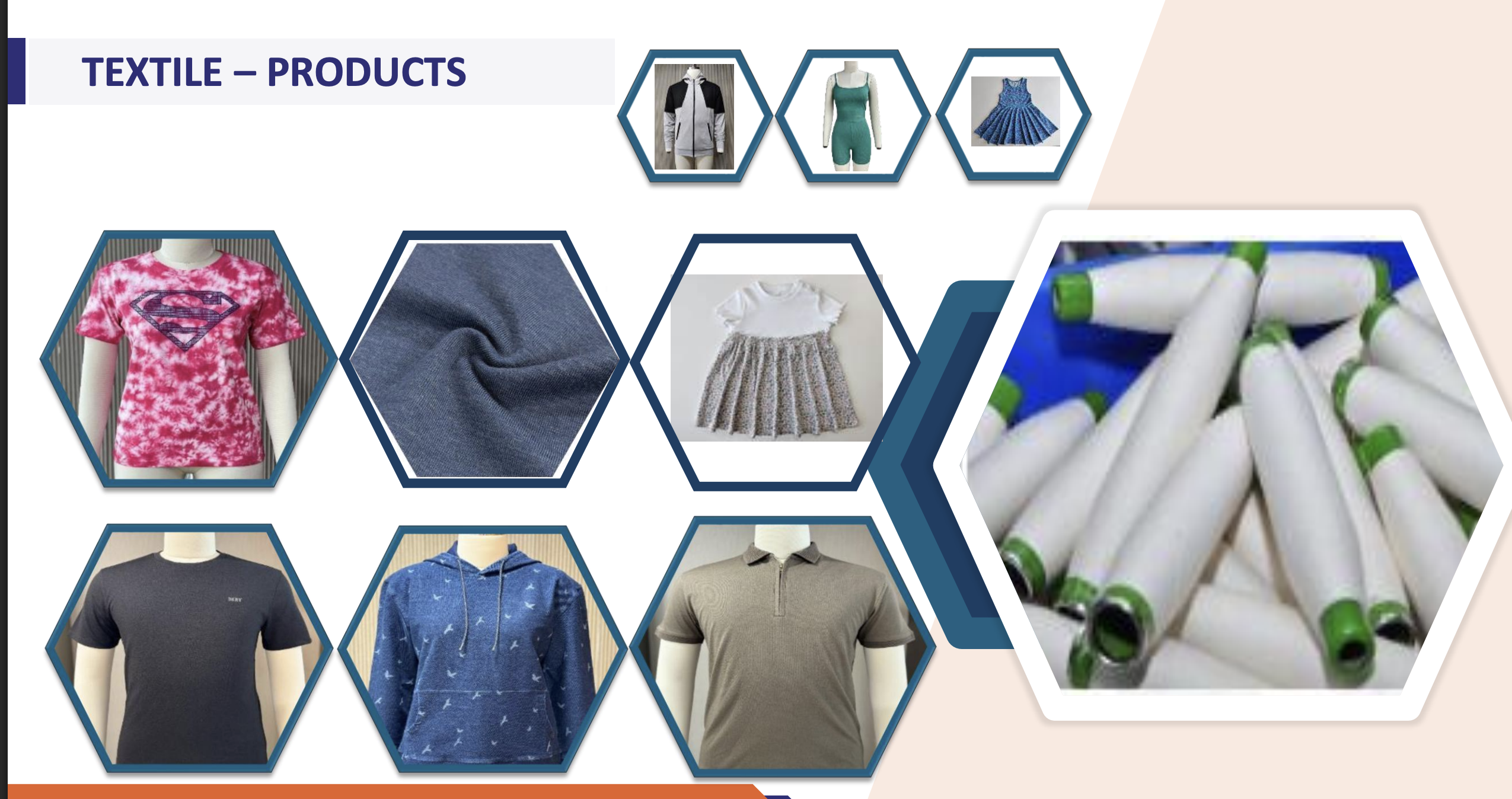
Textiles — the chronic underperformer. Cotton yarn, knitted fabric, and garments. A 62,000-spindle unit in Amravati (set up in FY24) and garment units in Maharashtra and Madhya Pradesh round out the vertical integration. Yarn turned cash-positive in Q3-Q4; fabric near-broke even; garments still hemorrhaged, running at 60% utilization due to US order weakness. The division lost ₹8 crore in FY26, a shrinkage from a ₹39 crore loss in FY25, but only because the Amravati yarn unit added ₹29 crore EBITDA.
Engineering & Designing Services (Technosoft) — a 800-person offshore-60%, on-site-40% shop offering CAD, automation, prototyping, and AI-based defect detection to automotive, aerospace, oil & gas, and heavy machinery clients. Revenue nearly doubled to ₹280 crore in FY26 (₹210 crore in FY25), yet margins dipped to 12% from 14%, hammered by AI investment and seasonal Q3 holiday costs.
Defence — launched in 2016. Manufactures LR-SAM missile shells, coolers, turn tables for DRDO. No material revenue disclosed.
The portfolio screams “we’ve tried a lot and we’re sticking to what works.” Drum closures throw off cash; scaffolding absorbs capex for growth; textiles and engineering keep the pie diversified, assuming they sort profitability. It’s a portfolio of bets, not a moat-driven single business.
4. Financials Overview
Figures are consolidated, in ₹ crore.
Metric
FY24
FY25
FY26
YoY Change
Revenue
2,182
2,596
2,759
+6.3%
EBITDA
468
523
591
+12.9%
PAT
279
263
285
+8.5%
EPS (Reported)
₹115.06
₹112.99
₹125.84
+11.4%
Q4 FY26 snapshot: Revenue ₹712 crore (+1.3% YoY), PAT ₹78 crore (+18% YoY), EPS ₹34 (reported Q4 data from investor presentation, not annualized).
The reported EPS is ₹126 for FY26; annualized March-close EPS means no multiplication needed. P/E = ₹2,484 / ₹126 = 19.8x.
Concall Note: Management guided that margins should return to “15% sustainable range” once US tariff interpretation settles (50% on steel only vs. full product value remains unresolved). Operating cash accrual continues to underpin the story, despite capex hitting ₹300+ crore over the past two years for the new extrusion and formwork facilities.
5. Market Expectations & Historical Multiples
This section describes how the market is currently pricing the company and how that compares with its own history and peer group. It is descriptive, not predictive.
Metric
Current
Historical Avg (5yr)
Peer Median (Industry)
P/E
19.8x
17.6x
21.5x
EV/EBITDA
11.0x
—
—
P/B
2.79x
—
2.05x
ROE
15.0%
15.6% (3yr avg)
11.5% (peer median)
ROCE
16.1%
—
13.3% (peer median)
The market pays 19.8x earnings for Technocraft, sitting above its own 5-year average of 17.6x but below the peer band of 21–25x (where APL Apollo, Welspun, and others trade). The current multiple appears to price in a recovery from tariff pressure: at the peer median of 21.5x, the arithmetic would place the stock’s embedded valuation some distance higher, yet the market has held back, likely awaiting