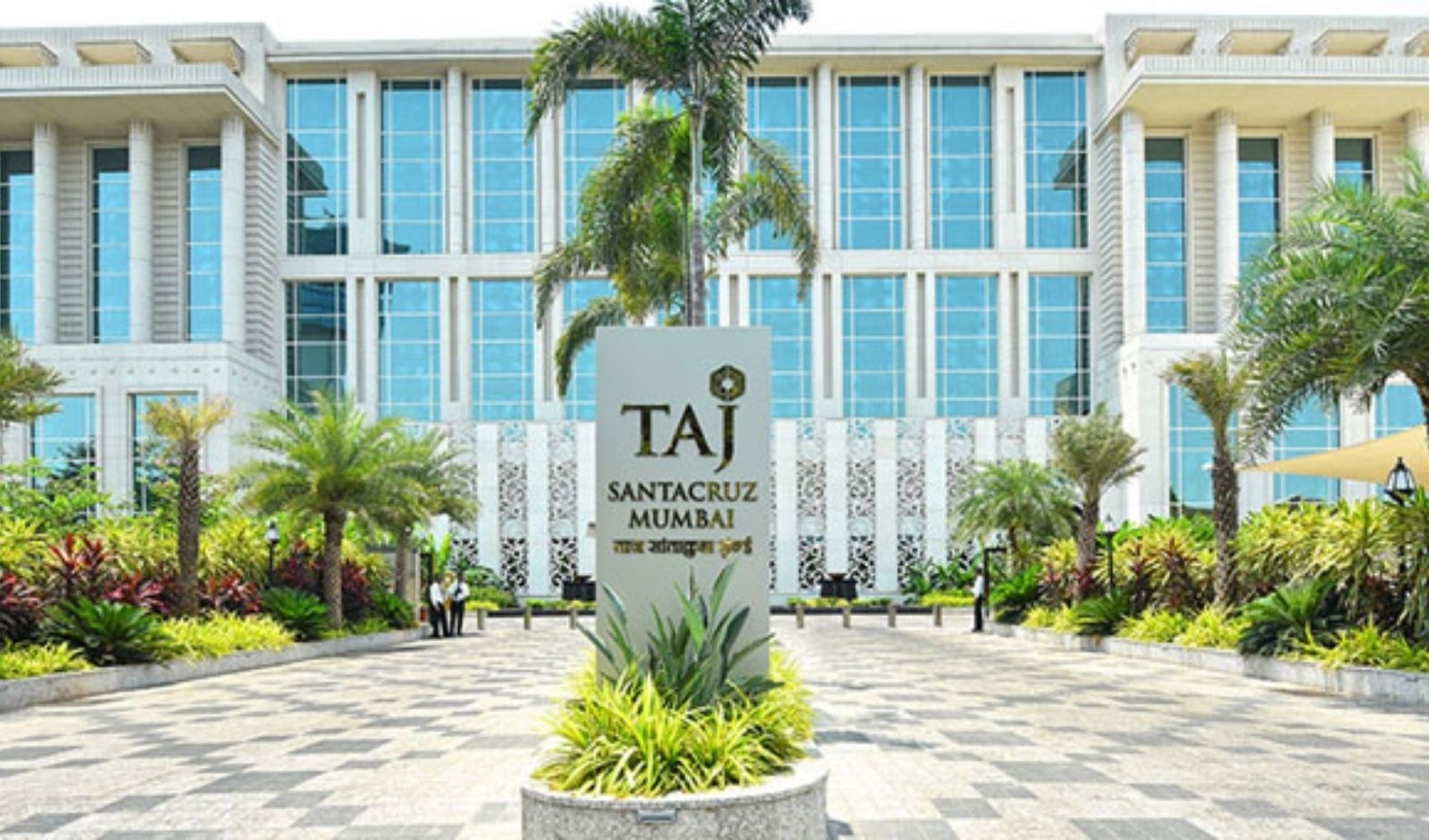
TajGVK Hotels FY26: Highest Ever, Then Blew It With Taj Santacruz
General information and entertainment, not investment advice. The author is not a SEBI-registered adviser or research analyst. No recommendation, no promised returns. Markets carry risk including loss of capital. Figures may not be current. Consult a registered adviser before acting.
1. At a Glance
TajGVK’s standalone numbers in FY26 are the highest ever: ₹474 Cr revenue, ₹175 Cr EBITDA, ₹117 Cr PAT. The margin story is tight—EBITDA margin at 35% (up from 33%). Occupancy hit 81%, ARR at ₹9,157, RevPAR at ₹7,458.
But here’s the tension: in February, the company acquired 2.01% more in Taj Santacruz to cross 51% and flip it into a subsidiary. That deal unlocked ₹283 Cr in “exceptional items”—a one-time revaluation gain that inflated consolidated PAT to ₹411 Cr. Strip that out, and consolidated PAT is ₹128 Cr, not the headline ₹389 Cr before the gain.
The company is debt-free post FY25 (₹44 Cr borrowings remain in the balance sheet, a legacy) and raking in ₹173 Cr from operations. Bengaluru’s Taj Yelahanka is on track for Q2FY27. Meanwhile, the GVK promoter group is mid-litigation unrelated to TajGVK. The credit rating upgraded to IND A+/Stable.
The play is simple: six hotels running a tight operation, no debt, and a greenfield project. The catch is scale—₹508 Cr consolidated revenue is small, and Hyderabad carries 70% of the load.
2. Introduction
TajGVK Hotels & Resorts, a 1995 venture, is a joint arrangement between Hyderabad’s GVK group (via Shalini Bhupal and G. Indira Krishna Reddy) and Indian Hotels Company Limited (IHCL, the Taj operator). The JV was uneasy: IHCL held 25.25% and ran the hotels under a management agreement. In December 2025, it exited—Shalini Bhupal acquired the stake at ₹370 per share, and IHCL’s license to operate ended.
This is a pivot. The company now faces a choose-your-own-adventure: either negotiate new terms with IHCL (likely) or run solo. For now, IHCL still manages the five core properties (Taj Krishna, Taj Deccan, Taj Vivanta in Hyderabad; Taj Club House in Chennai; Taj Chandigarh). The subsidiary Taj Santacruz is on its own.
The company had shed Taj Banjara in late 2023, a 122-room property in Hyderabad that had remained dark since February 2023. Hyderabad, though, is not going anywhere—the city’s micro-market supplied 70% of FY25 revenue and 70% again in FY26. Taj Krishna alone is a ₹54% revenue contributor.
FY26 saw a soft Q4: West Asia geopolitical turbulence dampened travel, and the company noted “some cancellations or postponement of bookings.” Yet domestic demand cushioned the blow.
3. Business Model: WTF Do They Even Do?
Six hotels. That’s the portfolio. All premium, all branded (or attempting to be).
Hyderabad (592 keys, 70% of revenue):
Taj Krishna, 260 keys. The flagship, contributing ~54% of total revenue. The crown jewel.
Taj Deccan, 156 keys. Under renovation in FY26.
Taj Vivanta Begumpet, 181 keys. The newer entrant, opened 2012.
Chennai (220 keys, ~9% of revenue):
Taj Club House. High-end market, built for business and events.
Chandigarh (149 keys, ~9% of revenue):
Taj Chandigarh. Also under renovation in FY26.
Mumbai (279 keys, via 51%-held subsidiary Taj Santacruz, ~13% of revenue):
Taj Santacruz. Acquired 49% as a JV in 2016, then upped to 51% in February 2026. Now consolidated. The subsidiary reported ₹236 Cr revenue and ₹90 Cr EBITDA in FY26.
Revenue mix tilts toward room rentals (55%), with F&B at 19% and banquet/MICE events at 23%. A weddings and corporate events shop pretending it’s also a hotel.
Occupancy above 80%, ARRs in the ₹9k+ range—the company wields pricing power in its micro-markets. RevPAR, the industry’s golden metric (revenue per available room), stood at ₹7,458 in FY26, up from ₹6,174 in FY24. The company holds ~8% of Hyderabad’s premium supply. It’s a small player in a large market, but the best fish in its particular pond.
The operating agreement with IHCL, until it terminated, brought brand equity, marketing, and operational playbook. Now the company must decide: pay for a new license or fork the path. The timing of IHCL’s exit is coinciding with the Bengaluru greenfield (a new market, no IHCL baggage). A signal, perhaps.
4. Financials Overview
Figures are consolidated, in ₹ crore.
Metric
FY26
FY25
FY24
FY23
Revenue
508
450
408
384
EBITDA
164*
150
132
148
PAT
389**
94
74
80
EPS
65.4***
18.6
14.8
14.8
*EBITDA is understated due to consolidated impact of Taj Santacruz inclusion post-February 2026. **Includes ₹283 Cr exceptional gain on revaluation; adjusted PAT ~₹106 Cr. ***EPS reflects the exceptional item; core EPS ~₹17 per share.
Quarterly Results (Consolidated):
Metric
Q4FY26
Q4FY25
Revenue
159
125
EBITDA
47
33
PAT
320
35
EPS
51
5.55
The Q4 numbers are fiction-level misleading. The ₹320 Cr PAT is the one-time gain; the real operational PAT in Q4 was closer to ₹37 Cr. Stripping noise: Q4 revenue grew 27% YoY, operating EBITDA rose to ₹47 Cr (up from ₹40 Cr in Q4FY25), and operational margin held steady at 30%.
From the management’s mouth (May 2026 presentation): The company observed that “domestic demand mitigated major risk in fall in revenue” during the West Asia flare-up. Room rentals account for 55%, F&B 19%, MICE/banquets 23%, others 3%. The ADR (average daily rate) in Q4FY26 was ₹9,853, occupancy 83%, RevPAR ₹8,201—all solid.
Renovations continued: ₹8.01 Cr spent in FY26 (down from ₹10.01 Cr in FY25) on Taj Deccan’s rooms and public areas at Taj Chandigarh and Taj Club House.
5. Market Expectations & Historical Multiples
This section describes how the market is currently pricing the company and how that compares with its own history and peer group. It is descriptive, not predictive.
Metric
Current
Historical Average (5-Yr)
Peer Median
P/E (using ₹327 CMP)
13.3x
20.9x
28.6x
EV/EBITDA
12.4x
N/A
N/A
ROCE
13.2%
17.5%
10.8%
ROE
18.4%
16.9%
8.3%
The market currently pays 13.3x annualized FY26 earnings (using consolidated ₹65.4 EPS), a 2.1x discount to its own five-year median of 20.9x. Peer hospitality operators (ITC Hotels, EIH, Chalet, Leela Palaces) trade at a median P/E of 28.6x. TajGVK sits well below both its own history and the group.
At ₹327, the market appears to be pricing in (a) a one-off revaluation that inflates reported earnings, (b) no credit for the debt-free status, and (c) caution about the IHCL transition and GVK promoter litigation. Historically, the company traded between 18–22x. The 5-year ROCE average is 17.5%; current-year ROCE is 13.2%, a dip caused by the Taj Santacruz revaluation (goodwill bloat in the balance sheet).
ROE is a bright spot: 18.4% on an average equity base, ahead of peers and its