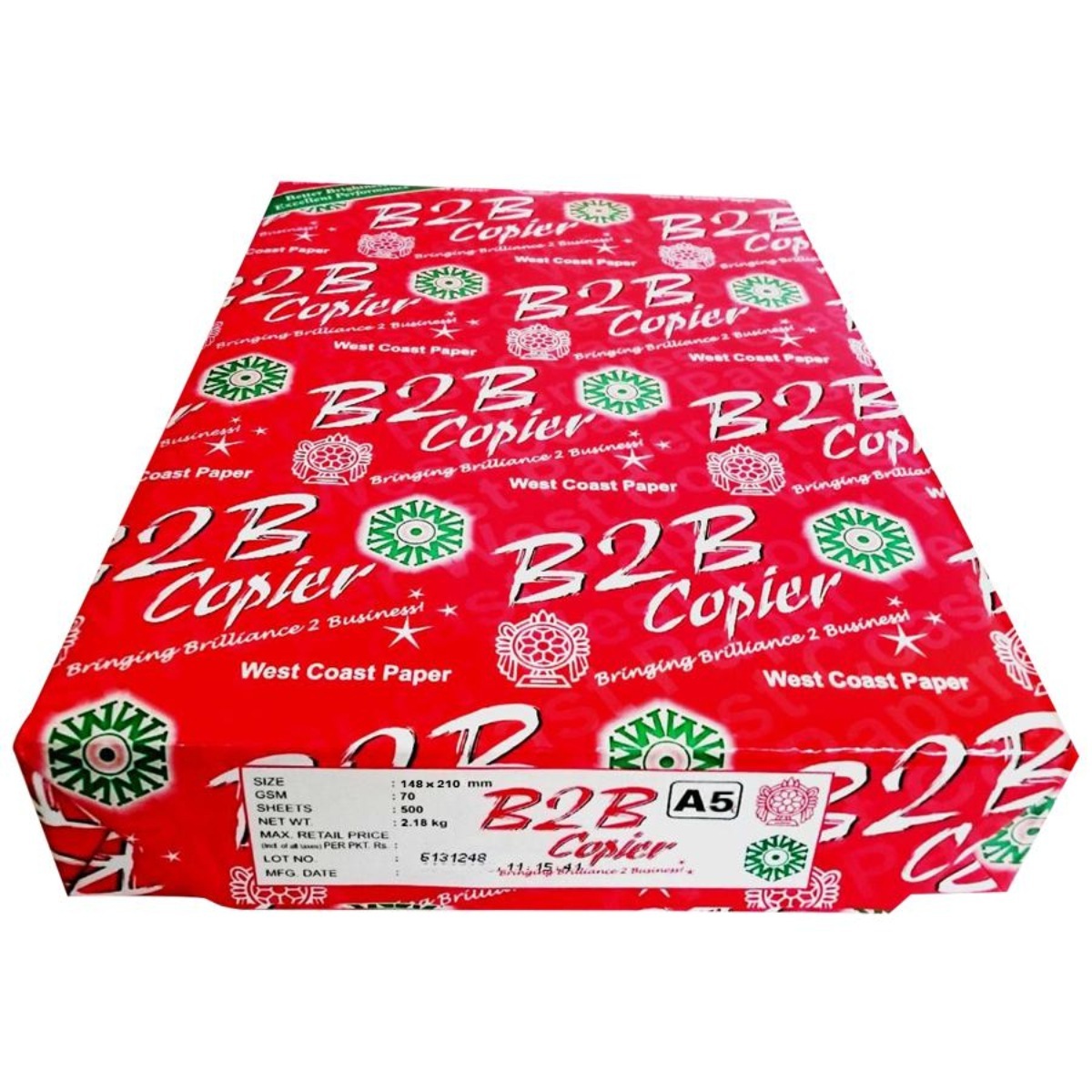
West Coast Paper FY26: The Margin Collapse Nobody Saw Coming
Section 1 — At a Glance
West Coast Paper Mills reported FY26 results that arrive like a slow-motion car crash. Revenue grew 5.3% to ₹4,279 Cr — unremarkable. Profit crashed 52% to ₹156 Cr. The stock trades at 22.5x earnings on a 4.2% ROE. This is a company in distress dressed in a tie.
What went wrong? Wood prices spiked 25% in FY25. Paper realisations fell as Chinese and Vietnamese imports flooded India. The Andhra subsidiary’s Rajahmundry plant went into lockout after a workers’ strike. Margins compressed from a 33% EBITDA high in FY23 to just 10% by FY26.
The balance sheet? Deteriorating. Cash dropped. Borrowings crept up. Working capital days exploded from 13 days (FY24) to 151 days (FY26) — a warning flag someone dropped in a hurricane.
But the company has net cash of ₹3,000 Cr sitting in investments. Debt is only ₹345 Cr. It’s not broken yet. Just fragile. Management promises wood prices are already softening. Paper prices recovered in April 2026. The margin recovery is their story now.
Section 2 — Introduction
West Coast Paper Mills Ltd, established in 1955, operates the fifth-largest paper mill in India. Based in Dandeli, Karnataka, the company has spent seven decades making paper — writing, printing, boards, and specialty products sold under the Wesco brand across India and 26+ countries.
The real story isn’t just paper. West Coast owns 72.45% of Andhra Paper Limited (APL), a 259,000-tonne capacity mill in Rajahmundry. Together, consolidated capacity sits at 579,000 MTPA. The company also owns West Coast Optilinks, an optical fibre cable manufacturer — 7% of revenue in FY25. It’s a diversified operation hiding inside a paper story.
The SK Bangur Group controls the company through a web of holding entities. Promoters hold 56.58%, DIIs hold 13.11%, FIIs are down to 3.24%. The stock has rallied 34.6% over three months but is up just 3.45% over the past year. Something shifted in the narrative around mid-FY26.
Recently: The board reappointed CMD S.K. Bangur for a fresh five-year term (May 2026 onwards). A new optical fibre cable facility opened in Hyderabad. The company is eyeing tissue paper capacity of 35,000 MTPA. But these are growth plans for later. Right now, the company is fighting to defend margins.
Section 3 — Business Model: WTF Do They Even Do?
West Coast produces three core paper types. Writing and printing papers (copier, maplitho) account for ~30-35% of volumes — commodity stuff facing import pressure. Cupstock accounts for ~20% and is the growth darling, because plastic bans are making it essential for packaging. Specialty papers (10-15%) sit at the premium end and face lower import threats.
The Dandeli mill operates at ~320,000 MTPA capacity and runs at 95%+ utilization. It has in-house pulp production (265,000 MTPA) and its own 75-MW power plant. Vertical integration is the moat. Andhra Paper adds another 259,000 tonnes. The two mills together can service the continent.
Distribution matters. The company has 70+ established dealers and 6 zonal offices across India. 75% of those dealers have stuck around for 15+ years. That’s not loyalty; that’s lock-in. Export to 26 countries happens, but it’s minimal.
The optical fibre cable side (West Coast Optilinks) manufactures FRP rod cables and glass roving, mostly for telecom and utilities. Revenue: ₹381 Cr in FY25. Growing fast (65% between FY22-FY24), but still small relative to paper’s ₹4,000+ Cr.
The business is not high-margin anymore. In FY23, EBITDA margin hit 33% — a supernormal high. Now it’s 10%. That collapse is the entire story.
Section 4 — Financials Overview
Figures are consolidated, in ₹ crore.
Metric
FY26
FY25
YoY Change
Revenue
4,279
4,062
+5.3%
Operating Profit
391
80
+389%
EBITDA
681
528
+29%
Net Profit
156
311
-49.8%
EPS
22.82
47.14
-51.6%
Wait. Operating profit jumped 389%. EBITDA is up. But net profit crashed 50%. What happened?
The answer: other income collapsed, and tax spiked. Other income fell from ₹198 Cr (FY25) to ₹114 Cr (FY26). Interest rose from ₹38 Cr to ₹42 Cr. Together, they wiped out the operating profit improvement. It’s not an operational failure; it’s a one-time squeeze on non-operating items.
More precisely: FY25 carried forward exceptional gains and investment income. FY26 normalized. That’s not reassuring.
The tax rate jumped to 34% from 24%. The government didn’t change the law. The company’s profit mix became less favorable for deductions.
Section 5 — Valuation Discussion: Fair Value Range (Educational Only)
What follows is an educational look at what the numbers imply — not a price target, and not advice.
Method 1: P/E-Based Valuation
Reported EPS FY26: ₹22.82 Annualised EPS: ₹22.82 (full year, no multiplication) Peer P/E band for large-cap paper: 16–20x (median peer P/E: 17.7x)
Fair value range: ₹22.82 × 16 to ₹22.82 × 20 = ₹365–456 per share
Current trading: ₹513. Trading at 22.5x, well above the peer band.
Method 2: EV/EBITDA-Based Valuation
Consolidated EBITDA FY26: ₹681 Cr EV (Equity Value + Debt − Cash): ₹3,390 + ₹345 − ₹38 = ₹3,697 Cr Current EV/EBITDA: 5.4x