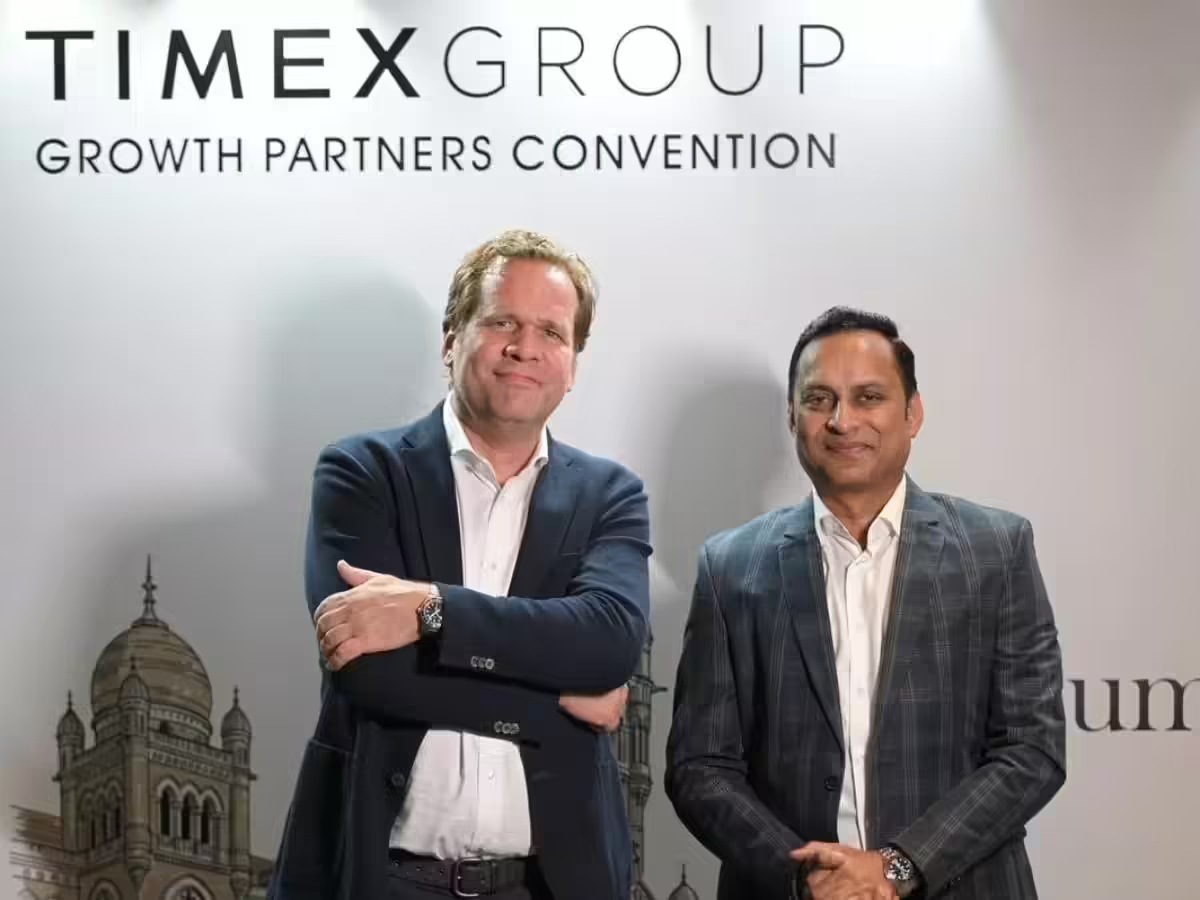
Timex Group India Ltd Mar 2026: A 152% Profit Surge Meets a 58x Valuation Reality Check
Date of Publishing -
Spotted a factual error — a wrong number, date, or fact? Tell us and we will check the source.
Section 1 — At a Glance
Timex Group India Ltd has delivered an exceptional financial turnaround for the fiscal year ending March 31, 2026, catching the attention of both momentum investors and structural skeptics. Revenue for the full year reached an all-time high of ₹799 crore, representing a 48% year-on-year expansion. This top-line acceleration was outpaced by profitability, with net profit scaling to ₹75 crore—a 152% jump compared to the previous fiscal year.
While the headline metrics indicate an operational breakthrough driven by premium brand positioning and e-commerce channel maturity, several internal developments warrant careful scrutiny. The company’s stock is currently trading at a premium price-to-earnings (P/E) multiple of 58.63 and a price-to-book (P/B) ratio of 39.7, indicating aggressive growth expectations are baked into the current valuation. Furthermore, the promoter group has systematically trimmed its stake over the past year, reducing its holding from 74.93% to 51.00% via multiple Offers for Sale (OFS). Turnaround stories often look like miracles from the outside, but they are usually paid for by years of unseen operational discipline. Investors must now weigh whether this record performance is a structural shift in profitability or a cyclical peak in discretionary accessory spending.
Section 2 — Introduction
Timex Group India Ltd operates as a subsidiary of Tanager Group B.V. (formerly Timex Group B.V.), tracking its corporate lineage back to America’s oldest watchmaker established in 1854. The Indian entity has undergone multiple strategic avatars since entering the domestic market in 1988, including a notable decade-long joint venture with Titan Company that dissolved in 2000.
Today, the company handles the manufacturing, design, and distribution of timepieces across a highly fragmented consumer landscape. Operating out of its central facility in Baddi, Himachal Pradesh, the company has transitioned from a pure mass-market player into a multi-branded platform, attempting to capture everything from value-conscious analog buyers to ultra-luxury fashion consumers.
Section 3 — Business Model: WTF Do They Even Do?
Timex’s business model can be best described as a multi-tier brand pyramid masquerading as a single watch company. Instead of fighting the smartwatch onslaught with raw technology, management has opted to license and distribute an eclectic mix of international labels to partition the Indian wrist.
At the base sits the flagship Timex brand, holding the fort for affordable daily wear and culture-led heritage collaborations. Move up a notch, and you hit the fashion and lifestyle tier featuring Guess, Ted Baker, Nautica, and Philipp Plein. At the apex sits the high-margin luxury segment, where they retail Versace, Ferragamo, and Missoni to consumers who treat time telling as a secondary feature. This entire portfolio is fed by the Baddi assembly unit, which can crank out 3 million watches annually across analog, mechanical, and smart-connected variants. To ensure they don’t rely entirely on third-party retailers, Timex acquired the retail brand ‘Just Watches’ to control their own physical and digital real estate.
Section 4 — Financials Overview
Figures are consolidated, in ₹ crore.
Metric
Latest Quarter (Mar 2026)
YoY (Mar 2025)
QoQ (Dec 2025)
Revenue
235.00
169.00
151.00
EBITDA / Operating Profit
40.00
22.00
10.00
PAT
27.00
15.00
3.00
EPS (₹)
2.71
0.92
0.32
A spectacular top-line jump means nothing if operating leverage doesn’t drop to the bottom line; true earnings quality reveals itself when margins outpace revenue growth. The March 2026 quarter recorded a 73.7% year-on-year revenue expansion, but operating profit scaled by 81.8%, lifting the operating profit margin to 17%.
What is Management Promising in the Coming Quarters?
During recent strategic interactions, management highlighted that their curated brand architecture is intentionally designed to avoid cannibalization. The MD noted that long-term brand equity, commercial execution, and scaling manufacturing capacities are continuing to drive expansion ahead of the broader industry rate. Management remains focused on high-quality, sustainable progress rather than raw volume chasing, aiming to protect margins even as raw material costs fluctuate globally.
“These numbers do not come as a surprise to us – they reflect years of disciplined brand building,” the CEO noted.
Section 5 — Valuation Discussion
To evaluate whether Timex is a structural multi-bagger or an overpriced timepiece, we execute a multi-method valuation framework using the current market price of ₹438 and a full-year FY26 EPS of ₹7.47.