Kilburn Engineering Q4 FY26: The ₹629 Cr Growth Story Sinking Into A ₹17 Cr Cash Hole
Date of Publishing -
Spotted a factual error — a wrong number, date, or fact? Tell us and we will check the source.
Section 1 — At a Glance
The headline numbers for Kilburn Engineering in FY26 are designed to make growth investors salivate. Revenue surged 48.1% year-on-year to hit ₹628.80 Cr. The bottom line was equally impressive, with Net Profit jumping 54.2% to ₹96.20 Cr. For a custom engineering and capital goods player, executing at this velocity requires serious operational muscle, and management is signaling confidence with a ₹4,000 Cr inquiry pipeline and a ₹467 Cr consolidated order backlog.
However, beneath the polished surface of the P&L lies a severe liquidity mismatch. Despite banking record profits, the company burned cash for the second consecutive year, reporting a negative Operating Cash Flow of ₹17.76 Cr. Receivables have bloated to ₹202.23 Cr, stretching debtor days to a painful 117. Growth without cash conversion is just a high-interest loan from your own balance sheet. Investors must decide whether this is a temporary working capital bulge caused by year-end dispatches, or a structural flaw in their billing cycle. The optics are brilliant, but the mechanics need scrutiny.
Section 2 — Introduction
Kilburn Engineering is an established capital goods player that has spent the last 40 years mastering the thermal engineering space. Recently, management decided that organic growth was moving too slowly. In a bid to scale up and diversify, they bolted on two major acquisitions: M.E. Energy for ₹99 Cr in early 2024 (waste heat recovery), and Monga Strayfield for ₹123 Cr in 2025 (radio frequency drying).
These moves have transformed Kilburn from a traditional manufacturer into an integrated thermal solutions provider. They are aggressively expanding capacity, completing a ₹300 Cr fundraise to wipe out debt, and restructuring leadership. It is a classic transition phase.
Section 3 — Business Model: WTF Do They Even Do?
They dry things. Solid, liquid, and gas drying. If an industry has a process that is too wet, Kilburn engineers a massive, expensive piece of metal to make it less wet.
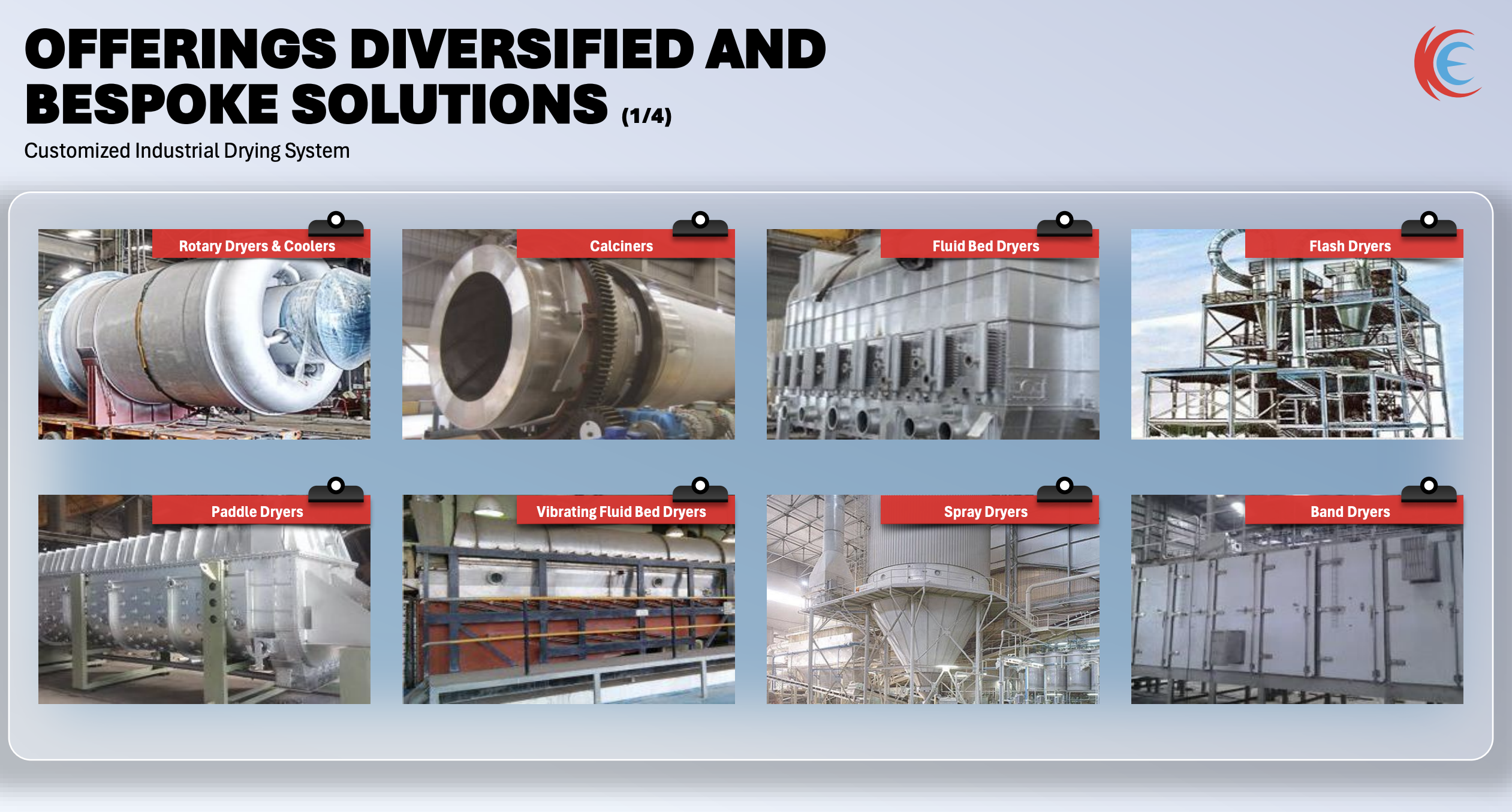
The company designs and manufactures rotary dryers, coolers, calciners, and solvent recovery systems for heavy-duty sectors like chemicals, fertilizers, petrochemicals, and nuclear power. With the recent acquisitions, they have also added waste heat recovery systems and radio frequency drying to their arsenal. They cater to a client list that reads like the index of a blue-chip mutual fund: Reliance, ONGC, Tata Chemicals, and ITC. Domestically they pull in 70% of their revenue, while exports to 20+ countries bring in the remaining 30%. It is not a glamorous business, but moisture removal is surprisingly lucrative.
Section 4 — Financials Overview
Figures are consolidated, in ₹ crore.
Metric
Mar 2026 (Q4 FY26)
YoY (vs Mar 2025)
QoQ (vs Dec 2025)
Revenue
189.18
+49.0%
+20.7%
Operating Profit
37.70
+5.0%
+5.0%
PAT
24.86
+21.8%
+7.3%
EPS
18.15*
–
–
What is Management Promising in the Coming Quarters?
The latest concall was a masterclass in aggressive defense. Management guided for 20-25% revenue growth in FY27 (targeting ₹750–800 Cr) but had to walk back some overenthusiastic margin expectations floating around in the investor presentation. Management noted, “normally we are targeting 20% to 23%… expecting 25% may not be possible.” Honesty is rare on these calls; we’ll take it.
When grilled on the ballooning receivables, they blamed a massive ₹50–60 Cr dispatch to Morocco right at the year-end. A sudden spike in Q4 billing is the corporate equivalent of cramming for a final exam the night before. Earnings quality is only as good as the cash collection that follows it.
Section 5 — Valuation Discussion: Fair Value Range Only
Kilburn is currently trading at a CMP of ₹493.80, translating to a P/E of 27.2x on FY26 earnings. Let’s map the territory.
P/E Method: With an FY26 EPS of ₹18.15, applying a conservative