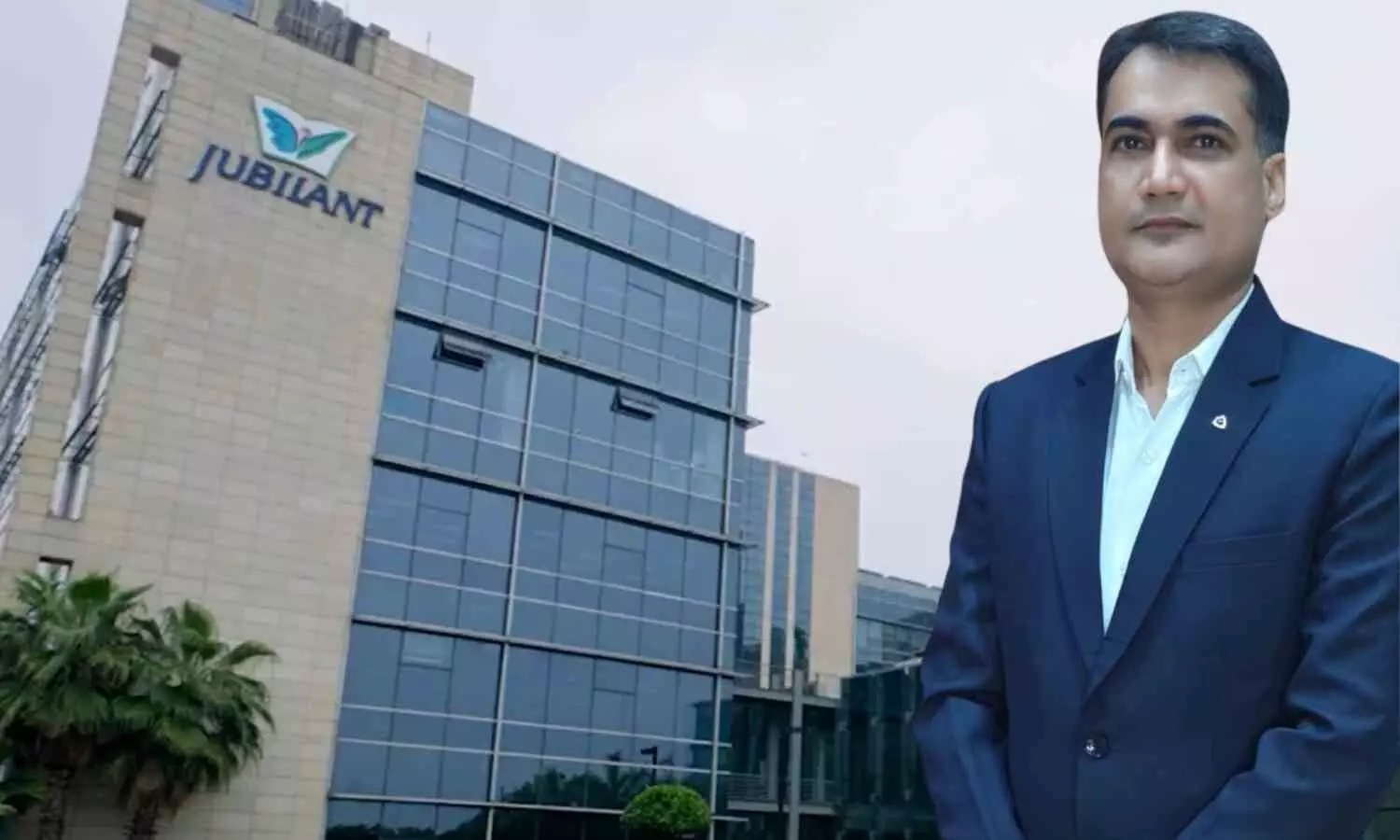
Jubilant Ingrevia Q4 FY26: An 84% QoQ Profit Jump That Kept the Force Majeure Away
Date of Publishing -
Spotted a factual error — a wrong number, date, or fact? Tell us and we will check the source.
1 — At a Glance
Jubilant Ingrevia closed FY26 with a performance that demands attention. The company reported a consolidated Q4 PAT of ₹86.44 Cr—a striking 84% sequential jump from the previous quarter—while navigating severe Middle Eastern supply chain disruptions with zero production loss. Full-year revenue landed at ₹4,388 Cr, up 5% year-on-year, driven heavily by a strategic shift toward higher-margin Specialty Chemicals and Nutrition segments.
The market is currently pricing the stock at ₹631, translating to a P/E of 36.1x on an FY26 EPS of ₹17.44. While the headline growth is returning, the underlying metrics reveal a business in deep transition. Management’s aggressive pivot toward Custom Development and Manufacturing Organization (CDMO) contracts is bearing fruit, highlighted by the commencement of a massive $300 million agrochemical contract and the rapid commissioning of a new facility in Bharuch.
Supply chain resilience isn’t tested when shipping is cheap and predictable; it is proven when a geopolitical crisis erupts and a company still delivers volume growth without breaking contractual commitments.
However, with return on equity lingering at 9.51% and heavy capex ongoing, the core question remains: is the margin expansion sustainable, or is it a temporary relief rally in a volatile commodity cycle?
2 — Introduction
Spun out of the larger Jubilant ecosystem, Jubilant Ingrevia carries over 40 years of legacy in the chemicals space. They are the quiet giants behind the scenes, holding the title of the largest global manufacturer outside of China for bio-pyridine and picolines.
If a product requires Vitamin B3 for animal feed, a base for an agrochemical vat, or a critical intermediate for pharmaceuticals, there is a high probability Jubilant’s manufacturing fingerprint is on it. Recently, they acquired a 100% stake in Remidex Pharma for ₹16.5 Cr to accelerate their footprint in human nutrition premixes. The strategic moves are deliberate, setting the stage for a shift from high-volume commodities to specialized value additions.
3 — Business Model: WTF Do They Even Do?
Jubilant Ingrevia operates a three-headed beast of a business model, serving 15 of the top 20 global pharma and 7 of the top 10 global agrochemical giants:
Specialty Chemicals (44% of Revenue): The high-margin darling. They make Pyridine, Fine Chemicals, and run a fast-growing CDMO business. This is where the pricing power lives.
Nutrition & Health Solutions (18% of Revenue): The stable anchor. They manufacture Vitamin B3 for animal and human nutrition, alongside choline salts. If it makes a chicken plumper or a human healthier, it’s here.
Chemical Intermediates (38% of Revenue): The volatile headache. Acetic Anhydride and Ethyl Acetate. This is the volume-heavy, margin-thin commodity game where global prices dictate your quarter.
They are trying to shrink the volatile head and grow the sexy one. It is a classic margin-accretion play, assuming the commodity side doesn’t drag the blended average down in the meantime.
4 — Financials Overview
Figures are consolidated, in ₹ crore.
Metric
Latest Quarter (Q4 FY26)
YoY
QoQ
Revenue
1,178.65
+12.1%
+12.2%
Operating Profit
162.58
+10.8%
+28.5%
PAT
86.44
+16.7%
+84.3%
EPS
5.43
+16.7%
+84.3%
Note: Operating Profit excludes other income. Management’s reported segment EBITDA figures differ slightly due to internal overhead allocations.
The numbers confirm the narrative. Management noted on the latest concall that this was the “highest quarterly revenue and EBITDA… when compared with last 14 quarters.” The margin improvement was heavily supported by better realizations and a fast pass-through of inflated raw material costs.
Earnings quality improves not when revenues temporarily spike, but when the underlying product mix quietly shifts toward higher-margin, sticky contracts. The Specialty and Nutrition segments are now contributing over 85% of the overall EBITDA. Management called a 20% year-on-year EBITDA growth for FY27 achievable.