Redtape Mar 2026: 30% Digital Sales, 26% ROE, and ₹1,152 Cr of Inventory We Need to Talk About
Date of Publishing -
Spotted a factual error — a wrong number, date, or fact? Tell us and we will check the source.
1. At a Glance
Redtape’s FY26 print is a masterclass in top-line aggression. With revenue clocking in at ₹2,419 crore (a 19.6% jump) and a Return on Capital Employed (ROCE) standing tall at 24.1%, the headline numbers demand respect. The market is paying a P/E of around 31.5x for a business growing double-digits, heavily out-pacing legacy footwear giants who seem to have forgotten how to sell shoes.
But peel back the top layer, and the friction points appear. The company is sitting on a staggering ₹1,152 crore of inventory. Management claims this is a structural necessity for a direct-to-consumer model relying on marketplace warehouses, and they’ve marginally improved the days-outstanding metric. A swollen inventory pile is just future margin compression waiting to be marked down. Add in the fact that ₹133 crore of “Other Income” is heavily propping up the bottom line—largely through e-commerce marketplace rebates—and the pristine profit picture gets a bit more complicated.
Will the operating leverage keep expanding, or will the working capital weight eventually snap the elastic?
2. Introduction
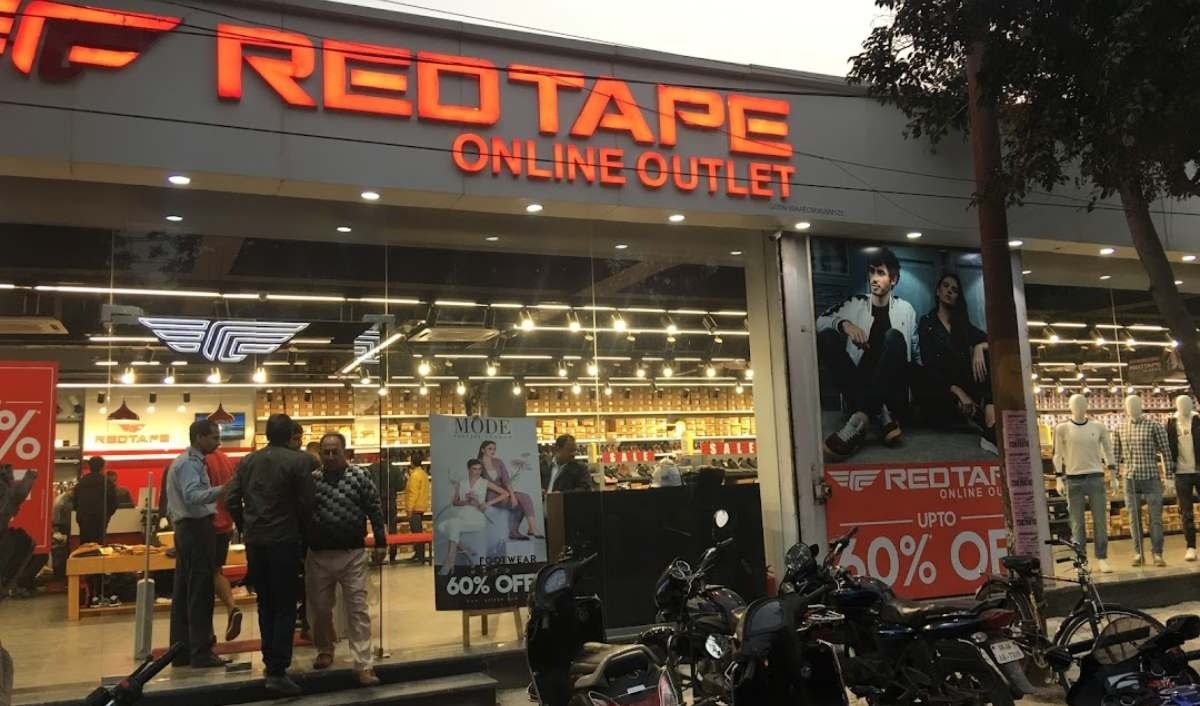
Spun out of Mirza International in August 2023, Redtape is no longer just a leather shoe export shop. It has morphed into a full-scale branded consumer play. The company operates a sprawling network of 669 retail stores across 300 Indian cities, selling everything from formal oxfords to athleisure sweatpants.
They are running four distinct brands on a single operating chassis: the flagship Redtape, the premium Mode, the casual Bond Street, and a budding outdoor adventure label called Ozark. It’s a capital-light, franchise-heavy model aimed directly at the aspirational, mid-premium Indian consumer who wants international styling without taking out a personal loan.
3. Business Model: WTF Do They Even Do?
They design shoes and apparel, get someone else to make most of them, and sell them through a mix of flashy stores and online marketplaces.
The revenue split is heavily anchored by footwear (63%), with apparel (34%) acting as the growth kicker and accessories (3%) playing a minor supporting role. While they do have an integrated manufacturing facility in Unnao churning out about 25% of their products, a whopping 75% of their catalog is imported from Bangladesh, Myanmar, and Nepal via contract manufacturing. They essentially import low-cost apparel and footwear, slap one of their four brands on it, and push it through a network where 70% of sales happen offline and 30% happen digitally (where they reign as a top-two brand on Flipkart and Myntra).
The recent launch of Ozark—an “outdoor and adventure” brand—is perfectly timed for the modern urban consumer whose idea of an extreme trek is finding parking at a crowded mall.
4. Financials Overview
Figures are consolidated, in ₹ crore.
Metric
Latest Qtr (Mar 2026)
YoY (Mar 2025)
QoQ (Dec 2025)
Revenue
675.51
505.97
786.55
EBITDA / Operating Profit
111.44
45.09
146.58
PAT
69.88
41.22
104.53
EPS
1.26
0.75
1.89
A 33.5% YoY revenue jump in Q4 is what we’d call a quietly excellent Tuesday. Management noted that the second half of the year saw genuine acceleration, fueled by wedding season footfalls and a GST reduction on footwear below ₹2,500—a bracket where nearly all of Redtape’s products comfortably sit.
However, gross margins saw a 321-bps YoY contraction in Q4. Management was quick to clarify that this was merely an accounting reclassification related to e-commerce marketplace rebates (which now flow into “Other Income”). Structural margins are forged in operating leverage, not accounting reclassifications. They insist the true reflection of their efficiency is the EBITDA margin, which expanded to 19.4% in the quarter.
5. Valuation Discussion: Fair Value Range Only
The market is pricing Redtape at a trailing P/E of 31.5x. Here is how that looks when we run the