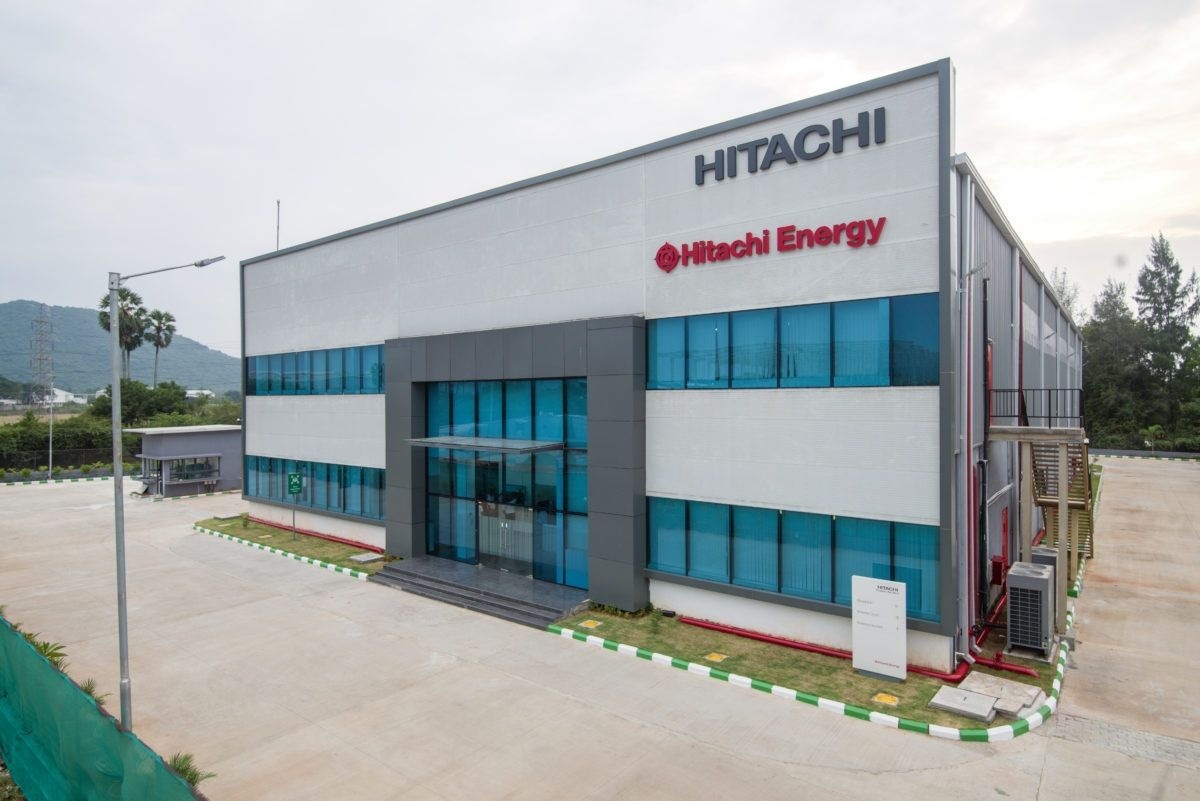
Hitachi Energy India Ltd FY26: A ₹1,57,000 Crore Valuation on a ₹988 Crore Net Profit—Is This an Engineering Marvel or Pure Gravitational Defiance?
Date of Publishing -
Spotted a factual error — a wrong number, date, or fact? Tell us and we will check the source.
1. At a Glance
The Indian power sector is undergoing a massive, structural transformation driven by renewable energy integration, grid complexity, and emerging massive power draws from data centers and artificial intelligence workloads. Within this landscape, Hitachi Energy India Ltd has emerged as a high-visibility participant, commanding a market capitalization of ₹1,57,852.56 crore. The company’s performance in FY26 was characterized by significant operational scaling, with revenue reaching ₹8,147.71 crore and net profit expanding to ₹987.84 crore. This financial performance is supported by an order backlog of ₹29,555.3 crore, providing visibility for upcoming periods.
However, this rapid operational scaling coexists with capital market expectations that warrant detailed examination. The stock trades at a trailing price-to-earnings (P/E) multiple of 153.55 and a price-to-book (P/B) ratio of 30.5, positioning it at a premium relative to historical valuation bands and capital goods sector averages. While operational metrics like the Return on Capital Employed (ROCE) reached 29.0% in FY26, the absolute cash generation capacity—reflected in a free cash flow of ₹735 crore—remains lower than the earnings figures due to working capital commitments required for executing heavy infrastructure contracts.
An investment in high-gestation capital goods businesses requires a clear distinction between technological leadership and equity valuation sustainability. The critical question for capital allocators is whether the structural multi-year electrification cycle can generate the long-term cash flows required to justify its current market valuation.
2. Introduction
Hitachi Energy India Ltd, formerly known as ABB Power Products and Systems India Ltd, was established in February 2019 following the demerger of ABB India’s power grid business unit. The company functions as a key execution vehicle for high-voltage transmission technology, grid automation, and industrial power solutions in India. The corporate structure was modified in December 2022 when the ultimate parent entity, Hitachi Ltd, acquired full ownership of the intermediate holding company, Hitachi Energy Ltd, thereby securing a 71.31% promoter stake in the Indian listed subsidiary.
Operating out of 8 manufacturing locations with 19 specialized factories, the company designs and manufactures heavy electrical equipment, including transformers, high-voltage switchgears, and power electronics. The organization’s domestic market strategy is aligned with central transmission infrastructure additions, railway electrification projects, and industrial power quality systems. Additionally, it serves as an export manufacturing hub for the broader Hitachi Group, shipping completed products and precision components to international group affiliates.
3. Business Model: WTF Do They Even Do?
Hitachi Energy India Ltd operates a business model focused on complex, large-scale electrical engineering. It is not a standard utility; it acts as the underlying technology provider that prevents national power grids from failing under high loads.
The business is structured into four core technology divisions:
Transformers: High-voltage power, traction, and digital transformers.
High Voltage Products: Switchgears and circuit breakers rated up to 1,200 kV.
Grid Integration: Large transmission and substation projects, including High Voltage Direct Current (HVDC) systems.
Grid Automation: Hardware, communication networks, and software for substation control.
The company’s revenue mix is heavily weighted toward Sale of Products at 79%, followed by Execution of Contracts at 16%, with services and other operations making up the remaining 5%. Domestically, India generates 73% of total revenue, while international markets contribute 27%.
The primary operational challenge is that the company operates as a B2B contract manufacturer and project executor, meaning it deals with long working capital cycles, complex raw material sourcing, and highly custom manufacturing setups across its 19 factories.
4. Financials Overview
Figures are consolidated, in ₹ crore.
The financial performance of Hitachi Energy India Ltd over the recent quarters shows a clear pattern of back-ended execution, which is typical for heavy engineering companies whose revenue recognition depends on project commissioning timelines.
Quarterly Performance Trend
Metric
Q4 FY26
YoY (%)
QoQ (%)
Q3 FY26
Q4 FY25
Revenue
2,754.05
↑ 62.45%
↑ 32.27%
2,082.21
1,695.28
Operating Profit
416.28
↑ 128.76%
↑ 20.55%
345.31
181.97
PAT
330.46
↑ 190.74%
↑ 26.41%
261.42
113.66
Reported EPS (₹)
74.14
↑ 176.44%
↑ 26.41%
58.65
26.82
“Did Management Walk the Talk?” & “What is Management Promising?”
During historical interactions, management consistently highlighted that operating margins would improve as the higher-margin product mix expanded and raw material cost pressures eased. The FY26 financial statements show that this margin expansion materialized, driven by an optimized product mix and lower miscellaneous expenses. Sequential quarterly fluctuations continue to occur, which management explicitly attributes “only to the variation in the product mix executed during those specific periods”.
Looking ahead, management is highlighting long-term revenue visibility supported by a record order backlog of ₹29,555.3 crore. They have noted that while transmission project order inflows may experience occasional timing mismatches