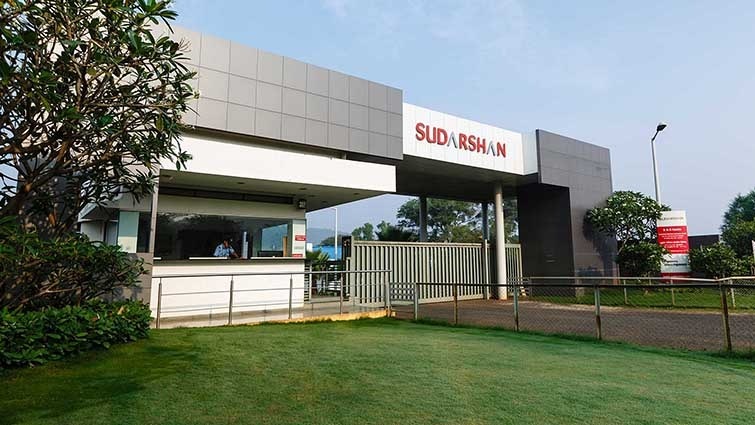
Sudarshan Chemical Q4 FY26: When a ₹1,389 Crore Global Acquisition Delivers a 6% Operating Margin
Date of Publishing -
Spotted a factual error — a wrong number, date, or fact? Tell us and we will check the source.
Section 1 — At a Glance
Sudarshan Chemical Industries Limited has finalized its transition into a global corporate giant, but the immediate financial consequence is a stark divergence between top-line expansion and bottom-line efficiency. Total consolidated revenue for FY26 reached an unprecedented ₹9,787.2 crore, representing a 192.8% surge compared to ₹3,345.6 crore in FY25. This massive escalation was driven entirely by the full-year consolidation of the Heubach Group, an acquisition that catapulted the company to the position of the world’s second-largest pigment manufacturer.
However, this aggressive scaling has come at a severe cost to overall capital efficiency. Full-year consolidated Net Profit plummeted to ₹41.0 crore from ₹60.0 crore in FY25, heavily suppressed by the thin margin profile of the acquired international operations, alongside elevated operational friction. Return on Equity has compressed to a microscopic 0.49%, while Return on Capital Employed stands at a subdued 5.51%.
Investor interest remains anchored to the long-term structural synergies of an entity that now commands 19 manufacturing sites across 11 countries and serves over 4,000 global clients. Conversely, risk signals are visible across the balance sheet: gross debt has expanded to ₹2,473.0 crore, annual interest expenses have risen to ₹165.0 crore, and the group is carrying a substantial inventory asset base of ₹2,444.0 crore to restore global service reliability. True corporate scale is measured by sustainable earnings power, not by the physical acreage of international manufacturing infrastructure. The core analytical question is whether this newly expanded framework can be rapidly optimized before capital costs outpace operational cash generation.
Section 2 — Introduction
Sudarshan Chemical Industries, established in 1951, spent decades operating as a respectable, domestic-focused organic pigment manufacturer out of Maharashtra. The historical operational template focused on steady capacity expansion and highly defensive domestic market shares. However, this conservative playbook was permanently discarded on March 3, 2025, when the company completed the acquisition of the global pigment operations of Germany’s insolvent Heubach Group for a cash consideration of €151.9 million (~₹1,389.9 crore).
This transactional leap transformed a localized manufacturer into a multinational conglomerate controlling major production corridors across Europe, the Americas, and Asia. Now operating under the unified management banner of “One Sudarshan,” the company is tasked with executing a complex operational turnaround on an asset that was structurally severely stressed prior to the takeover.
Section 3 — Business Model: WTF Do They Even Do?
Sudarshan Chemical operates as a full-spectrum industrial color house. The company synthesizes organic pigments, inorganic pigments, and effect pigments that provide color, durability, and shimmer to everyday industrial applications. If a molecule adds color to an automotive coating, a plastic container, decorative paints, printing inks, or synthetic textiles, it is highly probable it originated in their chemical reactors.
In a move that challenges traditional notions of core focus, the company also operates a wholly-owned engineering subsidiary named Rieco Industries. Rieco constructs large-scale industrial bulk solid processing systems and air pollution control equipment.
Post-Heubach, the business model has evolved into a global logistics jigsaw puzzle. The company has scaled from managing two legacy manufacturing hubs in Roha and Mahad to an asset footprint of 19 sites worldwide. This expansion increased their active SKU count to over 1,600 across 60 distinct brands. The current operational reality involves navigating the friction of integrating four separate legacy SAP platforms to ensure that base chemical intermediates produced in cost-effective Asian facilities can be efficiently processed and delivered to key accounts in Western markets.
Section 4 — Financials Overview
Figures are consolidated, in ₹ crore.
Metric
Latest Quarter (Mar 2026)
YoY
QoQ
Revenue
2,790.00
106.8%
32.7%
EBITDA / Operating Profit
227.00
90.8%
656.7%
PAT
82.00
203.7%
Turned Profit
EPS
10.01
19.5%
Turned Profit
The financial trajectory in Q4 FY26 indicates a sharp operational recovery from the losses recorded earlier in the fiscal year. Management noted that the severe destocking cycle executed by major global accounts began to normalize in January and February, triggering a volume recovery across the European and Indian paint and coating segments.
During the earnings call, management disclosed a critical forward-looking operational directive: the group will deliberately execute an aggressive inventory drawdown strategy over the next three quarters, targeting a reduction of €30 million to €40 million to optimize cash generation. While this initiative is designed to rapidly deleverage the balance sheet, it introduces a near-term accounting headwind. The lower production volumes relative to sales will cause an under-absorption of high fixed manufacturing costs, which is projected to negatively impact reported EBITDA by €9 million to €12 million over the same period. Management clarified that the inventory is fundamentally healthy and will not be liquidated at a discount. High accounting profits can frequently mask a cash-starved operating framework, but a tactical reduction in reported short-term margins is often the ultimate indicator of long-term balance sheet discipline.
Would you prioritize an artificial quarterly EBITDA target over real, unencumbered liquidity flowing