Aditya Birla Fashion & Retail Ltd Mar 2026: A ₹830 Crore Net Loss Disguised as an Organic Growth Story
Section 1 — At a Glance
A high-stakes transition is unfolding at Aditya Birla Fashion & Retail Limited, where rapid portfolio transformation is colliding with heavy near-term structural stress. In FY26, the company recorded a consolidated revenue of ₹8,177 crore, marking an 11% year-on-year growth that highlights durable brand equity across its core formats. However, this topline expansion has come at a massive cost, culminating in a reported consolidated net loss of ₹830 crore for the full year. Investors face a structural dilemma: operational execution is improving across legacy segments like Pantaloons, yet aggressive acquisition-driven debt expansion continues to depress bottom-line performance. Aggressive capital allocation in specialized retail verticals often creates a long gestation period where interest obligations outpace operational cash creation. The strategic narrative is heavily anchored by the proposed vertical demerger of the premium Madura Fashion division into a separate listed entity, a move designed to unlock distinct equity structures but one that leaves the residual capital structure highly leveraged. With net debt protection metrics remaining deeply depressed and an interest coverage ratio hovering at negative levels, the market’s attention is squarely divided between promising operational turnarounds and the compounding burden of financial leverage. The next few quarters will determine whether this portfolio can organically self-fund or if it will remain structurally dependent on promoter intervention.
Section 2 — Introduction
Aditya Birla Fashion & Retail Limited operates as one of the largest conglomerate plays in the Indian apparel landscape, born from the consolidation of Madura Fashion & Lifestyle and Pantaloons. Over the past few years, the company has pivoted away from its masstige origins to assemble an expansive retail empire spanning value retail, digital-first D2C brands, and luxury designer couture. Management is currently executing a fundamental corporate restructuring centered on a vertical demerger of its high-margin Madura division into Aditya Birla Lifestyle Brands Ltd, attempting to isolate the steady-state lifestyle segment from the volatile, investment-heavy growth vectors remaining within the parent entity.
Section 3 — Business Model: WTF Do They Even Do?
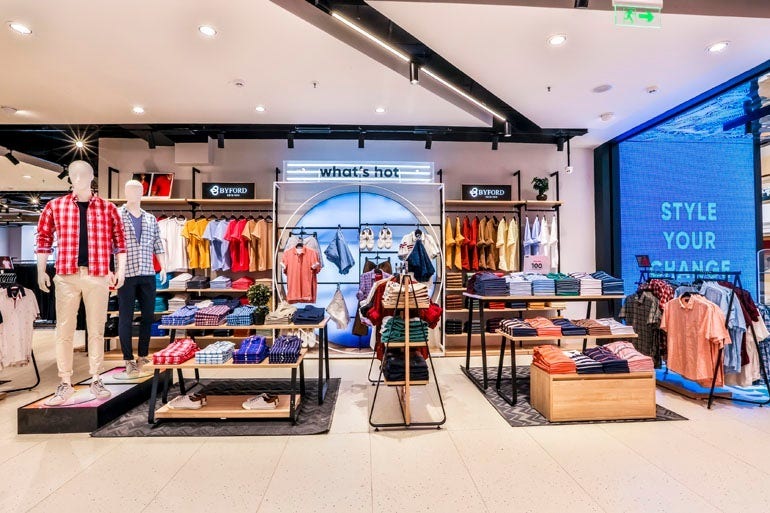
The company’s business model resembles a crowded wardrobe where high-end designer wedding wear sits uncomfortably next to value-focused fast fashion. On one side, legacy engines like Pantaloons provide mass-market volume across 399 stores. On the opposite extreme, the company has gone on an aggressive shopping spree in high-end ethnic spaces, collecting stakes in marquee labels like Sabyasachi, Tarun Tahiliani, House of Masaba, and TCNS Clothing. To add further flavor, they have thrown in a digital brand incubator called TMRW to build e-commerce brands like Bewakoof, alongside bringing global luxury experiences via Galeries Lafayette. It is a business model that simultaneously tries to dress a college student, a high-society bride, and an ultra-high-net-worth individual, hoping the operational synergy will somehow offset the massive capital intensity of managing separate retail universes.
Section 4 — Financials Overview
Figures are consolidated, in ₹ crore.
Metric
Latest Quarter (Mar 2026)
YoY
QoQ
Revenue
1,990
+15.76%
-16.18%
EBITDA / Operating Profit
188
-5.53%
-37.75%
PAT
-164
-583.33%
-19.71%
EPS
-1.22
-771.43%
+2.40%
The headline revenue of ₹1,990 crore indicates a solid volume lift, yet the earnings quality tells a more complex story as operational improvements get diluted by non-cash adjustments and one-offs. Quarterly performance is highly dependent on seasonal consumption patterns, and variations in baseline comparisons can frequently obscure the true underlying trajectory of cash generation. Management focused on comparable metrics, noting that excluding last year’s ₹97 crore demerger gain and factoring in TMRW’s ₹83 crore derivative asset gain from associate WROGN, core operating EBITDA expanded by 29% to ₹229 crore. The CEO noted that “the last 18 months of work is translating into results.” We will be watching if this momentum can outlast raw material inflation.
Section 5 — Valuation Discussion: Fair Value Range Only
Evaluating a business with structural net losses requires looking past trailing metrics to examine underlying assets and replacement values.
P/E Method: With an annualised reported EPS of -₹6.36, traditional P/E methodology