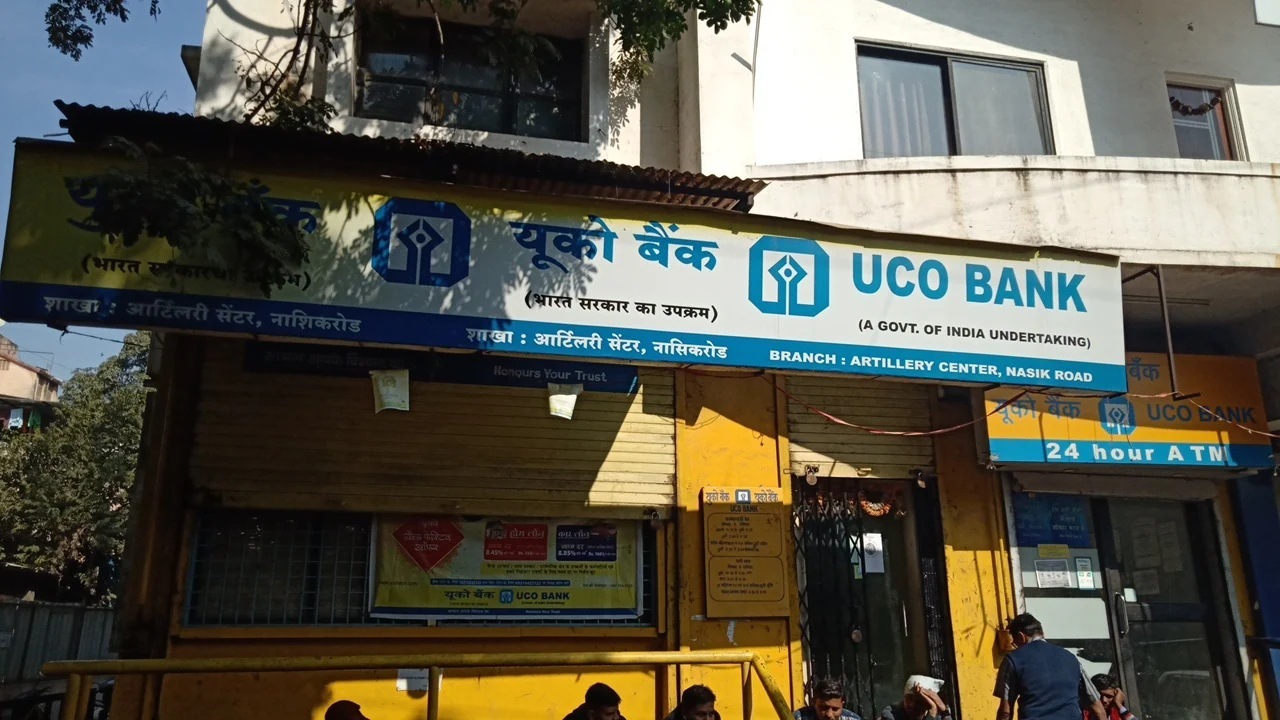
UCO Bank Q4 FY26: The 11x P/E Turnaround Story With a 91% Government Shadow
1. At a Glance
The numbers coming out of Kolkata-headquartered UCO Bank for FY26 paint a picture of an institution aggressively cleaning its house. The bank closed the year with ₹26,281.36 Cr in revenue and a net profit of ₹2,767.86 Cr—a 13.2% bottom-line expansion that comfortably outpaced its top-line growth. But the real story isn’t in the income statement; it’s buried in the asset quality metrics.
Gross NPAs have been wrestled down to 2.17%, while Net NPAs stand at a microscopic 0.27%, backed by a towering Provision Coverage Ratio (PCR) of 97.79%. For a bank that spent the better part of the last decade swimming in stressed assets, these figures represent a tectonic shift in balance sheet hygiene. A bank’s true health isn’t measured in loan growth, but in the provisions it no longer needs to make. However, with the Government of India sitting on a massive 90.95% stake, free float is virtually non-existent, and every strategic move comes with a bureaucratic asterisk.
The bank is guiding for even cleaner asset quality in FY27, but with a warning of margin compression. The question for investors is whether the turnaround is fully priced into its 11.2x P/E multiple, or if the best is yet to come.
2. Introduction
Founded in 1943 by industrialist G.D. Birla, United Commercial Bank was nationalized in 1969 and officially became UCO Bank in 1985. Today, it operates as a mid-sized public sector lender with a deep-rooted presence in eastern and north-eastern India. Out of its ~3,327 branches, roughly 61% are strategically positioned in rural and semi-urban pockets, securing a steady pipeline of low-cost deposits. It also maintains a token international footprint with branches in Hong Kong and Singapore, plus a representative office in Iran.
3. Business Model: WTF Do They Even Do?
UCO Bank executes the classic public sector banking playbook: gather cheap retail deposits from the hinterlands and lend them out across the spectrum. Their revenue mix is fairly balanced, split between Corporate Banking (~37%), Retail Banking (~36%), and Treasury Operations (~27%).
The bank has recently been tilting heavily toward the RAM segment (Retail, Agriculture, and MSME), which now makes up over 65% of its advances. Retail housing loans jumped 19%, and car loans spiked a massive 71%. To shed its dinosaur image, management has launched “Project Parivartan”—the corporate equivalent of buying a MacBook to finally start that novel—investing ₹1,000 Cr in IT upgrades, moving customer onboarding to tablets, and ramping up mobile banking users from 14 lakh to 70 lakh in three years.
4. Financials Overview
Figures are consolidated, in ₹ crore.
Metric
Q4 FY26
YoY
QoQ
Revenue
6,656.33
-1.31%
0.06%
Operating Profit
4,580.25
24.12%
6.72%
PAT
801.15
22.79%
8.33%
EPS
0.64
23.07%
8.47%
A 22.79% YoY jump in Q4 net profit looks spectacular on a press release, but it masks a flatlining topline. When credit costs shrink, the bottom line expands effortlessly—until the credit cycle turns again.
Management addressed this dynamic in the latest earnings concall, noting they deliberately walked away from ~₹14,000 Cr in corporate loan sanctions because the yields were too low. Management said, “We do not want credit growth in the Corporate segment at the cost of margins.” A PSU bank prioritizing yield over mindless balance-sheet bloat? We must be in a simulation. Meanwhile, the treasury desk had a rough Q4, taking a ₹135 Cr mark-to-market hit due to a sudden spike in bond yields, proving that the bond market humbles everyone eventually.
5. Valuation Discussion: Fair Value Range Only
With an FY26 EPS of ₹2.21, here is how the market is currently viewing the bank.
P/E Method: UCO’s immediate PSU peers (SBI, Bank of Baroda, PNB) are trading in a P/E band of 6.5x to 10.5x. Applying this multiple to UCO’s annualised EPS of