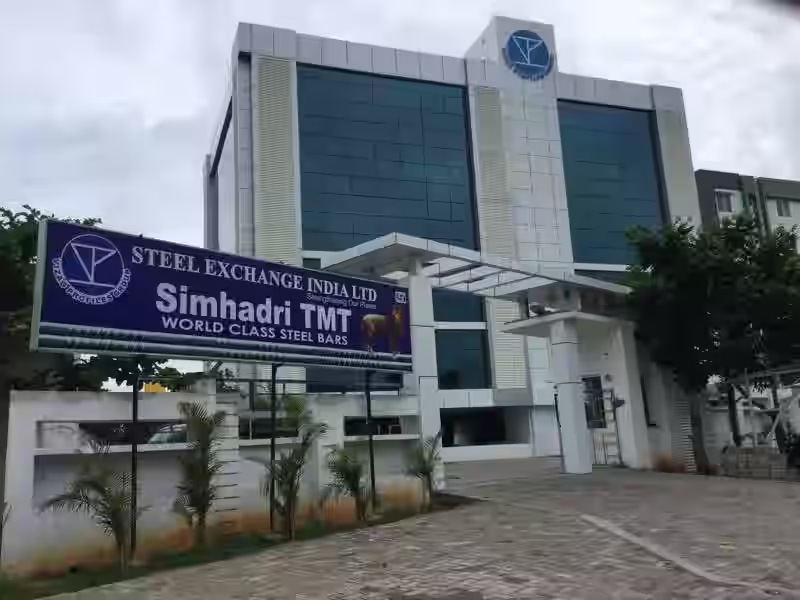
Steel Exchange India Ltd Q4 FY26: 100% Pledged Promoters and a 57x P/E Walk Into a Bar
1. At a Glance
Steel Exchange India Ltd (SEIL) presents a classic structural puzzle. Operating a 400-acre integrated steel plant near Visakhapatnam, the ₹1,566 Cr market cap company trades at a lofty 56.8x trailing price-to-earnings ratio, despite a topline that shrank 7% YoY in FY26 to ₹1,059.44 Cr.
While the full-year revenue contracted, Q4 FY26 offered a sudden adrenaline shot: operating profit surged 51.6% YoY to ₹49.73 Cr, and PAT spiked an eye-watering 160% YoY to ₹12.37 Cr. This late-year margin expansion provides the bull case for a turnaround, underpinned by a recent refinancing exercise that swaps punishing 18.75% debt for more manageable 13.25% facilities. A low-margin cyclical business wearing a high-growth valuation multiple is usually a misunderstanding waiting to be corrected.
Yet, serious structural overhangs remain. The promoters have 100% of their holding pledged, working capital days have deteriorated, and the company generated a negative ₹38.01 Cr in operating cash flow for FY26. Management is now pivoting toward land monetization and logistics to extract value. The coming quarters will test whether this is a genuine capital allocation pivot or a distraction from core manufacturing pressures.
2. Introduction
Incorporated in 1999, Steel Exchange is the flagship entity of the Vizag Profiles group. For over two decades, they have been turning raw iron ore and coal into TMT bars, billets, and sponge iron. They operate out of a massive 400-acre site in Andhra Pradesh, complete with captive railway sidings and a 60 MW power plant that runs partially on waste gases.
Recently, the company has begun talking less like a pure-play steelmaker and more like an infrastructure landlord, setting up a new subsidiary, SEIL Infra Logistics Limited, to monetize its surplus land. The shift from smelting iron to leasing logistics parks is certainly a choice, and we are here for the transition.
3. Business Model: WTF Do They Even Do?
SEIL operates an integrated steel plant. They buy iron ore from NMDC, throw it into a kiln to make sponge iron, melt that into billets, and roll those into “SIMHADRI TMT” bars (which account for roughly 67% of revenues). It is a textbook heavy-industry model with high fixed costs and a voracious appetite for working capital.
Lately, however, management realized they have 200 acres of spare land sitting near major ports and highways. Why suffer the cyclical brutality of steel pricing when you can be a landlord? Thus, the new logistics subsidiary was born. SEIL is now a steel company trying to side-hustle its way into real estate monetization.
4. Financials Overview
Figures are standalone, in ₹ crore.
Metric
Q4 FY26 (Mar 26)
YoY (Mar 25)
QoQ (Dec 25)
Revenue
287.33
-1.4%
+19.5%
Operating Profit
49.73
+51.6%
+121.4%
PAT
12.37
+159.8%
+442.5%
EPS (₹)
0.10
+150.0%
+400.0%
The Q4 numbers look like a typo in the best possible way. A 19.5% QoQ revenue bump translated to a 442.5% explosion in net profit. When operating leverage kicks in, profits fly; when it reverses, they crash. The trick is knowing which side of the cycle you are buying.
Did Management Walk the Talk?
In an August 2025 concall (discussing Q1 FY26), management confidently guided for FY26 revenues of ₹1,400–1,500 Cr and an EBITDA of ₹170–180 Cr. They missed both targets by a country mile. Actual FY26 revenue crawled in at ₹1,059 Cr with an EBITDA hovering near ₹138 Cr. Management called a margin expansion “sustainable,”