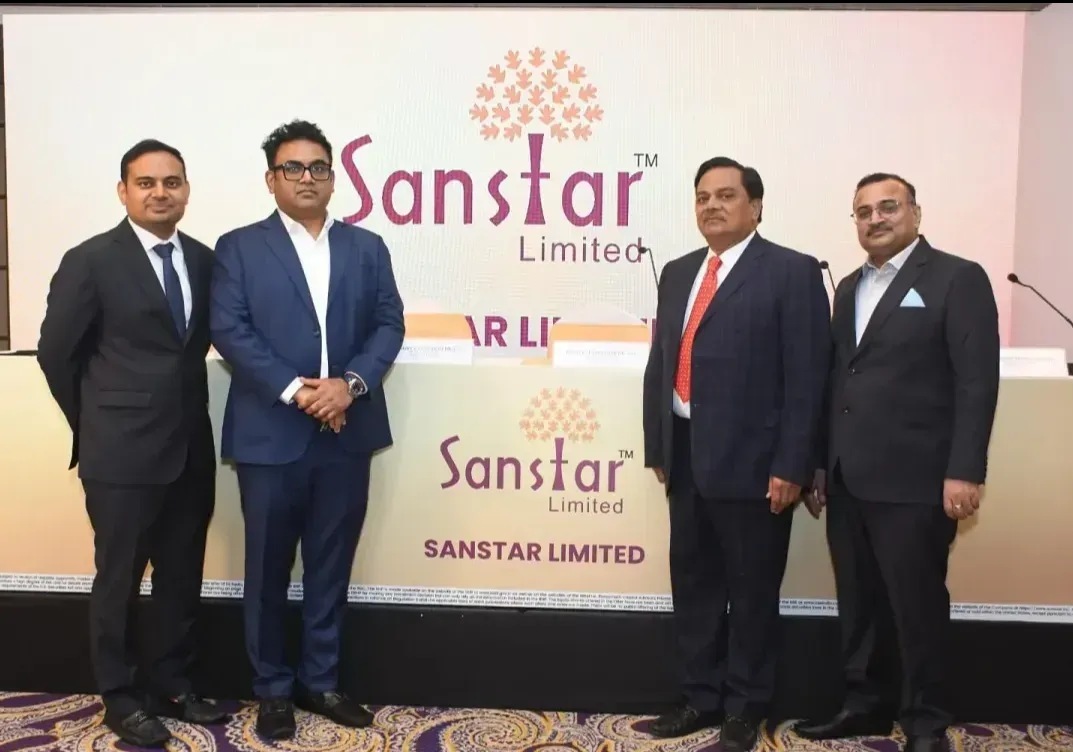
Sanstar Q4 FY26: The Strategic Pivot and the ₹198 Cr Catalyst
Section 1 — At a Glance
Sanstar Limited entered FY26 facing a challenging operational environment, characterized by intense margin pressure in its core commoditised segments. Headline revenue for the full year contracted by 17.7% to ₹784.63 crore, down from ₹953.40 crore in FY25, primarily driven by depressed global sales realizations in the native starch business. This softness reflects an influx of competitive Chinese exports into key Southeast Asian markets, which fundamentally altered regional supply dynamics and compressed structural spreads. Despite the topline contraction, structural changes took hold in the second half of the year, leading to a strong operational recovery by the fourth quarter.
Investor attention is currently divided between these historical headwinds and a major corporate development. On May 28, 2026, the company approved a ₹198.27 crore preferential equity issue to a subsidiary of global ingredient major Ingredion, alongside a comprehensive joint venture agreement. Concurrently, Sanstar successfully commissioned its expanded Dhule native starch line, increasing its consolidated milling footprint from 1,100 tonnes per day (TPD) to 2,350 TPD. This aggressive capacity addition, funded predominantly via IPO proceeds, introduces operational execution and asset-turn risks during a period of volatile commodity spreads.
Capital deployment prior to realization efficiency is a high-stakes corporate transition that tests balance sheet resilience before delivering structural scale benefits. While full-year operating profit felt the brunt of early-year plant shutdowns, the final quarter signaled an earnings inflection that could reshape the company’s valuation architecture.
Section 2 — Introduction
Sanstar Limited, established in 1982 and headquartered in Ahmedabad, is a manufacturer of maize-based specialty products and ingredient solutions in India. The business model revolves around the wet milling of maize, translating raw agricultural output into high-value starch variants, dextrins, and functional derivatives.
The company’s corporate narrative shifted dramatically post its initial public offering, utilizing its capital base to transition from a regional processing player into an institutional manufacturing platform. The completion of the Dhule expansion positions Sanstar as the second-largest maize processor in the country. However, this capacity expansion lands squarely in a global macro environment defined by volatile crop procurement pricing and aggressive international competition.
Section 3 — Business Model: WTF Do They Even Do?
Sanstar essentially takes thousands of tons of corn, subjects it to automated wet milling via SCADA systems, and separates it into things humans eat, things animals eat, and things factories use to glue boxes together.
Their product portfolio is split into starches (63%), derivatives like liquid glucose and maltodextrin (16.5%), and co-products like corn gluten meal (6.5%). If you have consumed a packaged dessert, swallowed a pharmaceutical pill, or fed a high-protein diet to livestock recently, there is a reasonable statistical chance Sanstar processed the baseline molecules.
The primary structural problem is that 63% of the business resides in native starch—the corporate equivalent of selling plain vanilla flour in a market where everyone else is also selling flour. This exposes the revenue mix to brutal pricing cycles whenever global supply shifts. The long-term plan is to tilt this product mix toward value-added derivatives where customers actually look at specs rather than just looking at the lowest quote.
Section 4 — Financials Overview
Figures are consolidated, in ₹ crore.
Metric
Latest Quarter (Q4 FY26)
YoY
QoQ
Revenue
₹216.78
-4.20%
+7.43%
EBITDA
₹19.40
nm
+8.38%
PAT
₹20.49
+271.20%
+49.56%
EPS
₹1.12
+239.39%
+49.33%
Note: nm = not meaningful due to a negative EBITDA baseline of -₹0.50 crore in Q4 FY25.
The financial trend over the last year showcases an extreme operational divergence. The first half of the year was a sequence of low capacity utilization and maintenance closures that left the income statement look thin. However, sequentially, Q4 FY26 saw revenue rise to ₹216.78 crore, backed by an