Gulshan Polyols FY26: When the Moonshine Turns Legal and the Subsidy Hits Just Right
Date of Publishing -
Spotted a factual error — a wrong number, date, or fact? Tell us and we will check the source.
Section 1 — At a Glance
Gulshan Polyols Limited concluded the financial year 2026 by engineering a major structural transformation, successfully pivoting from its legacy mineral and starch processing operations to establish itself as an ethanol-dominated energy platform. Total revenue for the fiscal year reached a milestone of ₹2,314 crore, representing a 14% year-on-year expansion. This top-line progression was comprehensively outpaced by profitability, as Operating EBITDA escalated by 131% to ₹232 crore, driving a substantial 504 basis point operating margin expansion to 10.0%. Profit After Tax (PAT) concluded at ₹107 crore, a 334% explosion from the low base of ₹25 crore recorded in the preceding fiscal year.
This financial acceleration was primarily propelled by the rapid commercial scale-up of the company’s grain-based ethanol distillation capacity, which has now reached an aggregate of 810 KLPD. The distillery segment alone generated ₹1,609 crore in revenue during FY26, accounting for approximately 70% of consolidated receipts. Despite the headline growth, capital efficiency metrics present a multi-speed narrative; while Return on Equity (ROE) recovered sharply to 16.1% from a multi-year trough, the historical three-year median ROE remains suppressed at 7.64%, reflecting the severe margin pressure experienced during the recent capital expenditure cycle. Furthermore, the earnings profile remains tightly anchored to regulatory architectures, specifically the allocation volumes and pricing frameworks dictated by Oil Marketing Companies (OMCs) and federal fiscal incentives. Total incentive receipts from the Madhya Pradesh Industrial Development Corporation (MPIDC) contributed ₹21.8 crore to the current period’s performance, highlighting the operational dependence on state-sponsored production-linked assistance.
Capital deployment is entering a phase of cyclical consolidation as immediate greenfield commitments abate, leaving a total debt pile of ₹313 crore. The underlying earnings quality continues to depend on volatile agricultural feedstock pricing and administrative grain allocations, which introduce structural variations in manufacturing economics.
Section 2 — Introduction
Established in 1981, Gulshan Polyols Limited has spent the better part of four decades navigating the unglamorous corridors of industrial commodity manufacturing. Historically recognized as a stable supplier of calcium carbonate variants and primary corn starch derivatives, the corporation long functioned as a low-profile vendor to domestic consumer goods and industrial majors.
However, the structural realities of the Indian domestic energy mandate prompted management to initiate an aggressive, capital-heavy transition into the bio-fuel ecosystem. Over the past three fiscal periods, the company has methodically deployed capital to establish a multi-location distillery network, effectively shifting its center of economic gravity from mineral transformation to grain-based ethanol manufacturing. This transition has completely rewritten the corporate identity, elevating the business into a front-line participant in the national mandate targeting 20% ethanol blending across the domestic fuel infrastructure.
Section 3 — Business Model: WTF Do They Even Do?
At its core, Gulshan Polyols operates as an industrial chemistry engine that transforms basic agricultural inputs into raw materials for everything from fuel tanks to toothpaste tubes. The corporate portfolio is segregated into three distinct processing arms:
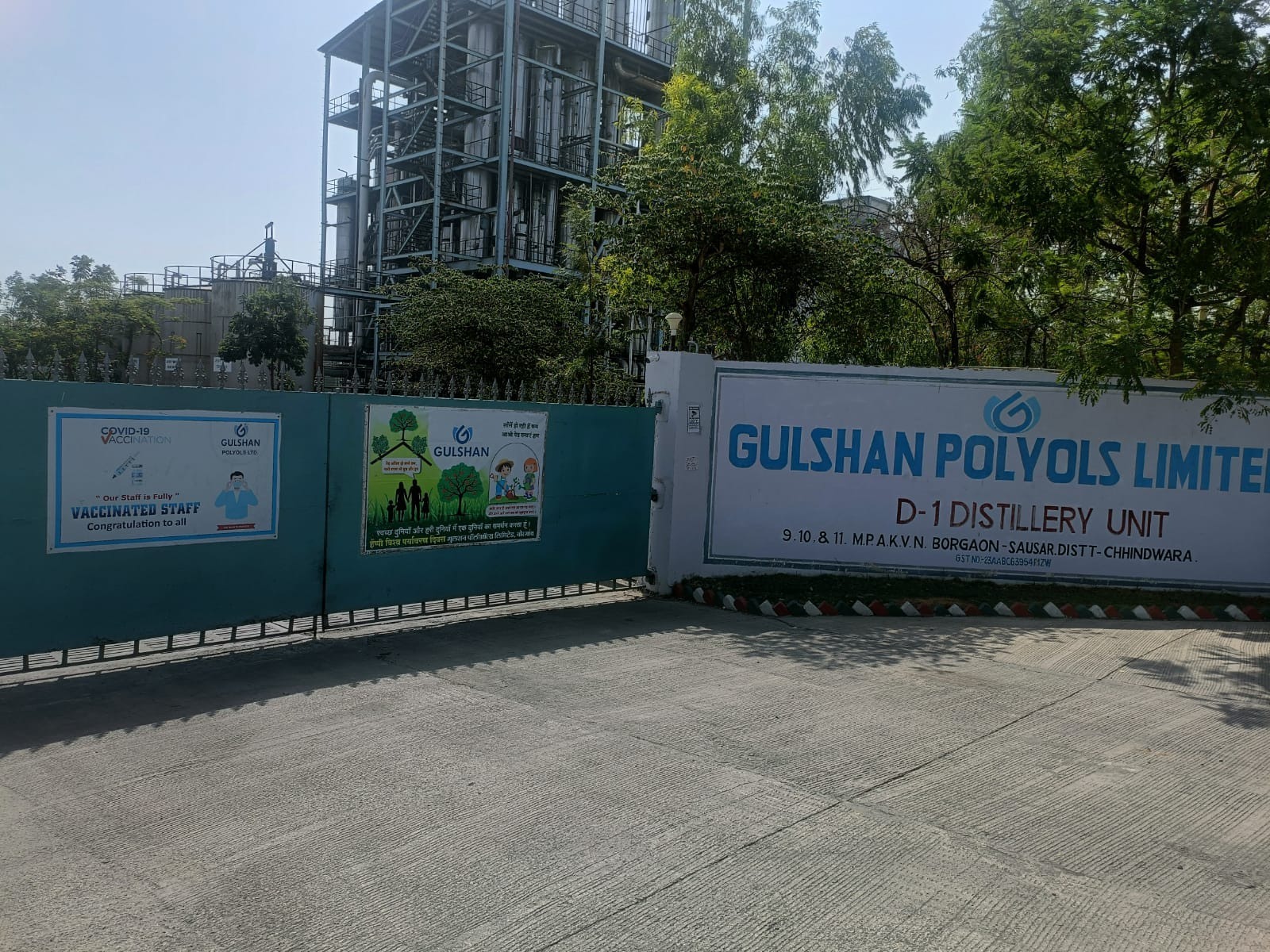
The Ethanol Engine (Bio-Fuel / Distillery): The undisputed heavyweight of the portfolio, contributing roughly 70% of revenue in FY26. The company buys damaged food grains, broken rice, and maize, and distills them into high-purity grain Extra Neutral Alcohol (GENA) and fuel-grade ethanol. They run a total capacity of 810 KLPD across Madhya Pradesh and Assam, feeding directly into long-term off-take contracts with state-run Oil Marketing Companies.
The Sweet and Starchy Core (Grain Processing): This segment processes corn and rice into maize starch powder, liquid glucose, maltodextrin, and Sorbitol 70% solution. It represents 36% of historical revenue and acts as a major export vehicle, servicing multinational oral care and pharmaceutical giants across 35 countries.
The Rock Shredders (Mineral Processing): The legacy cash cow that refuses to go away. Accounting for roughly 5% of the revenue mix, this unit processes raw minerals into Wet Ground Calcium Carbonate (WGCC) and Precipitated Calcium Carbonate (PCC). If you have ever used Asian Paints, rubbed a piece of value-added paper, or walked in a pair of Relaxo shoes, you have interacted with Gulshan’s mineral block.
Section 4 — Financials Overview
Figures are consolidated, in ₹ crore.
Headline Results
Metric
Q4 FY26
YoY
QoQ
Revenue
₹551.00
7.0%
-12.1%
EBITDA
₹65.00
121.0%
-1.5%
PAT
₹38.00
435.0%
-25.5%
EPS (₹)
₹6.02
490.2%
-8.2%
Did Management Walk the Talk?
During the prior earnings cycles, management explicitly stated that the massive capex deployed in the Assam and Madhya Pradesh distillery expansions would yield significant operational leverage once capacity utilization crossed critical thresholds. The final FY26 prints confirm this thesis, as consolidated EBITDA margins expanded from a pedestrian 5.0% in FY25 to a far more respectable 10.0% in FY26.
This expansion was meaningfully aided by a macro drop in raw material costs, with maize softening to the ₹19–₹22/kg band, and the execution of the state-mandated 40% FCI rice allocation