Allcargo Terminals FY26: A ₹49 Crore Tax Drama and the Global Container Shell Game
Section 1 — At a Glance
A structural shift is quietly altering the terminal logistics landscape as fiscal 2026 comes to a close. Headline figures present an apparent triumph, with full-year consolidated revenue stepping up 8.31% to ₹821 crore and profit after tax surging 46.67% to ₹44 crore. Yet, a deeper examination reveals distinct operational friction. Beneath the surface of this expansion lies an aggressive reliance on accounting lease adjustments under Ind AS 116, alongside mounting regulatory challenges. Specifically, a newly disclosed ₹49.35 crore income tax demand and a ₹25.29 crore GST notice cast a long shadow over recent earnings quality.
Investor focus remains divided between management’s ambitious capital expenditure plans and distinct corporate vulnerabilities. The business is racing to diversify away from port-side container freight stations into rail-linked inland container depots, scheduling over ₹400 crore in capital deployments through 2030. However, this capital expansion has triggered an immediate halt to shareholder distributions. Furthermore, a low interest coverage ratio highlights structural constraints, leaving little margin for error as internal accruals are fully diverted to fuel these massive expansions.
The core operational metric, volume handling, indicates a plateauing trend at key maritime gateways. While total volumes ticked up 6% to 723,035 TEUs for the full year, a sequential 7% contraction in the final quarter highlights an undeniable truth: port-side container yards are operating at peak utilization, rendering top-line growth hostage to capacity creation. Real security in asset-heavy networks is never found in chasing high-turnover peak volume, but in controlling the physical infrastructure that commands the throughput. The market’s immediate focus turns to how effectively a heavily leased balance sheet can absorb these capital commitments while clearing a regulatory minefield.
Section 2 — Introduction
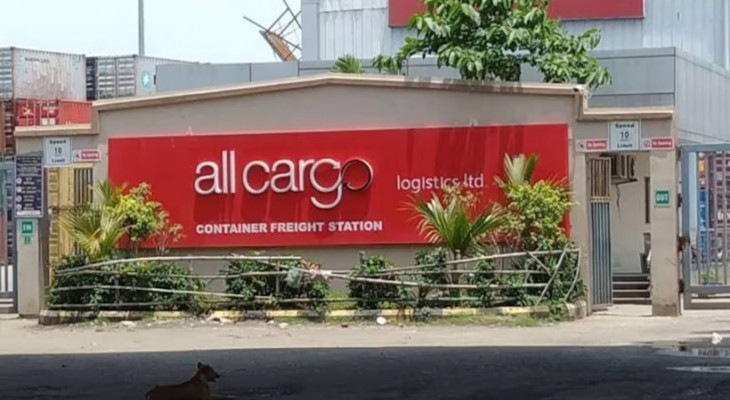
Allcargo Terminals Ltd came into independent existence through a spin-off from its parent entity, Allcargo Logistics Ltd, finalized in early 2023. This corporate split was designed to isolate the group’s domestic container freight station (CFS) and inland container depot (ICD) infrastructure, freeing it from the volatile global freight forwarding cycles of the wider business.
The newly liberated management team wasted no time mapping out a strategy focused on footprint expansion and structural upgrades. Operationally, the company has repositioned itself to capture changing trade flows across India’s core maritime corridors. Yet, separating from a parent company is rarely clean, and the business remains bound to the wider Allcargo ecosystem through critical land leases and related-party investments. As trade flows face shifting regulatory policies and intense port-side competition, the company is attempting to transition from a pure yard storage operator into an integrated multimodal player.
Section 3 — Business Model: WTF Do They Even Do?
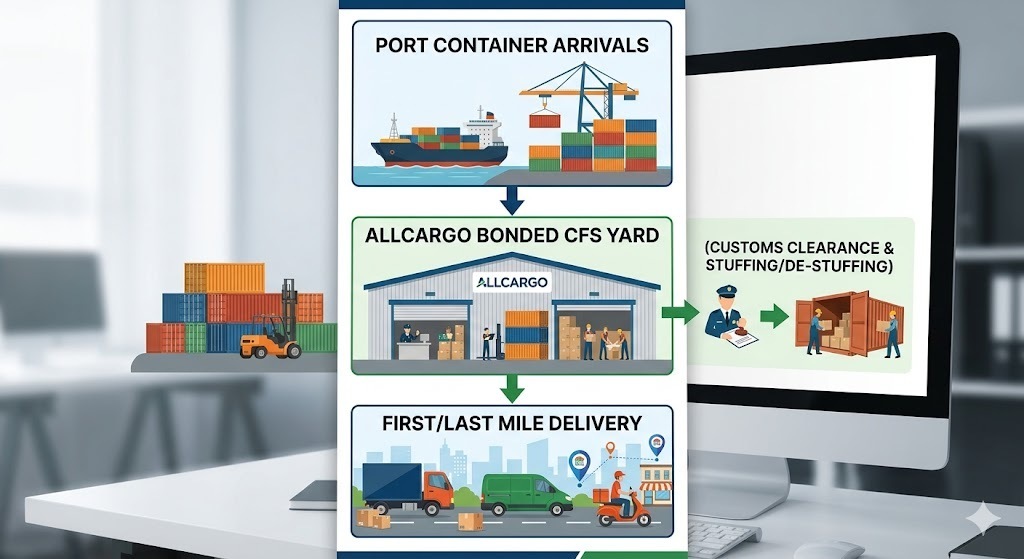
At its core, Allcargo Terminals acts as the waiting room for international trade. When cargo containers arrive at major Indian ports like JNPT or Mundra, they do not immediately zip onto trucks. Instead, they sit in a Container Freight Station (CFS) under close customs supervision, undergoing customs clearance, stuffing, de-stuffing, and temporary storage.
The company runs six of these customs-bonded yards across India’s highest-traffic maritime gateways, complemented by a joint-venture inland depot at Dadri. Management frequently calls this an “asset-right” model. Translated from corporate optimism to financial reality, this means they prefer leasing land from sister concerns rather than buying it outright.
While this setup keeps initial capital expenditure low, it leaves the company entirely exposed to port traffic fluctuations. Furthermore, ground rent—historically the easiest way to generate high margins when containers sat abandoned in a yard—has fallen to just 20% of total revenue. Consequently, the company has to work significantly harder, manually moving and processing physical containers to protect its thin service margins.
Section 4 — Financials Overview
Figures are consolidated, in ₹ crore.
Quarterly Performance Trend
Metric
Q4 FY26
YoY (%)
QoQ (%)
Revenue
208.04
11.89%
-4.54%
EBITDA
44.02
31.02%
3.33%
PAT
8.77
Turnaround
-41.65%
EPS (₹)
0.30
Turnaround
-42.31%
The final quarter of the fiscal year showcased a textbook case of optical mismatch. Revenue climbed to ₹208.04 crore, representing comfortable double-digit growth against the previous year’s depressed baseline. However, a closer look at the sequential numbers reveals a cooling trend, with revenue slipping 4.54% from the preceding quarter as trade volumes normalized.
EBITDA registered at ₹44.02 crore, but management openly admitted this late-quarter margin bump was helped by temporary expense reductions rather than permanent cost efficiencies. Meanwhile, net profit took a severe sequential hit, plunging over 41% to ₹8.77 crore. This volatility serves as a reminder that short-term earnings spikes are often driven by temporary fluctuations in cargo mix, rather than durable operational scale.
Did Management Walk the Talk?
During recent investor calls, management confidently emphasized an operational turnaround, highlighting a steady recovery in realization per container and a commitment to maintaining stable margins. They claimed the company is now “completely debt-free” on an external basis.
However, the reported profit metrics are heavily influenced by lease accounting treatments. While external bank borrowings were paid down, finance costs rose to ₹16.46 crore in the final quarter alone. When asked about this during the May 2026 earnings call, the Chief Financial Officer clarified:
“The borrowings on the balance sheet are primarily ROU