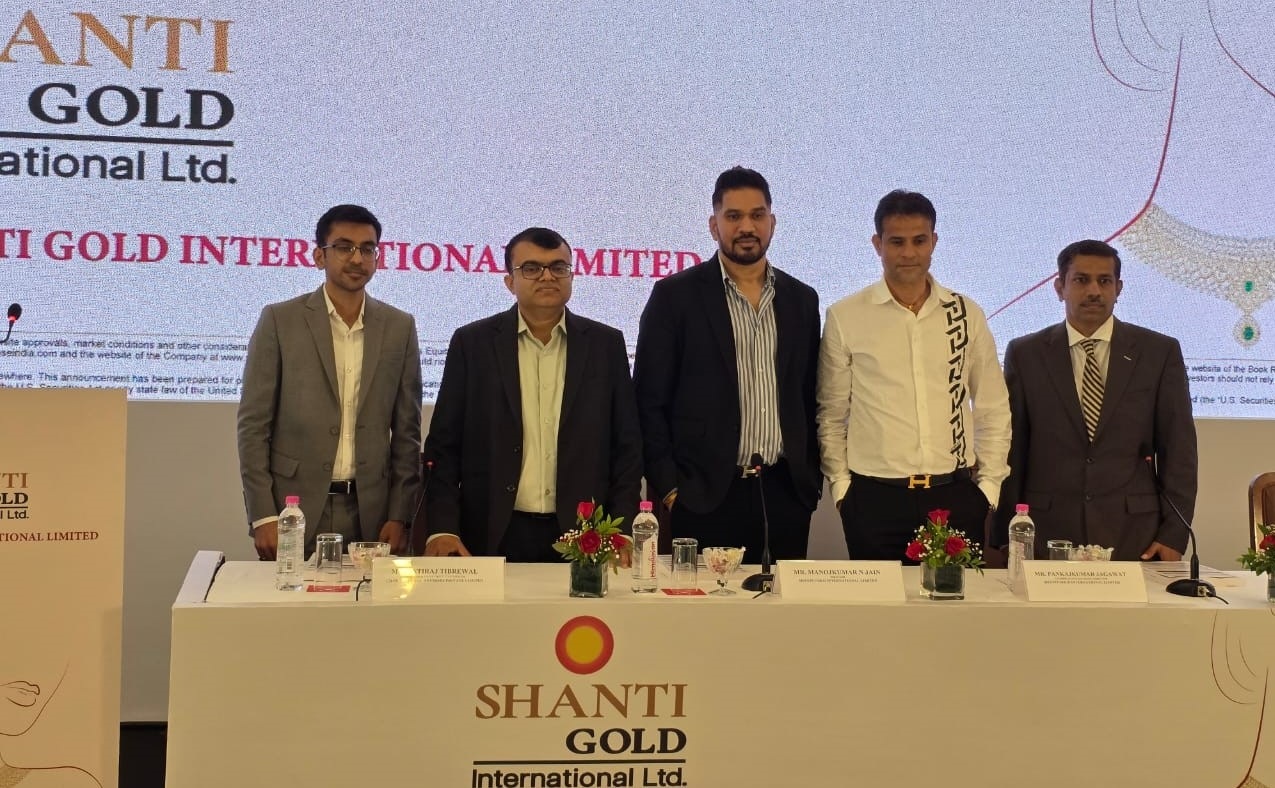
Shanti Gold FY26: A 465% Profit Surge Glittering on Outright Speculation?
At a Glance
Shanti Gold International Ltd delivered an extraordinary headline performance for the financial year ended March 31, 2026, driven by unprecedented growth across its primary manufacturing metrics. Annual sales scaled new heights, expanding by 82.46% to reach ₹2,018.71 crore, compared to ₹1,106.41 crore in the previous fiscal year. This rapid top-line expansion was matched by a dramatic 159.05% spike in annual net profit, which climbed to ₹140.15 crore from ₹54.10 crore in FY25. The closing quarter of the year further amplified this trajectory, with Q4 FY26 net profit surging by 465.30% year-on-year to ₹51.93 crore.
Behind these dazzling numbers, however, lies a complex operational narrative that demands close investor scrutiny. The company’s exceptional profitability in FY26 was substantially aided by non-recurring macro factors, specifically an inventory valuation tailwind generated by purchasing gold outright using fresh IPO proceeds during a period of sharp gold price appreciation. This inventory strategy effectively decoupled the company’s reported margins from its sustainable core business performance. Furthermore, the rapid scaling of operations has severely strained the balance sheet’s working capital cycle, with trade receivables and inventories doubling over the past twelve months.
High operational growth during an asset price surge frequently masks structural cash flow pressures, as accounting profits get trapped directly on the balance sheet rather than converting into real liquidity.
Introduction
Shanti Gold International Ltd has come a long way from its humble origins as a regional partnership firm established in 2003. Corporate milestones show a steady march from its conversion into a public limited entity in 2013, to its eventual listing on the NSE and BSE on August 1, 2025.
The company has successfully anchored its presence as a key business-to-business (B2B) design and manufacturing partner for some of the country’s largest organized jewelry retail chains. While its historical operations have been firmly rooted in the high-density gold consuming hubs of South India, the management is currently attempting a massive transformation in corporate scale, pushing aggressively into newer geographies, product categories, and manufacturing capabilities.
Business Model: WTF Do They Even Do?
At its core, Shanti Gold operates a high-volume wholesale manufacturing engine. It doesn’t run glitzy retail showrooms with security guards standing at attention; instead, it acts as the backend kitchen for national heavyweights like Joyalukkas India and Lalithaa Jewellery Mart. The company specializes in 22-karat Cubic Zirconia (CZ) casting gold jewelry, turning raw bullion into intricately designed rings, bangles, and bridal sets.
The operation relies on a design-led culture, powered by an army of 96 CAD designers churning out over 400 new designs a month to keep retail partners hooked. The geographic footprint is heavily concentrated, with Tamil Nadu and Andhra Pradesh combined accounting for 47% of its domestic revenue.
The business model is essentially an outsourcing play: organized retailers are increasingly giving up on manufacturing to focus entirely on expanding retail footprints and optimizing footfalls, leaving Shanti Gold to do the heavy lifting of melting, casting, and hallmarking.
Financials Overview
Figures are consolidated, in ₹ crore.
Quarterly Performance
Metric
Latest Quarter (Mar 2026)
YoY
QoQ
Revenue
₹658.93
121.65%
3.45%
EBITDA / Operating Profit
₹67.01
217.26%
53.03%
PAT
₹51.93
465.30%
69.76%
EPS
₹7.20
323.53%
50.94%
The final quarter of FY26 was an absolute blowout on paper, with top-line growth of 121.65% translating into a blistering 465.30% explosion in PAT. EBITDA margins expanded by a whopping 306 basis points to hit 10.17%.
However, looking at the sequential progression reveals that revenue growth is beginning to flatten out, growing just 3.45% quarter-on-quarter, even though profits continued to race ahead due to favorable product mix shifts toward high-margin bridal jewelry.
Did Management Walk the Talk?
During the May 2026 earnings call, management was remarkably transparent about the fact that the spectacular numbers of FY26 are a statistical mirage that won’t easily repeat. The CEO noted that the sustainable core “business margin” is actually between 3.5% and 4% at the PAT level.
The incremental upside that pushed FY26 PAT margins to 6.94% was entirely an “extra bonus” born out of opportunistic speculation. Management explicitly stated that they used the fresh cash from the IPO proceeds to bypass the standard Gold Metal Loan (GML) route and bought gold bullion outright.
As gold prices caught fire globally due to geopolitical instability, Shanti Gold sat back and reaped massive, non-recurring inventory gains. For the upcoming year, management has guided for value growth of 60% to 70% and volume growth of 30% to 40%, but warned investors to reset expectations back to the baseline core margin of 4%.
Valuation Discussion: Fair Value Range Only
To determine where Shanti Gold stands, we evaluate its current pricing relative to its fundamentals using three distinct corporate valuation methods based on its full-year FY26 earnings. With the stock currently trading at a Closing Market Price (CMP) of ₹220.68 and a full-year reported EPS of ₹19.44, the historical trailing P/E sits at a modest 11.35x.
1. P/E Multiple Method
The median P/E multiple for the broader peer group of listed jewelry companies stands at approximately 17.78x (ranging from Titan’s premium 71x down to distressed single-digits). However, because management has explicitly stated that FY26 earnings were artificially inflated by transitory