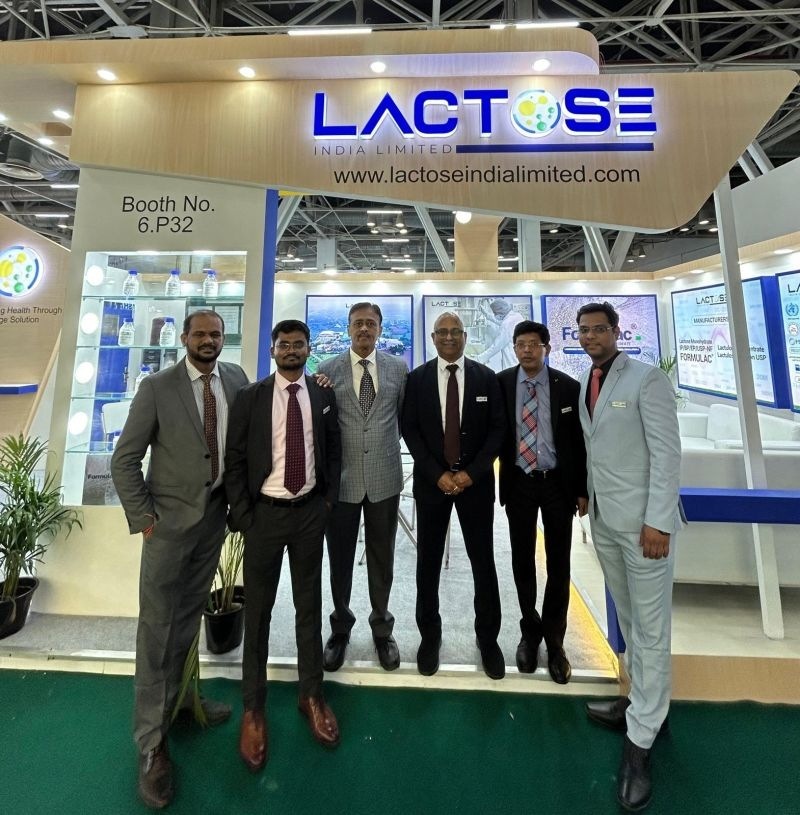
Lactose (India) FY26: The 163-Crore Sales Jump With a Side of Auditor Musical Chairs
Section 1 — At a Glance
Lactose (India) Ltd presents a classic small-cap paradox where soaring operational volumes clash directly with structural balance sheet stress. The headline numbers for the fiscal year ended March 31, 2026, paint a picture of sudden, aggressive scaling. Annual sales surged to ₹163.29 crore, representing a remarkable 40.28% growth over the previous fiscal’s ₹116.40 crore. Profit after tax also saw an upward trajectory, finishing at ₹6.06 crore compared to ₹5.16 crore in FY25.
However, beneath this accelerating topline lies a web of warning signals that are rapidly drawing investor anxiety. Operating profit margins have entered a clear multi-year downtrend, compressing to 10.97% in the final quarter of FY26. The rapid expansion has come at a steep financial cost: borrowings have ballooned to ₹62.45 crore, while other liabilities spiked to an unprecedented ₹55.99 crore. This leverage has trapped capital in a massive working capital cycle, causing inventory to jump to ₹55.95 crore and trade receivables to reach ₹33.46 crore.
Most concerning for public shareholders is the severe governance friction that occurred mid-fiscal, marked by the rapid resignation of multiple statutory auditors in less than three months. Compounding this anxiety is the heavy reliance on promoter pledges, with 26.1% of the promoter group’s holding locked up as collateral. When operational scaling happens entirely on the back of soaring liabilities and systemic working capital stretches, the quality of earnings deteriorates even as headline revenues expand.
Section 2 — Introduction
Lactose (India) Ltd is a legacy player in the pharmaceutical ingredients landscape, having been incorporated back in 1991. From its manufacturing base in Vadodara, Gujarat, the company operates in a highly specialized, technical niche. Over the last few fiscals, the company has actively attempted to pivot its operational strategy. Historically reliant on low-margin job work and contract manufacturing, management has made a concerted push toward direct product sales, primarily by expanding its customer relationships and leaning into direct marketing. While the company’s association with global names like the Kerry Group has given it a technical edge, its small absolute scale of operations leaves it highly exposed to local input cost volatility and intense competitive pressures from both domestic and global bulk drug manufacturers.
Section 3 — Business Model: WTF Do They Even Do?
To put it bluntly, Lactose (India) makes the boring parts of your medicine that actually make the medicine work. They are industrial specialists in pharma excipients and bulk drugs. Specifically, they control an estimated 40% market share of the Indian lactose market, acting as a critical supplier of binders. Binders are the unsung heroes of the pharma world; they are the chemical glue that ensures a pill holds its shape, expands its bulkiness, and dissolves in your stomach at exactly the right speed instead of turning into chalk.
Their product portfolio revolves around two main pillars: Lactose powder, where they boast a 10,000 MTPA capacity, and Lactulose, a specialized API where they have a 2,400 MTPA capacity. They also run a formulation unit pumping out up to 20 lakh tablets per day. Their client list reads like a who’s who of Indian pharma—supplying giants like Sun Pharma, Zydus, Abbott, and Lupin. Historically, they let these big boys walk all over them with low-margin contract conversion work. Today, product sales make up 84% of their revenue mix, leaving just 16% for job work. They are trying to act like a premium API powerhouse, but as we will see in the financials, running with the big boys requires actual cash, not just a fancy client list.
Section 4 — Financials Overview
Figures are consolidated, in ₹ crore.
Quarterly Results Trend
Metric
Latest Quarter (Mar 2026)
YoY
QoQ
Revenue
₹45.77
+55.68%
+24.48%
EBITDA / Operating Profit
₹5.02
-17.97%
+64.05%
PAT
₹1.88
-21.67%
+254.72%
EPS
₹1.49
-21.99%
+254.76%
The headline revenue growth looks spectacular on paper, with March 2026 sales coming in at ₹45.77 crore—a massive 55.68% jump compared to the ₹29.40 crore reported in the same quarter last year. However, look closer at the operational efficiencies. EBITDA for the quarter fell to ₹5.02 crore from ₹6.12 crore YoY. When your sales shoot up by 55% but your actual operational profit drops by nearly 18%, you